



March 02, 2026
 Raven Ridge Wildlife Center/Facebook
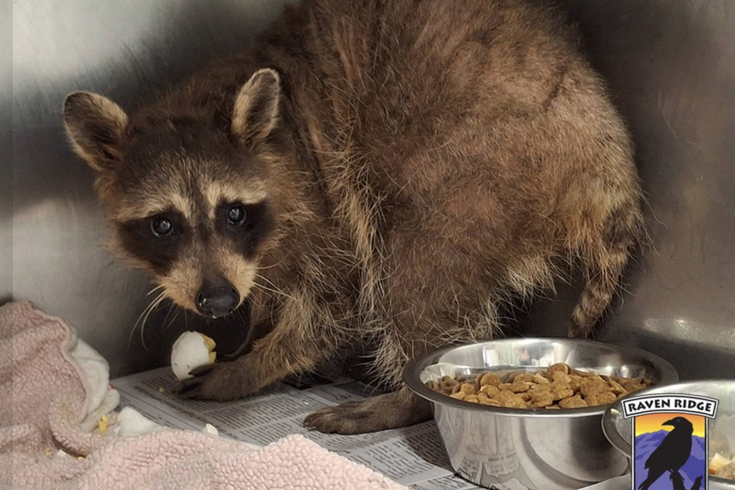
Benito, a raccoon who was rescued in South Philly during February's brutal cold snap, is undergoing rehab at Raven Ridge Wildlife Center in Lancaster County. He's lucky to survive a winter that tested the resolve of animals across the region.
For 10 days in early February, neighbors in South Philly tried to capture a raccoon that was struggling to survive amid the city's longest cold snap in more than two decades.
Benito, as they affectionately named the raccoon, was in terrible shape. He had mange, frostbite, open wounds and other sores all over his body. He was emaciated and stunk. The neighbors on South Cleveland Street set out a carrier with food inside to lure Benito to safety, and finally he took the bait.
MORE: Becoming an expert birdwatcher may help protect the brain from aging
"With no no fur or anything, I don't even know how this animal kept warm, but the community was not going to give up on capturing this raccoon," said Tracie Young, founder of Raven Ridge Wildlife Center, which took Benito in for rehab at the animal clinic in Washington Boro, Lancaster County.
In an update Monday, the wildlife center said Benito is responding well to his treatment.
"The thick crust that covered his body has fallen off, thanks to skin treatments and warm, medicated baths that have helped regenerate his skin," the clinic wrote in a Facebook post. "His fur is starting to grow back, and he has reached a healthy weight, looking much better overall."
***UPDATE*** on the raccoon we received from Philadelphia: After 10 days of neighbors' efforts to capture the raccoon,...
Posted by Raven Ridge Wildlife Center on Monday, March 2, 2026
Benito's story has been a theme for distressed wildlife in Southeastern Pennsylvania this winter.
"Usually, the winter time for us is calm," Young said. "We'll get some intakes, but this year has been so busy. It was almost like summer."
Young and her team of about 45 volunteers have been treating raccoons, foxes, birds of prey and stranded shorebirds that were brought in on the brink of starvation. Many are suffering from various maladies. Mange, the contagious skin disease spread by mammals infested with mites, is a common problem for city-dwelling raccoons and other species. They ingest rodenticides when they eat mice and rats, weakening their immune systems and leaving them susceptible to mites.
In below-freezing temperatures, Benito's fur was ravaged by the itchy condition. His remaining coat had formed clumps.
"It was almost like thick pieces of cement," Young said.
In the 11 years since Young started the wildlife center, she said her staff has tried its best to save raccoons that are brought in from places where they're generally considered pests. Rabies is usually the biggest concern with raccoons, and the only way to test for it is by cutting off the animal's head and submitting it to a lab.
"We know what a raccoon acts like when they're in captivity. Sometimes, there are signs we may be dealing with rabies, and if that's the case, we'll euthanize them," Young said. "But when we're able to bring in an animal or a raccoon, like we've gotten several from Philadelphia this winter, we're able to observe them."
Since Benito's demeanor suggested he was rabies-free, Young's team set out to treat him with baths and a nourishing diet that would put him back on the right path. Mange often takes months for a full recovery before animals can be released.
"He's not even going to be able to go outside for at least another month, until we can get that fur back on him," Young said. "Then he can start grooming and doing, you know, what a raccoon does."
When it's time for Benito to roam free, he won't be going back to South Philly. The wildlife center has several locations in the state to release raccoons where food and water are plentiful.
"Hopefully, these raccoons never see another person again," Young said.
While most wild animals are adapted to survive cold winters, the snowpack that stuck around Philly after the storm in late January took a toll on numerous species. In Cape May, birding groups reported a large die-off of American woodcocks that were left grazing for earthworms they couldn't reach beneath the snow. Robins became more at risk of car strikes as they sought food near roadways.
Even rats, which usually thrive in urban environments, may see minor population drops in places like Philly and New York City this spring due to the unforgiving elements in recent months.
Young said her clinic has taken in red-tailed hawks, owls and even some new species. She has three horned grebes, a migratory bird that's not native to this area. Some became stranded after descending on frozen waterways.
"A lot of these shorebirds were blown off course for migration," Young said.
Young is hopeful Benito will go on to live a natural life out in the wild. Getting him and the others at the clinic back on their feet is a labor of love.
"Any animal that comes in with mange, that's what we call an ugly rehab, because, yeah, it's gross," Young said. "But we're willing to do it and to watch the transformation."