


June 05, 2026

Content sponsored by
 Provided Courtesy/The Free Library of Philadelphia
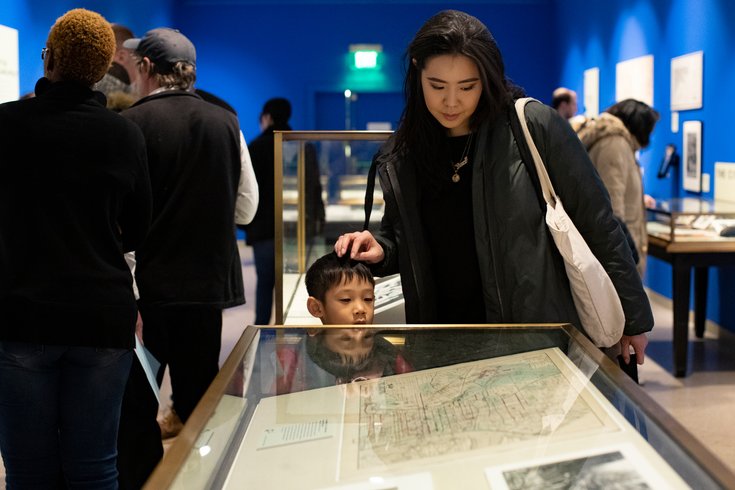
A woman and a young child examine a display case at Dietrich Gallery exhibition. Provided Courtesy/The Free Library of Philadelphia.
Most Philadelphians know the Free Library as a place to borrow books, study, use a computer, or attend a neighborhood program. But tucked inside the Free Library of Philadelphia’s Parkway Central branch is a hidden gem that many haven’t discovered: one of the most remarkable public collections of rare books, maps, art, music, and historic artifacts in the country. And it’s free to explore.
Hidden beyond the library’s busy main spaces, the Free Library’s Special Collections offer visitors something closer to a museum experience than a typical library visit. But unlike many museums, these collections are designed to be accessible. Curious visitors, students, researchers, and history lovers can explore materials up close, take guided tours by knowledgeable librarians, and discover pieces of Philadelphia and world history that are rarely seen anywhere else.
One of the biggest surprises is on the library’s first floor: the Edwin A. Fleisher Collection of Orchestral Music on the library’s first floor. It’s the largest lending library of orchestral music in the world. The collection, along with the Drinker Collection of Choral Music contains more than 22,000 titles and is used by musicians and orchestras from around the globe.
One floor up, the Map Collection features more than 130,000 current and historical maps; many documenting Philadelphia’s changing neighborhoods. Nearby, the Print and Picture Collection preserves fine art, photographs, drawings, and thousands of historical images that capture the city’s evolution.
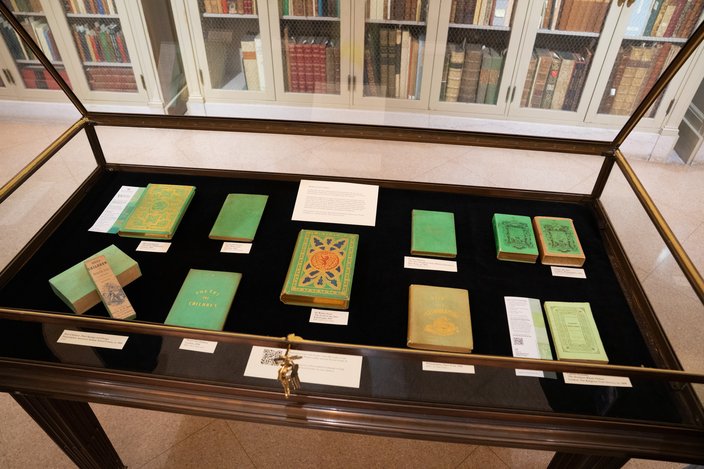
Antique Victorian-era books bound in cloth dyed with Paris green, an arsenic-based pigment popular in the 19th century, are featured in a rotating exhibition.
The centerpiece for many visitors is the Rare Book Department on the library’s third floor – home to one of America’s great public book collections.
The department offers free public tours every weekday at 11 a.m., giving visitors the chance to see treasures that feel almost unbelievable inside a public library. Among them: a Shakespeare First Folio, medieval manuscripts, 4,000-year-old cuneiform tablets, and green-hued Victorian-era books bound with arsenic. On view now during the nation’s 250th anniversary, books and items from the period of the founding and past centennial celebrations are on display.
There are also deeply personal artifacts connected to literary history, including Charles Dickens’ writing desk and “Grip,” Dickens’ pet raven that is believed to have inspired Edgar Allan Poe’s famous poem “The Raven.”
Grip, a preserved raven housed in the Rare Book Department, is displayed in a custom case with naturalistic materials. The bird, once owned by Charles Dickens, is associated with inspiring Edgar Allan Poe’s poem “The Raven.”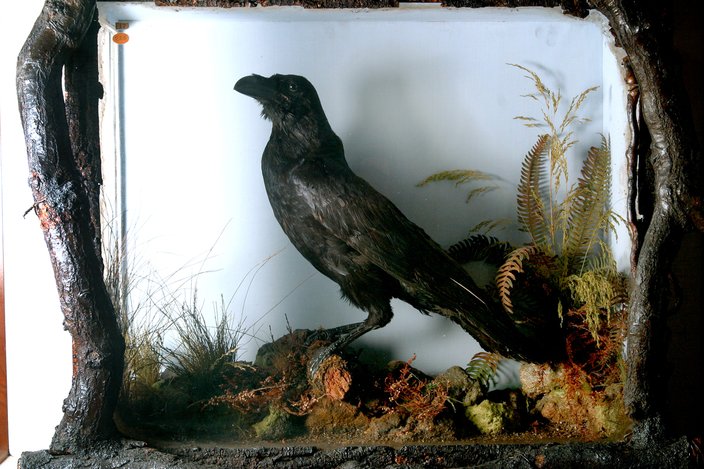 Provided Courtesy/The Free Library of Philadelphia
The collection extends far beyond literature. Visitors can see Revolutionary War materials, artwork by Beatrix Potter and even a letter connected to the Salem Witch Trials.
Elsewhere in the department, the Children’s Literature Research Collection contains more than 85,000 children’s books dating back to the 1800s, while the Theatre Collection preserves playbills, photographs and entertainment history dating to 1803. The Government Publications Collection documents the political and civic history of Philadelphia and the United States through pamphlets, atlases, photographs and public records.
The library’s exhibitions bring the collections into new focus, as well as displaying Philadelphia’s unique local culture and history.
Currently on view at Parkway Central is “Book Complaints,” an exhibition exploring censorship, book banning, and intellectual freedom in Philadelphia’s libraries over the last century. The exhibit examines who decides what people should read — and why those debates continue today.
Additional exhibitions connect to the nation's 250th anniversary. “Philadelphia for the People” on the second floor reflects how the city has changed since the signing of the Declaration of Independence. The exhibit explores public space, art, and community life while asking how Philadelphia can continue serving all residents in the future.
The library has something to interest everyone. For history lovers, book fans, or anyone looking for something different to do in Philadelphia, visiting the Parkway Central Library offers the change to encounter extraordinary stories, art, and ideas – all without buying a ticket.
At the Free Library, history isn’t locked away. It’s alive, available, and waiting to be discovered.