





August 05, 2026

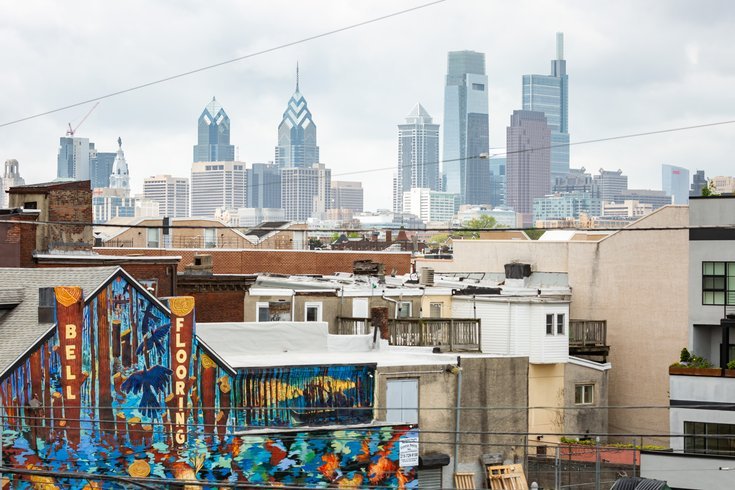 Thom Carroll/for PhillyVoice
Philadelphia residents who live near major highways and industrial areas have higher rates of asthma, a new study from Rowan University shows. Researchers argue urban planning must adapt to account for poor air quality and racial disparities in exposure to respiratory risks.
In the American Lung Association's annual State of the Air report, the Philadelphia region ranked 17th worst in year-round air pollution out of more than 200 metropolitan areas in the United States. Residents who live in the vicinity of industrial land and major highways bear the brunt of the city's poor air quality and have higher rates of asthma, according to new research from Rowan University.
Urban planning and environmental health researchers at Rowan analyzed data from 766 census tracts spanning nine counties in Pennsylvania and New Jersey that cover the Philadelphia metro area. The study sought to trace the connections between air pollution, asthma and the history of redlining laws that led to disinvestment in minority neighborhoods.
MORE: AI chatbot companions could be making adults more lonely, new study finds
Communities with the highest rates of adult asthma are concentrated in places along the Interstate 95 corridor and in predominantly Black neighborhoods impacted by redlining and heavy industrial activity, according to the research.
North Philadelphia's Franklinville and Stanton neighborhoods topped the list, followed by Bartram Village in Southwest Philadelphia and Strawberry Mansion in North Philadelphia. The area surrounding West Chester University in Chester County is the only place outside Philadelphia that landed in the top five for highest asthma rates.
The study evaluated how historical zoning and land use decisions shape exposure to ambient pollution, including soot and other particles that come from a combination of human and environmental causes. Building homes near highways, or vice versa, puts residents at greater long-term risk for respiratory problems compared to areas where there is less traffic and more green space. Exposure to diesel particulate matter from highways is particularly associated with higher asthma prevalence, the study found.
"For urban planners and public health practitioners, our findings underscore the need to address not only environmental hazards in isolation, but also the social and spatial conditions that render certain communities more vulnerable to their effects," the researchers conclude in the study, which was published in the International Journal of Justice and Sustainability.
The study relied on data from a variety of sources. Land use and road data were provided by the Delaware Valley Regional Planning Commission, while demographic data was pulled from the U.S. Census Bureau and paired with historical redlining maps from the University of Richmond's Mapping Inequality project. Asthma estimates were taken from the Centers for Disease Control and Prevention and pollution measures came from the Environmental Protection Agency.
The researchers also found that residents in the most impacted neighborhoods had among the region's lowest rates of high school graduation. The study did not account for individual health factors, such as smoking, or indoor asthma risks. It also did not include data on healthcare access, which is an indicator whether asthma is diagnosed and treated.
Philadelphia's air quality generally has improved since the 1980s, partly due to regulatory policies that reduce particulate matter, but more frequent wildfires that bring smoke from New Jersey and Canada are contributing to an increase in acute periods of poor air quality. Some researchers also warn that the expansion of AI data centers powered by fossil fuels could create new setbacks in air quality.
Compared to last year's report from the American Lung Association, Philadelphia's air quality rank plummeted 11 spots among U.S. metro areas. Nationally, the State of the Air report found 4 in 10 Americans live in places with unhealthy levels of air pollution, including nearly half of children in the United States. The report found people of color are nearly twice as likely as white people to live in areas with dangerous levels of air pollution.
The Rowan researchers say urban development needs to account for air quality impacts early in the planning process for industrial infrastructure, housing and transportation.
"Planners should integrate health impact assessments more robustly into land use planning and zoning reform," the researchers said.