




April 11, 2026
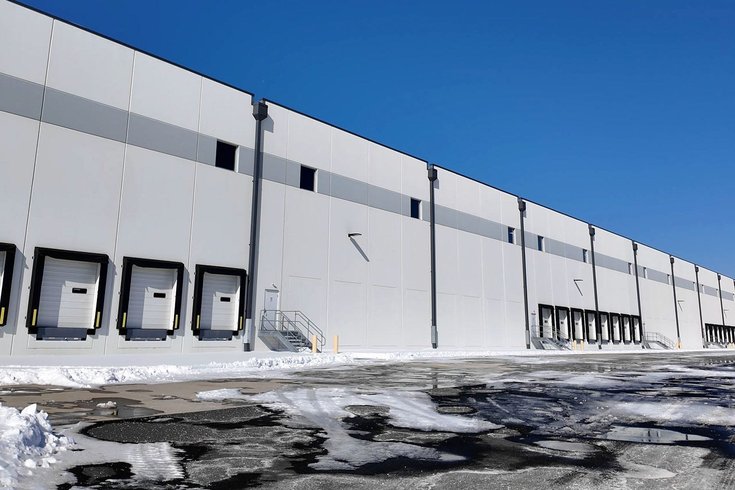 Thomas P. Costello/Imagn Images
The Department of Homeland Security has purchased vacant industrial warehouses around the country as potential sties for detention centers, including the building above on Route 46 in New Jersey.
The U.S. Immigration and Customs Enforcement has decided to appeal state orders stalling two detention centers planned in Pennsylvania.
Meanwhile, host communities’ many questions, including about the facilities’ strain on resources in Berks and Schuylkill counties, go unanswered.
RELATED: N.J. files lawsuit to block ICE detention center in Roxbury Township
ICE wants to use water and sewage systems as permitted for the sites for their prior use as warehouses, according to the appeal filed Wednesday.
State Department of Environmental Protection orders have effectively blocked water and sewage use – even for security personnel to access drinking water or bathroom facilities – until ICE provides the agency with detailed plans, including for expanding infrastructure.
“The orders unreasonably interfere with and encroach upon a federal law enforcement agency’s ability to fulfill its responsibilities of enforcing the nation’s immigration laws,” ICE’s attorney Daniel Wilmouth wrote.
DEP referred to its letters from late March declining ICE’s request to connect to water and sewage systems and declined further comment Thursday, citing litigation.
The 7,500-person facility planned for a former Big Lots warehouse in Tremont Township, Schuylkill County, which has a population of around 300, would likely more than triple the 4,000-person population that currently connects to the sewage system, according to the county Municipal Authority.
Demand for water also would surge – and the area already struggles with its water supply.
A 1,500-person detention center is envisioned for a warehouse in Upper Bern Township, Berks County, which has remained empty since its construction several years ago, according to Spotlight PA.
Pennsylvania officials have evidenced “an antipathy toward ICE,” the agency’s appeal claims, pointing to the orders themselves as well as Gov. Josh Shapiro (D) stating he’d use “every tool at [his] disposal” to prevent the centers from opening.
“Specific plans to develop this concept and implement an increased detention capability are ongoing and not yet finalized,” Wilmouth wrote. “For [DEP] to preemptively issue excessively broad administrative orders that prevent ICE from using any water at all at one site, even for fire prevention or suppression, and from using any water except for fire prevention at the other site, suggests an antipathy towards ICE.”
ICE also argues in its appeal that the DEP orders compromise public safety.
Both properties have ceased to generate tax revenue since the federal government acquired them in January – weeks, locals say, after rumors began to speculate about it – as part of a nationwide buying spree of nearly two dozen possible sites for detention centers.
The 520,000-square-feet Upper Bern facility provided about $800,000 each year for the county, township and school district, combined: $31,000 for the township plus nearly $200,000 for the county and almost $600,000 for Hamburg Area School District.
Losses total nearly $1 million from taking Tremont’s 1.3 million-square-feet warehouse off the tax rolls. The township’s $196,000 hit amounts to nearly half its budget, according to Supervisor Larry Bender.
Pine Grove Area School District would be out more than half a million annually, county officials have said, exacerbating the district’s $1.3 million operating deficit.
ICE floated making a payment in lieu of taxes (PILOT) for “at least” three years during a recent conference call with local officials, County Commissioner Larry Padora said Wednesday.
He said he didn’t know why the offer was pegged to that duration, nor when anything in writing might materialize confirming the PILOT and addressing other concerns.
“These warehouses that ICE [is] doing … are completely and 100% another vile stain on the United States conscience,” said Sarah Monger, of Tremont, during a commissioners’ meeting in March moved to the evening from the typical 10 a.m. start to afford more people the chance to engage on the issue.
Monger was among nearly two dozen people who spoke about the detention center — most, but not all, in opposition — during the public comment portion of the session.
Even those who do support the Trump administration’s deportation push agree: the rural area can’t accommodate the potential influx in demand on not only water and wastewater infrastructure, but also roads, hospitals and first responders.
Neither Tremont Township nor the adjacent borough of Tremont has its own municipal law enforcement. Instead, Pennsylvania State Police provide coverage as well as to Upper Bern.
State Police say they’re working on the Capital-Star’s request for information about planning and coordination thus far with ICE and how that tends to go, in general, ahead of a new facility poised to increase demand.
Jefferson Health’s media relations team, which handles requests for the Lehigh Valley Health Network including Lehigh Hospital – Schuylkill, hasn’t responded to similar requests for planning and coordination information.
Padora has said he wants a memorandum of understanding addressing not only the PILOT, but also ensuring any infrastructure expansions and their future maintenance don’t increase costs to other ratepayers.
The MOU also should provide for tours by local officials including commissioners as well as firefighters, paramedics and others, Padora has said.
In response to the Capital-Star’s questions about progress on a written agreement with local officials, engagement with first responders and other details, a Department of Homeland Security spokesperson wrote:
“As with any transition, we are reviewing agency policies and proposals. As Secretary Mullin said in his confirmation hearing: ‘I will work with the community leaders and make sure that we are delivering for the American people what the President set out … We want to work with community leaders. We want to be good partners.’”
DHS previously provided the same response to the Capital-Star asking whether the agency would appeal the DEP orders.
Deadlines for the agency’s environmental appeal, discovery and negotiation process run through Nov. 4, according to a prehearing order from Environmental Hearing Board Chair and Chief Judge Steven C. Beckman.
The order sets out other deadlines and turning points in the interim that could drag out the matter or bring it to a resolution faster, depending on how ICE and DEP choose to proceed.
Pennsylvania Capital-Star is part of States Newsroom, a nonprofit news network supported by grants and a coalition of donors as a 501c(3) public charity. Pennsylvania Capital-Star maintains editorial independence. Contact Editor Tim Lambert for questions: info@penncapital-star.com.