




August 26, 2025
 Jon Tuleya/for PhillyVoice
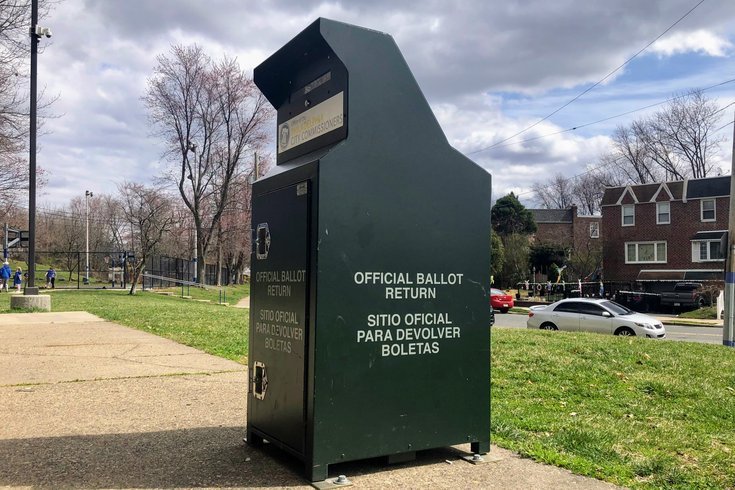
A federal appeals court ruled Pennsylvania can no longer toss out mail-in ballots that contain inaccurate dates on their return envelopes. The three-judge panel said the state's requirement doesn't have a valid purpose that justifies disqualifying votes. Above, a mail-in ballot drop-off box.
Pennsylvania mail-in ballots submitted with inaccurate dates written on the envelopes can no longer be tossed and excluded from election results, a federal appeals court ruled Tuesday in a case that has divided Democrats and Republicans in the battleground state.
The U.S. Court of Appeals for the Third Circuit unanimously decided that throwing out incorrectly dated mail-in ballots is unconstitutional, citing a lack of justification for the state to disqualify the rights of thousands of voters who make the error when casting their ballots. The decision upholds a prior ruling by a federal judge in Pittsburgh earlier this year.
MORE: Pennsylvania and New Jersey press tech companies to crack down on deepfake pornography
Pennsylvania law requires voters to write the date on the return envelope for mail-in ballots when putting them in the mail. Some voters forget to follow instructions or write incorrect dates, which has led to votes getting tossed by election officials each year since 2020. In last year's election, about 4,500 votes were thrown out because of errors with dates on envelopes. That was down from about 10,000 in the general election in 2022 and roughly 17,000 in the 2023 primary election. The state redesigned the ballot ahead of last year's primary.
Multiple lawsuits have challenged Pennsylvania's legal standing to throw out incorrectly dated mail-in ballots, but most higher courts have instructed election officials to follow the state's laws despite the wave of litigation.
Gov. Josh Shapiro (D), who supported the latest legal challenge, praised Tuesday's decision and said it will prevent "meaningless errors" from costing people their right to vote.
In the 55-page opinion, the three-judge panel concluded that the date requirement does not serve a legitimate government purpose.
"(We) are simply unable to discern any connection between dating the declaration on return envelopes and detecting and deterring voter fraud,” Judge D. Brooks Smith wrote in the opinion.
Groups that filed the lawsuit included the American Federation of Teachers of Pennsylvania, the League of Women Voters of Pennsylvania, the NAACP, and the Democratic campaign arms of the U.S. House and Senate.
“Today’s decision by the court is a victory for free and fair elections, protecting Pennsylvanians’ constitutional right to participate in our democracy," Democratic Congressional Campaign Committee executive director Julie Merz and Democratic Senatorial Campaign Committee executive director Devan Barber said in a joint statement. "It’s also a reminder that the Republicans’ playbook for the midterms is to disenfranchise voters across the country because they know they can’t win on their failed governing record."
Republican Party officials at the state and national levels — in addition to GOP campaign arms in the U.S. House and Senate — stood against the lawsuit and argued that the date requirement helps ensure election security. Republicans did not immediately say whether they plan to appeal Tuesday's decision, which could ultimately send the case to the U.S. Supreme Court.
The ruling comes in the week after President Donald Trump said he would seek to end mail-in ballots ahead of next year's midterm elections, claiming they are subject to fraud and tampering. In past elections, Democrats have outnumbered Republicans in the use of mail-in ballots — but Republican voters took greater advantage of them last November than in years past.
The Committee of Seventy, the nonprofit government watchdog based in Philadelphia, said last week that Trump's attacks on mail-in ballots lack merit. Trump falsely claimed there was widespread voter fraud and cheating in Philadelphia during last year's presidential election.
"Whether the intention is to lay the groundwork for rejecting results in the event of a loss, or to exploit states where one party controls all branches of government to push a federal agenda, the facts are the facts: our elections are secure, mail-in voting is secure, and election administration must remain in the hands of the states," the group said.
Legal scholars have said Trump can't put an end to mail-in ballots simply by issuing an executive order. The Constitution gives states the power to set their own rules for running elections, and only Congress would have the authority to override such rules specifically for congressional elections.
Shapiro said Pennsylvania's elections will not be impacted by the Trump administration's efforts to get rid of mail-in ballots.
"Donald Trump can sign whatever executive order he wants," Shapiro said at an event last week. "It will have absolutely no bearing on our elections here in Pennsylvania, and we will once again have free and fair, safe and secure elections led by Democratic and Republican clerks of elections in each of our 67 counties."