


February 04, 2026
 Thomas Hawthorne/Imagn Images
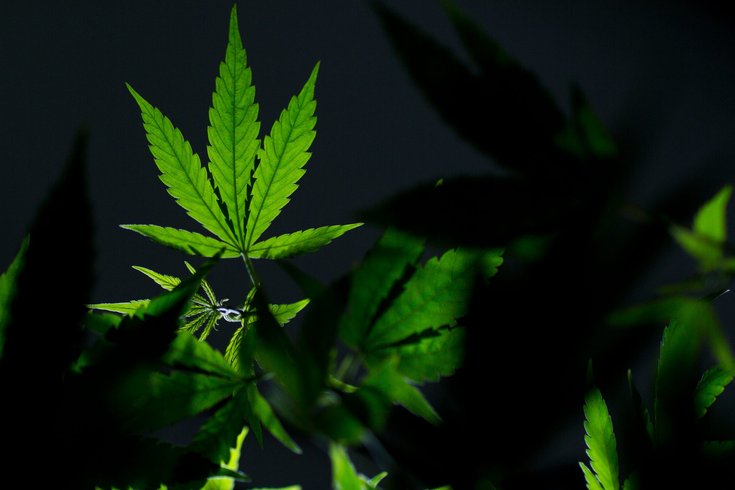
Marijuana advocates believe legalization in Pennsylvania again could be a long shot in 2026, but they also see reasons for optimism for a path forward in Harrisburg.
In his annual budget proposal Tuesday, Pennsylvania Gov. Josh Shapiro once again urged the state legislature to send him a bill to legalize recreational marijuana for adults.
"Everyone knows we need to get this done, so let's come together and finally get it over the finish line," Shapiro said.
MORE: Gaming company is seeking nominations for landmarks to include in Philly edition of Monopoly
Shapiro's proposal echoes past calls for the divided legislature to reach consensus on marijuana legalization. With the exception of West Virginia, every state bordering Pennsylvania now has an adult-use cannabis program generating millions of dollars in annual tax revenue and saving money through criminal justice reform. Shapiro's budget estimates cannabis would bring Pennsylvania $729.4 million in the first year of implementation from taxes and one-time licensing fees.
"Pennsylvania remains stuck in place, without commonsense protections and losing out on critical tax revenue and new business to neighboring states," the Shapiro administration wrote in its budget request to lawmakers.
Cannabis advocates, who have spent years pushing for reform in Pennsylvania, shared mixed feelings about the state's outlook in 2026.
"We are still spinning our wheels in Pennsylvania. I don't see the traction that's required to advance the legislation," said Chris Goldstein, regional director for the National Organization for the Reform of Marijuana Laws. "... With the split between the Senate and the House, the whole strategy for legalization at this point is so far apart. I don't think it's ever been further apart."
Last year, there appeared to be momentum in the legislature. The bill that garnered the most attention came from the Democrat-controlled House. State Reps. Rick Krajewski (D-188) and Dan Frankel (D-23) proposed legalizing marijuana to be sold at state liquor stores. The House passed the bill without any Republican support, but it was quickly killed in the Senate's Law & Justice Committee. The Senate is controlled by Republicans.
"It's kind of created some lines in the sand for what next steps might look like," said Meredith Buettner, executive director of the Pennsylvania Cannabis Coalition, an industry trade association. "I think that bill is still an impediment to what we're trying to get to because of how it's been used politically. I don't believe we're going to see a state store bill move in Pennsylvania."
Goldstein called the proposal an example of House Democrats trying to "reinvent the wheel" for marijuana legalization instead of refining what other states do. The biggest flaw in the state store model, he added, is that it would create barriers for entrepreneurs to enter the most accessible part of the industry on the retail side.
"The other sides of cannabis — manufacturing, processing, growing — all of that stuff is at a scale outside of the expertise of most entry-level people," Goldstein said. "... That's what the Democrats did last year, and it was a really silly mistake."
Other headwinds surrounding cannabis could help move the needle in Pennsylvania.
Last fall, the federal government amended the law governing the intoxicating hemp products that have proliferated in smoke shops and gas stations — especially in states where marijuana remains illegal. In the Philly suburbs, a group of district attorneys released a grand jury report accusing smoke shop owners of misleading their customers about the potency of hemp-derived THC products. The report said the shops had been exploiting a lack of oversight to sell "straight-up marijuana" disguised as a legal alternative with no regulation.
In December, President Donald Trump signed an executive order to expedite the federal reclassification of cannabis as a Schedule III drug under the Controlled Substances Act. The move, initiated by the Biden administration, would recognize the pharmaceutical value of cannabis and soften the federal government's stance on issues from medical research to industry taxes.
"The signals that are coming out of Washington are that it is going to happen," Buettner said. "... I think that has kind of helped in changing the tone of the conversation here in Harrisburg."
Goldstein believes consumers suffer the most from a murky legal landscape between states and the federal government.
"It's dangerous to have a policy that relies on such ambiguity and lack of scientific reality," he said. "We're seeing that with the hemp derivatives and stuff like that. It's a minefield for consumers. How do you know what's safe?"
State Sen. Sharif Street (D-3), a longtime marijuana reform advocate who is now running for Congress, praised the push to reschedule cannabis in December and said Pennsylvania has "a clear opportunity" to move forward with legalization. Street co-sponsored a bipartisan legalization bill last year with Sen. Dan Laughlin (R-49) that called for a private retail market similar to models in other states.
Street and Laughlin could not be reached for comment on whether they plan to reintroduce their bill in the Senate this year.
Goldstein lamented that nearly 8,900 people were arrested for marijuana possession in Pennsylvania last year despite Philadelphia and dozens of other cities decriminalizing cannabis over the last decade-plus.
"I'd like to see the governor really start to look at the daily injustices we can actually solve in Pennsylvania," he said.
Sooner than later, Buettner expects lawmakers on both sides of the aisle to embrace the revenue-generating potential of cannabis. As Shapiro faces re-election and other lawmakers vie for open seats in the legislature, marijuana could be a powerful political tool for connecting with voters across the spectrum. But it remains to be seen whether all of the talk turns into action.
"I am optimistic that something can happen," Buettner said. "I think the conversation is going to continue to percolate in Harrisburg throughout the year."