




March 06, 2026
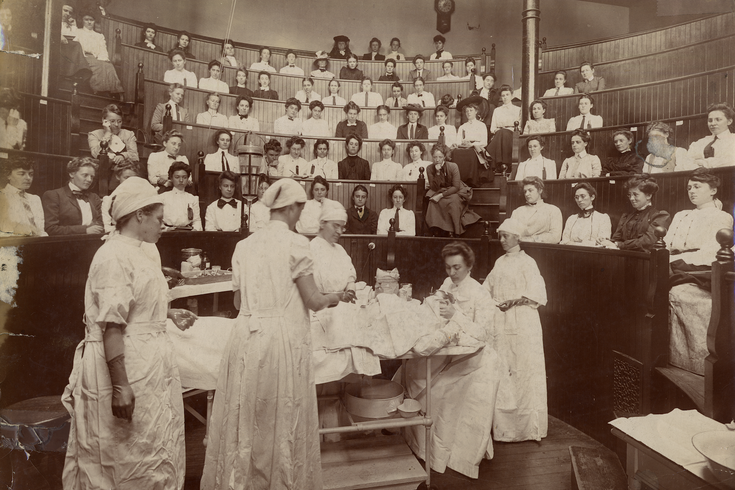 Provided Image/Legacy Center Archives & Special Collections, Drexel University
The Woman's Medical College of Pennsylvania, established in 1850, was the first degree-granting medical college for women in the world. The photo above shows the operating amphitheater around 1903.
The Woman's Medical College of Pennsylvania, the world's first medical school for women, graduated its first class in 1851. Among the graduates was Dr. Hannah E. Myers Longshore, who became the first female physician to open a private practice in Philadelphia.
In her decades as one of the first women in the United States to practice medicine, Longshore became a staunch advocate for reproductive health and the abolition of slavery. She also cared for hundreds of families every year — more than most other physicians at the time. But she frequently was confronted by prejudice from male physicians and pharmacists who refused to fill her prescriptions.
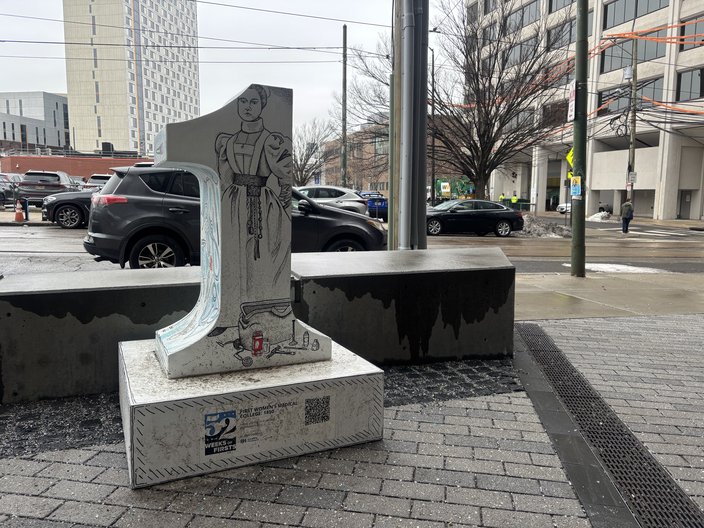
Longshore's story is included in an interactive exhibit that highlights the groundbreaking Woman's Medical College of Pennsylvania, one of four "firsts" that are being championed in March as a part of the Philadelphia Historic District 250th Committee's yearlong "52 Weeks of Firsts" program.
Each Saturday, a different invention, trend or significant contribution with Philly roots is being celebrated through educational events called "Firstivals." These events each include family activities, giveaways, music, entertainment and stories told by Once Upon A Nation actors who highlight people like Longshore.
The Woman's Medical College of Pennsylvania was established in 1850 by a group of Quakers, including Longshore's brother-in-law Joseph, who believed that women had the right to a medical education. The school welcomed thousands of students from around the world, providing them opportunities to attend clinical demonstrations, perform research and teach other students in a hospital setting.
The institution "provided education for women at a time when there was little support to do so, laying the foundation for women physicians to impact the quality of health care and research today," Margaret Graham, director of the Legacy Center: Archives & Special Collections at Drexel's College of Medicine said in a statement. "Women came from all over the world to train at WMCP, often returning home to serve their communities, and ultimately representing advancements in care and leadership in the profession."
Students frequently were subjected to the hostilities of their male colleagues. In 1869, a group of women were harassed, verbally abused and spit on by male medical students during a lecture at Pennsylvania Hospital in what became known as the "Jeering Incident." The episode became synonymous with women's struggle to be accepted in the medical field and was documented in the personal accounts of students like Anna Broomall, who graduated in 1871.
"When we turned up at the clinic … pandemonium broke loose," she said in a 1926 interview. "The present generation should be given to know what such women have done for all other women."
The college began admitting men 120 years after its founding, and it was renamed the Medical College of Pennsylvania. It was re-established as the Drexel University College of Medicine in 2002.
The Woman's Medical College of Pennsylvania, the first medical college for women in the world, is among four Philadelphia 'firsts' being celebrated in March.
Drexel will celebrate the medical school's history during a "firstival" on Saturday, March 14, at its Health Sciences Building at 60 N. 36th St. It runs from 11 a.m. to 1 p.m.
The other three "firstival" events happening in March are listed below. They all run from 11 a.m. to 1 p.m.
• First flower show (1829): The Philadelphia Flower Show, currently in its 197th year, was the first horticultural display of its kind in the world. It will be celebrated Saturday at the Philadelphia Marriott Downtown at 1201 Market St.
• First match folder (1892): Designed by patent lawyer Joshua Pausey, the match folder was created in Philadelphia and paved the way for the invention of the matchbook. The Science History Institute at 315 Chestnut St. will commemorate this invention on Saturday, March 21.
• First medical school in America (1765): Prior to the establishment of the medical professorship at the College of Philadelphia, doctors in the American colonies had to be trained via apprenticeships or overseas. The Perelman School of Medicine at the University of Pennsylvania at 3400 Civic Center Blvd. will honor the College of Philadelphia on Saturday, March 28.
The full list of Philadelphia's firsts for the year — and the events celebrating them — can be found on Visit Philadelphia's website.