




April 06, 2026
 Provided Image/Oxygen TV
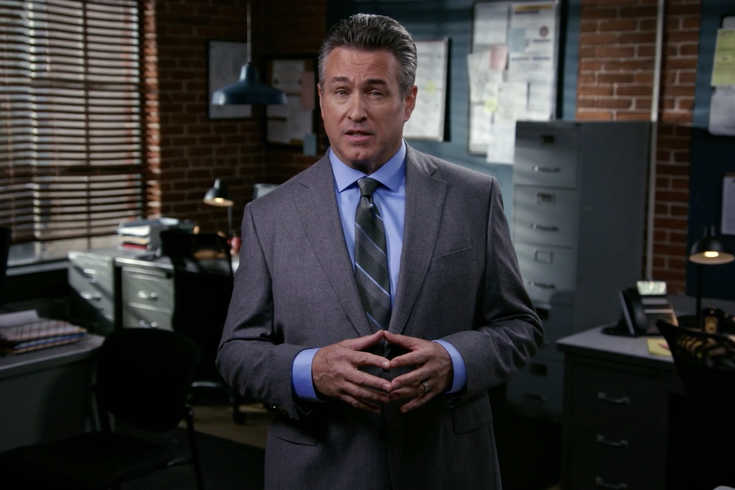
Oxygen TV's true crime series 'Philly Homicide' will return for a second season on April 11. Host Chris McMullin, a retired Bensalem police detective, says the show is a testament to the challenges of police work and the strength of families impacted by violent crime.
Retired Bensalem detective Chris McMullin, host of the Oxygen TV series "Philly Homicide," agreed to be the voice of the true crime show on one condition before its first season premiered two years ago.
"We don't over-embellish," McMullin said. "We just tell the story organically and let people see the process, at least a glimpse into it. That was something that was very important to me — for families and loved ones of the victims, and even the cops, because it takes a toll on you."
"Philly Homicide" returns April 11 for a second season that delves into the investigations of 10 high-profile crimes across the region, from the outskirts of the city to parts of South Jersey. Many of the cases trace ties between criminal activity in Philly and victims targeted in the suburbs. Several involve betrayal, revealing the methods investigators used to peel back layers of deception by the perpetrators.
"A lot of times, you're going to ask them questions and you already know the answers, but you want to see what they're going to say," McMullin said. "For me, situations like that were always stressful, but they have to be done."
Episode 1 details the 2011 murder of John "Tony" Dillard, a manager at the former Germantown Cab Co. Dillard, 57, was found dead inside a company cab that had been parked in a secluded lot in Chester. His body was covered in trash bags and he had severe head trauma. An autopsy determined he had been fatally stabbed in the neck with a pen that punctured his jugular vein.
Dillard was engaged to a younger woman, Shawna Jordan, who was having an affair. The day he was killed, Dillard accompanied Jordan at a traffic court hearing in Philadelphia. Detectives reviewed security footage and spotted a man, later identified as Shemar Alexander, who had followed the couple into the court building.
Months passed before DNA evidence from the pen could be connected to Alexander, who attempted to lead investigators astray. Alexander claimed to be Jordan's cousin and said he had owed a drug debt to one of her jealous former lovers, who was in prison. Under duress, Alexander said he helped carry out a hit on Dillard to avoid making the payment.
But detectives found photos on social media that showed Alexander had been romantically involved with Jordan, presenting a clear motive for the killing. They asked Alexander why the cab was left in Chester, where crime rates had been surging at the time.
"He said, 'Well, somebody told me Chester detectives don't solve homicides,'"Joseph McFate, the former Chester detective who led the case, says in the episode. "And I looked at him and I said, 'Guess what? We solved this one.'"
Alexander was found guilty of first-degree murder and related offenses at his 2014 trial. He was sentenced to life in prison. Police suspected Jordan was also involved in Dillard's murder, but lacked evidence to pursue charges against her.
Dillard's daughter, Erin, spoke highly of her father and said she hopes he can be remembered as more than a homicide victim.
"They are not what happens to them. They are people," she says in the episode. "And he was great."
McMullin knew he wanted to be a police officer when he was 7 years old and first saw the inside of a cop car in North Wildwood. He started out as a dispatcher for the Jersey Shore community at 19 years old, became a seasonal officer and then joined the Philadelphia Police Department in 1990. He went on to spend decades at the Bensalem Police Department.
McMullin, 56, said his law enforcement career was driven by the pursuit of justice for families.
"Everything is for the victims and their families," he said. "You can never, unfortunately, bring somebody back. The best thing you can do is do the most thorough investigation possible to try and bring justice."
"Philly Homicide" draws on interviews with the detectives, prosecutors and news reporters who followed crimes that often took years to solve. Parts of each hour-long episode have brief reenactments and feature news footage from the time of the investigations.
Episode 2 unravels the case of April Kauffman, the South Jersey radio host and advocate for veterans who was fatally shot at her home in Linwood, just outside Atlantic City, in 2012. She was 47. Kauffman's husband James, a well-known endocrinologist, had lied to her for years about being a Vietnam war veteran. He was also tied up in a pill mill scheme involving the illegal sale of opioids to the Pagan's motorcycle gang, whose members carried out the hit on April to protect Kauffman's reputation and fortune in the event of a divorce.
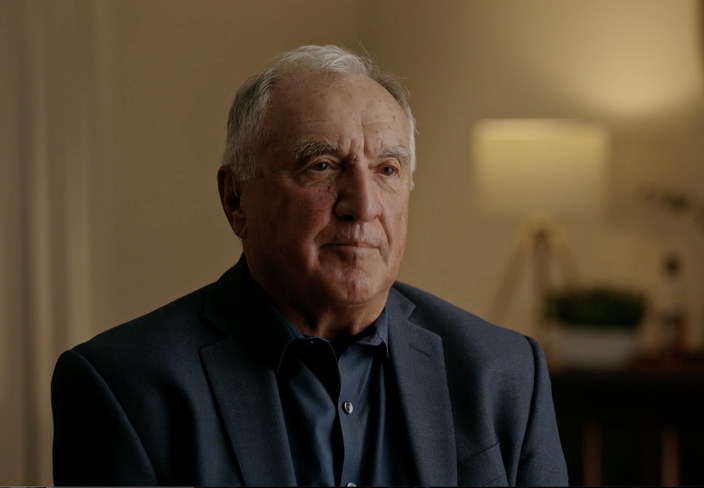
Author and former Philadelphia Inquirer reporter George Anastasia, an expert in organized crime, talks in the episode about Jim Kauffman's involvement in his wife's death. Kauffman was 68 when he took his own life in prison in 2018, weeks after he was charged with hiring the hitman who's now serving a life sentence.
"(The Pagan's) saw Kauffman as a guy who, a part of him wanted to be a biker, wanted to be a tough guy," Anastasia says. "But he couldn't really be it, so he did it vicariously by being around those guys, by being part of the pill mill. It might go back to the whole fake military thing."
Author and former Philadelphia Inquirer reporter George Anastasia is featured in the second episode on Season 2 of 'Philly Homicide,' which covers the investigation into the 2012 murder of April Kauffman in Linwood, New Jersey.
In Episode 3, the series examine a home invasion in North Wales, Montgomery County, that led to the death of Korean business owner Robert Chae in 2009. Chae was an immigrant who owned a beauty supply store at Suburban Station in Center City. He was shot, duct-taped, tossed in the garage and left to die from suffocating on his own blood, an autopsy found. The thieves stole about $20,000, jewelry and other valuables from a safe at the suburban home. Chae's family survived.
Detectives from across the region got involved in the homicide investigation, which followed a spate of other robberies targeting Asian business owners. The case relied on cellphone tower data to determine who had been scoping out Chae's home, and detectives uncovered a disturbing connection to one of Chae's relatives who stood to benefit from the break-in.
Despite the painful memories that true crime shows surface, McMullin said he's been gratified by family members and friends of victims participating in "Philly Homicide."
"It's gotten back to me that they felt it was almost a cathartic process for them because it gives them a platform to talk about their loved one that a lot of people can listen to and see," McMullin said.
Homicides have been declining across the United States in recent years following a spike in cases during the COVID-19 pandemic.
Since Philadelphia recorded a high of 562 homicides in 2021, the city has seen fewer cases in each of the last four years. There were 222 homicides in the city in 2025, the lowest total since 1965. This year's 24 homicides through April 3 are down more than 50% compared with the same period a year ago, according to police statistics. Chester reported notable drops in violent crimes last summer, and Camden had no homicides this winter for the first time in 50 years.
Progress has been attributed to a range of factors, from stabilizing social conditions after the pandemic to declining gun sales in many states. The growing prevalence of home security cameras, improvements in law enforcement techniques and advances in DNA analysis also are believed to deter crime. McMullin thinks public awareness of how crimes are solved makes a difference, too.
"Do I think it's because of technology? In some cases, yes, it probably is," McMullin said. "People are probably seeing it through shows like ours and other ones like ours. Anybody that is conscientious and watches the news and sees what goes on, law enforcement has a lot of abilities that at one time they didn't have to help zero in on the responsible parties. I do think that's a deterrent, on some level."
'Philly Homicide' returns to Oxygen TV on April 11. The series can be viewed using the Oxygen TV app with a cable provider or on platforms including Hulu + Live TV, Sling TV, YouTube TV and Directv Stream.
With fewer active cases, McMullin is hopeful that more police departments will take the time to reopen cold cases and invest in using new technology for breakthroughs in unsolved crimes. McMullin was instrumental in bringing justice to the family of 14-year-old Barbara Rowan, a Bensalem girl who was raped and killed in 1984. McMullin pushed to reopen the case, ultimately leading investigators to two men who were charged in 2015 and convicted two years later.
Together with his wife and with other detectives, McMullin started the nonprofit Cold Case Initiative in Bucks County a few years ago to raise money for advanced DNA analysis of stored evidence.
Two years ago, the group was able to identify the remains of Edward Nece, a man whose body was found on the banks of the Delaware River in Bensalem in 2003. His gravestone at a Doylestown cemetery, once marked with the name "John Doe," now bears the man's name. The identification was made without the cost and legalities of having to exhume Nece's remains.
In October, Cold Case Initiative helped identify the remains of Mary Marlovitz, a Pennsylvania woman whose remains were found in an Arizona desert in 1973. The group has several other active cold case investigations.
Working on cold cases is expensive, time-consuming and emotionally difficult work, McMullin said, but he compared the commitment to a well-known story written by anthropologist Loren Eiseley. In the "The Star Thrower," part of a collection Eiseley published in 1969, an old man spots a younger man throwing starfish into the ocean after droves of them washed ashore.
The old man muses that his counterpart can't possibly make a difference, but the young man leans down and tosses another starfish into the receding tide.
“It made a difference for that one," the younger man answers.
Every time he picks up a cold case, McMullin remembers that tale.
"I've solved several of them, and I can tell you that we made a very positive difference to those families," he said.