






March 02, 2026

 CLIFFORD OTO/Imagn Images
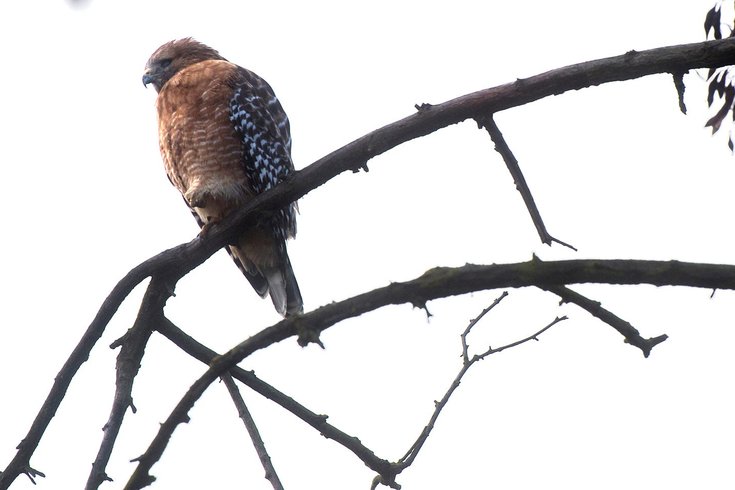
The skills needed to become an expert birdwatcher are associated with better lifelong brain health in regions responsible for attention, perception and memory, a study shows. Above, a red-shouldered hawk is shown on a branch at Lodi Lake in California during a birdwatching event held by the National Audubon Society.
Birdwatchers who can spot and identify species may have an edge in slowing cognitive decline as they age, according to new research on the growing hobby.
A study out of Canada examined the brains of expert and novice birders to see whether the structure of their brains showed differences in regions tied to attention and perception. Those who had the ability to identify birds with the highest accuracy were found to have more tissue density in these areas, suggesting their memory and recognition skills help keep their brains more youthful.
"Our study suggests that brain changes that are associated with developing specific skills persist well into older age, so this at least opens the possibility that types of cognition involved in that skill will benefit across the lifespan," Eric Wing, the study's corresponding author, told Medical News Today.
During the study, Wing was a postdoctoral fellow at Toronto's Rotman Research Institute, one of the world's leading centers for cognitive neuroscience, memory and aging. The birding study sought to build on researchers' understanding of neuroplasticity, the process that leads to changes in brain structure as people develop specialized skills.
The study doesn't offer proof that birdwatching specifically offsets cognitive decline, but it does shed light on how the brain is shaped by mastery of a subject. The study, published in the Journal of Neuroscience, concluded that knowledge acquisition might mitigate age-related decline in some areas of the brain.
"It gives us a window into how these regions might be important for developing the expertise in the first place," Wing told NBC News.
The study adds to a larger body of research backing the advantages of spending time outdoors, which is associated with improved mental, physical and cognitive health across dozens of studies analyzed by the Journal of Global Health.
Birdwatching is a growing pastime for nature lovers in the U.S. The National Audubon Society, which is dedicated to protecting bird habitats and promoting education, says more than 1 in 3 adults participates in the hobby, and NPR reports a growing number of children have become interested in learning about birds.
In the Philly area, there are numerous clubs and organizations dedicated to birding at all levels of expertise. BirdPhilly, an initiative of the Delaware Valley Ornithological Club and Drexel University's Academy of Natural Sciences, runs field trips and guided nature tours across the city in partnership with parks. Awbury Arboretum in Germantown, Morris Arboretum & Gardens in Chestnut Hill and John Heinz National Wildlife Refuge at Tinicum, near the airport, also have field guides, bird walks, classes and events tailored for birdwatching.
For the study, the researchers recruited 58 people who were split evenly into two groups. The expert birdwatchers, ages 24 to 75, were recruited from ornithological clubs in the Toronto area. The novice group, ages 22 to 79, drew from the same clubs along with a wider set of outdoor hobby groups.
When presented with screening tests on bird familiarity, the experts predictably outscored the novices with an average accuracy of 99.67% compared to 37.32%. The experts were adept at naming birds that were local to the Toronto area and non-native species.
To study the birdwatchers' brains, researchers had them undergo two types of MRI scans as they completed matching tests for various bird species. Both groups were shown an initial photo of a bird and then told to match the species in a multiple choice exercise with different photos of birds.
The diffusion MRI, which measures the movement of water molecules in brain tissue, found the experts had denser brain tissue than novices in areas connected to working memory, spatial awareness and object recognition. Functional MRI, used to observe which brain regions are most active during certain tasks, showed that the experts' brains also were most engaged in the same places that were structurally different from novices while doing the matching exercise.