



June 30, 2026
 Clam Lo/Pexels.com
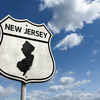
Collingswood may give voters a chance to decide in a November referendum whether the Camden County borough should allow liquor sales. The community has been a dry town for more than a century.
Collingswood could become New Jersey's latest dry town to abandon local regulations that prohibit alcohol sales in the borough.
Leaders in the Camden County community are considering steps that would make the issue a ballot referendum for residents to decide in November. The borough has been dry for more than a century with strict liquor laws tracing back to its Quaker roots. Opening up liquor licenses for Collingswood restaurants is viewed as a possible revenue source for the borough.
Collingswood has a population of about 14,400, according U.S. Census data, and the state only allows one liquor consumption license to be issued per every 3,000 residents in a municipality. Liquor distribution licenses are capped at one per 7,500 residents. At most, the borough could be eligible for four consumption licenses, whose fees and annual renewals could bring in thousands of dollars each year.
The three-member Collingswood Board of Commissioners will need to adopt a resolution by Aug. 21 to get a referendum onto the ballot for borough residents in the November election. Passage of a resolution requires a public petition with signatures from at least 15% of voters who participated in the last general election.
Collingswood currently has one brewery, the Raccoon Taproom by Swedesboro Brewing Co., that's allowed to operate in the borough with a limited brewery license under state law. Collingswood passed a local ordinance in 2015 allowing microbreweries to operate and sell beer on-site, but no other businesses have opened with that status.
New Jersey still has about 30 dry towns, but several have passed laws dropping the status in recent years.
Two years ago, voters in nearby Haddon Heights approved a referendum lifting the borough's 120-year ban on alcohol sales. Haddon Heights is eligible for two liquor consumption licenses. The borough did not find any businesses willing to pay a $400,000 minimum bid for the first license. It will hold a public auction on Sept. 15 with a $200,000 minimum reserve bid.
Audubon Park and Haddonfield are the only other dry towns in Camden County.
In Bergen County, Rutherford voters approved a ballot measure in 2020 to end the town's 115-year-old ban on liquor sales. Rutherford's first liquor license was issued to a restaurant in 2023.
And in Burlington County, Moorestown voters approved a 2011 referendum to allow liquor sales. The measure sparked controversy and legal challenges. More than a decade passed before Moorestown got its first license, which was awarded to the liquor store Super Buy Rite that opened at the Moorestown Mall two years ago. There are still no liquor sales outside the mall.
Other dry towns, like Ocean City in Cape May County, have doubled down on their status. Lawmakers in the shore town passed a resolution two years ago reaffirming the city's prohibition on alcohol sales amid speculation about the future of the shuttered Gillian's Wonderland Pier amusement park on the boardwalk.
New Jersey has made a number of liquor law reforms to address inefficiencies and make it easier for businesses to operate in different categories. A state law passed two years ago expanded the availability of liquor licenses at shopping malls and targeted inactive licenses, creating new requirements for them to be sold when they have lapsed for two years. The reforms also included easing restrictions on how breweries, distilleries, cideries and meaderies can do business.