



December 05, 2025
 Thom Carroll/For PhillyVoice
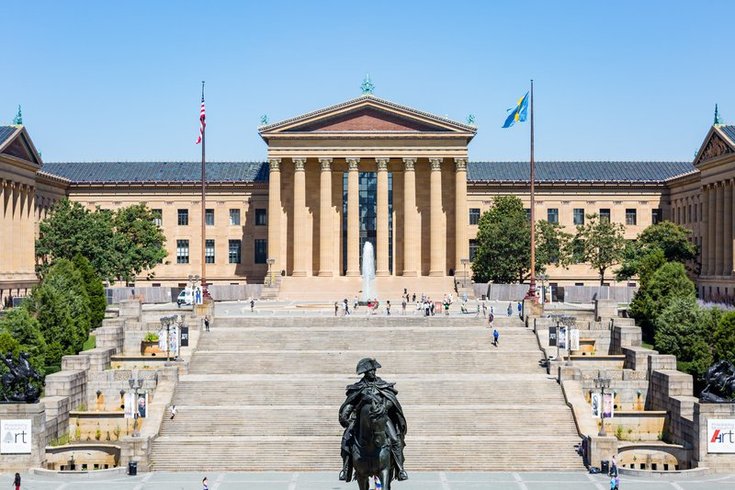
Frank Gehry, the renowned architect who died Friday at 96, once wanted to remove part of the Philadelphia Art Museum's Rocky steps to install a 24-foot window.
Nine years after Frank Gehry was hired to redesign the Philadelphia Art Museum the renowned architect made a radical proposal to alter the building's iconic Rocky steps.
Among his plans to renovate nearly 90,000 square feet of space inside the museum, which were revealed in 2014, Gehry wanted to remove a portion of the East Terrace steps, about halfway up, and install a 24-foot window. That structure would have become the east-facing wall of an new gallery and provided a view the Philadelphia skyline for the visitors who perused the space.
Gehry, who died Friday at 96, said the initial idea came from board member Mark Rubenstein, and it was just one of many options for the space.
"We're trying to be discreet, and we're still studying this," Gehry told the Inquirer in 2014. "There are 10 different ways to do it. It's not a done deal by any means. It's something we resisted doing. But it's powerful, because in one simple move it changes the character of the galleries."
Museum leadership supported the bold change to the steps, but much of the public and "Rocky" enthusiasts opposed altering the popular attraction. A petition to "Save the Rocky Steps" collected 1,400 signatures.
"It's stupid, of course – it's a movie – but the reason the Art Museum steps are vibrant is because of all the tourists who run up them, whether they enter the museum or not," Dan McQuade wrote in Philadelphia Magazine. "Would that change by completely redoing the steps?"
Gehry was hired in 2006 for the art museum redesign project. His vision for changes to the steps that overlook the Ben Franklin Parkway and Eakins Oval were not part of the renovations completed in 2021, but he left his mark on the structure. His design, known as the museum's Core Project, included rebuilding the West Terrace and adding the Williams Forum activity space. He also unearthed a 640-foot corridor, called the Vaulted Walkway, which hadn't been publicly accessible for 50 years.
Of his plan for the museum, Gehry said in 2017 that all he had to do was "follow the yellow brick road" and that the structure "showed you what you could do." His renovation, though expansive, quietly highlighted the building's original design while adding accessibility upgrades and functionality.
"I don't think you need architectural flourishes," Gehry told the Inquirer. "I like that you'll pass by and not know Frank Gehry was there."
In addition to the Philadelphia Art Museum, Gehry was known for designing famous structures around the world, including the Guggenheim Museum Bilbao in Spain and the Walt Disney Concert Hall in Los Angeles. He was among the earliest architects to use computers to create his designs.
Gehry was born in Toronto and became a U.S. citizen in 1950. He spent most of his life in California. In 1989, Gehry won the Pritzker Architecture Prize, which recognized all the work of his career to that point. The jury that selected Gehry for the award wrote that his architecture "reflects his keen appreciation for the same social forces that have informed the work of outstanding artists through history, including many contemporaries with whom he often collaborates."