





January 19, 2026
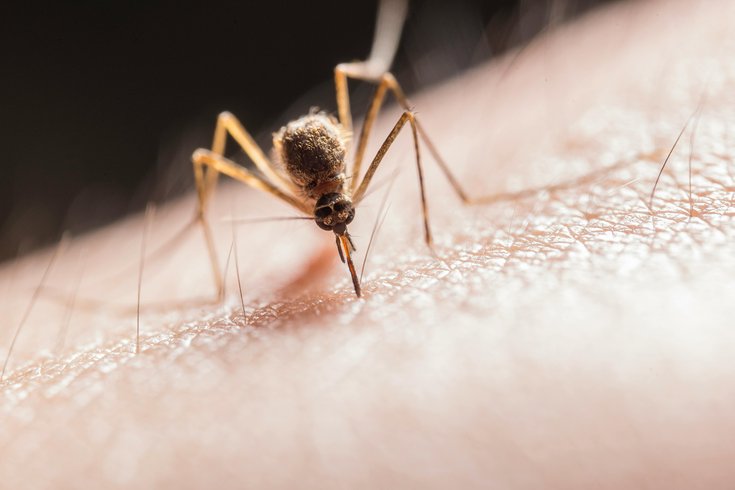 Jimmy Chan/Pexels.com
The needle-like proboscis that mosquitoes use to bite through skin can function as a dispensing nozzle for 3D printing, according to researchers from Drexel University and McGill University in Montreal.
Mosquitoes are responsible for more than a million deaths worldwide every year through the transmission of viral diseases like malaria and dengue. Their bloodsucking ways leave itchy bumps, they relentlessly raid personal space and their high-pitched buzzing is insultingly menacing. They might be the most hated living creatures on the planet.
Despite numbering in the trillions, mosquitoes serve virtually no beneficial purposes for human beings outside of a lab. That may change thanks to a collaboration between scientists at Drexel University and McGill University in Montreal.
MORE: Wawa's shelfless, all-digital store at Drexel University to close Jan. 21
A November study published in the journal Science Advances details how the mosquito's proboscis — the needle-like tube females use to penetrate the skin — could be a plentiful and cheap source of nozzles for 3D printing machines. The study demonstrated that the structures are capable of precision fabrication on a microscopic scale, offering hope that they can become tools in the fields of bioprinting and regenerative medicine.
The researchers stumbled upon this potential several years ago during an attempt to find new ways to prevent mosquito bites.
Megan Creighton, an assistant professor at Drexel's College of Engineering, was a Ph.D. student at MIT working alongside Changhong Cao, a materials scientist who now teaches at McGill. They were developing a topical cream capable of impeding mosquito bites.
"You get this film of nanoparticles, or microparticles, on your skin and it would physically inhibit a mosquito from biting you," Creighton said.
During their research, Creighton and Cao took atomically thin measurements of how a mosquito's proboscis deflects from surfaces at varying levels of force. Their experiments tested a cream made with boron nitride, a compound used in many cosmetic products for its mix of strong and soft properties. Working with mosquitoes revealed the intricacy of the proboscis.
"You start to appreciate just how much sophistication is in these animals — natural structures in general," Creighton said. "You have this highly, beautifully engineered tube structure for fluidic channels — blood and saliva flow through it. In the original design, we were trying to prevent bites, and we realized how effective this thing is. How do we use this to our advantage?"
Nozzles for 3D printing are usually made of glass that's been heated to form a fine point, allowing the printing material to pass through it and render details as thin as 40 microns — roughly half the width of a strand of human hair. The tips are fragile and cost about $80 apiece to produce. Researchers said more than 4 billion tips are used in the United States every year.
“Mosquito proboscides let us print extremely small, precise structures that are difficult or very expensive to produce with conventional tools,” Cao said in a university news release. “Since biological nozzles are biodegradable, we can repurpose materials that would otherwise be discarded.”
To test the method, Creighton and Cao turned to Ali Afify — a mosquito behavior researcher at Drexel — to get dead females from his lab and carefully remove their proboscides under a microscope. Cao's research team at McGill then attached them to 3D printing tips to gauge their mechanical strength and see how well they could produce tiny, layered structures measuring in microns. Two kinds of bioink, the living cellular materials used in 3D bioprinting, were dispensed through proboscides to make high-resolution structures in the shape of a honeycomb and a maple leaf.
“I think this collaboration between biology and engineering has discovered a beneficial use for mosquitoes for the first time," Afify said.
The researchers believe proboscides could offer a cost-saving way to aid research in bioprinting, which uses living tissue to build complex models for drug testing, organ development and the study of diseases. Compared to glass nozzles, a single proboscide could cost as little as 80 cents to produce, the researchers estimate.
“Evolutions in bioprinting are helping medical researchers develop unique approaches to treatment,” Creighton said. “The more precisely we can make these samples to mimic biological tissue and structures with improved 3D bioprinting, the more accurate our testing and ability to design more effective treatments."
Mosquito biology could hold the answers to other valuable questions in medicine, including how their saliva prevents blood clots and how proboscides can inspire designs for less painful injections.
Creighton, who also has a background in manufacturing, said she's confident the research on proboscides demonstrates their effectiveness as 3D printing nozzles. Whether the idea takes off commercially will depend on many other factors, including private-sector and government interest. The research on a topical cream to prevent mosquito bites is now being supported by a grant from the U.S. Department of Defense to protect soldiers from disease. Creighton said proboscides will need to find their own niche in 3D printing.
"It becomes less about the science and more about the business," Creighton said. "... The potential is there, but there is always the incumbent technology. You have to outperform the incumbent technology and you also have to get over the inertia of displacing it."