





January 19, 2026
 Zachary Allen/Image Images
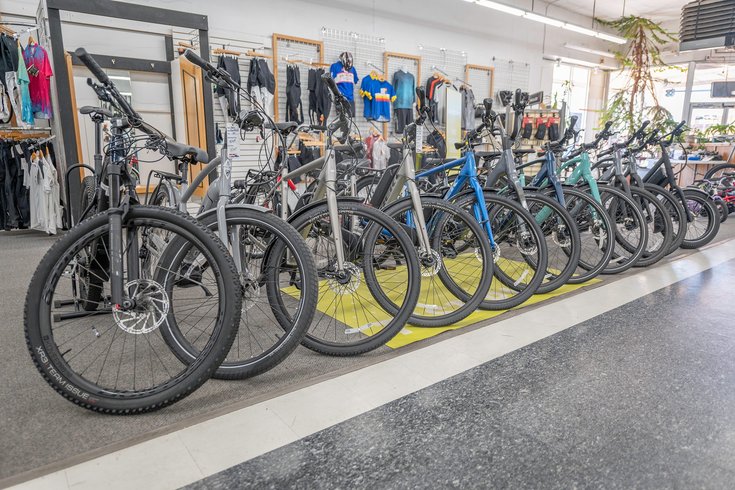
New Jersey will require all e-bike operators to be licensed and insured under a new law signed by Gov. Phil Murphy, creating some of the strictest regulations in the country amid rising fatal crashes. The file photo above shows e-bikes on display at a Colorado bike shop.
New Jersey has rewritten the state's laws regulating electric bikes and will start requiring operators to be licensed and insured and their e-bikes to be registered with the state.
The new rule eliminates New Jersey's three-tier system that had classified e-bikes based on the power of their motors and instead will treat all varieties of e-bike the same. Gov. Phil Murphy signed the bill into law on Monday, his last full day as governor. The law is opposed by some cycling groups and transportation advocates.
MORE: How Sheetz's invasion of Wawa's home turf could lead to lower gas prices
Murphy said the state was overdue to update the e-bike regulations. The electric powered cycles have become popular among young people and commuters, and as they have become more common, the number of crashes involving e-bikes also has risen. Last year, separate fatal crashes in North Jersey involving e-bikes killed a 13-year-old boy and a 22-year-old man.
"It is clear that we are in an age of increasing e-bike use that requires us to take action and update regulations that help prevent tragedies from occurring," Murphy said in a statement.
New Jersey now has among of the strictest e-bike regulations in the country. The law adds costs that critics say are misguided and impact riders using lower-powered, pedal-assisted models.
Until now, New Jersey had separated e-bikes into three categories. The lowest tier consisted of pedal-assisted bikes where the motor's assistance feature shuts off once the bike is moving 20 mph. The second group were motorized bikes that traveled as fast as 28 mph. The highest tier are electric bicycles, or e-motos, that are similar to mopeds. Their batteries generate at least 750 watts power and the bikes can reach speeds faster than 28 mph.
New Jersey already had required licenses, registration and insurance for the most powerful category of electric bikes.
Under the new law, all e-bikes fall into a single category. All operators have six months to obtain a license and register and insure their bikes. Violators will face $50 fines after the grace period.
Children 14 years old and younger are prohibited from using low-speed e-bikes, motorized e-bikes and upright scooters. The law requires an owner and operator to be at least 17 with a valid driver's license, or at least 15 with a motorized bike license. Adults in New Jersey who already hold driver's licenses are not required to get a separate license to operate e-bikes.
License and registration fees for e-bike riders will be waived in the first year of the law. The annual registration fee after 2026 will be $8.
The law also stops online sales of e-bikes in New Jersey for one year and bans selling of modification kits used to convert low-speed e-bikes into more powerful motorized bikes. High-powered e-bikes, often sold online and marketed to young people, are equipped with batteries outputting more than 3,500 watts, which can propel the bike at speeds up to 50 mph.
New Jersey Senate President Nick Scutari (D-22nd), who sponsored the bill, said the law aims to address the safety hazards posed by the most powerful e-bikes.
"Their popularity with young people, coupled with their inexperience as operators, puts them at greater risk," Scutari said in a statement Monday.
NJ Bike & Walk Coalition, one of the groups opposed to the new law, said the new regulations burdens e-bike riders without improving road safety. The law also creates grey areas for commuters crossing state borders and threatens the livelihoods of delivery workers and others who use e-bikes to do their jobs.
"This bill creates barriers to developing micro-mobility in the state as a safer, more equitable and more sustainable part of our transportation system," NJBWC executive director Debra Kagan said Monday. "It restricts low speed e-bike use while not addressing the real problem of high speed motorized devices."
Other critics of the law said the state's approach falls short of more impactful safety reforms that would support responsible e-bike use. Instead, they say it could cause confusion and create barriers. Some point to Connecticut's new e-bike law that took effect in October, only requiring a driver's license for throttle e-bikes with batteries more than 750 watts. Insurance and registration are only needed in Connecticut for e-bikes with batteries more powerful than 3,500 watts.
New Jersey Assemblyman Sterley Stanley (D-18th) said it falls on lawmakers to help residents understand the dangers of e-bikes and follow the state's regulations.
"Setting basic rules, such as age, registration, and licensing requirements helps protect riders and the people around them," Stanley said in a statement. "Our primary responsibility as legislators is to keep people safe, which is why we owe it to the people of New Jersey to do our part to ensure all vehicles operate in a manner free of unnecessary risk."