





December 12, 2025
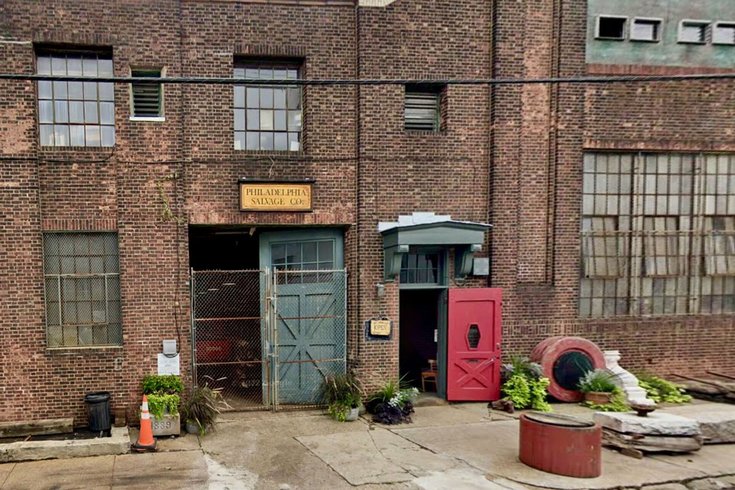 StreetView/Google Maps
The former Philadelphia Salvage Co. and its owner, Christopher Stock, have been sued by the Pennsylvania Attorney General's Office over complaints from customers who say their projects were never finished and they were not refunded. The business shut down in 2023. Above, one of the company's former locations is shown at 2234 W. Westmoreland Street in 2018.
The owner of the former Philadelphia Salvage Co., a business widely used to restore heirloom doors and other antiques, is being sued by the Pennsylvania Attorney General's Office to recover money and materials for projects that were left unfinished when the shop closed two years ago.
Attorney General Dave Sunday filed a lawsuit in the Philadelphia Court of Common Pleas on Friday, saying the company and its owner, Christopher Stock, failed to perform work for multiple customers and then refused to refund around $20,000 in deposits.
“Consumers paid for services to restore precious items," Sunday said in a statement. "... This lawsuit makes clear that contracts are binding and must be honored — or my office will take action on behalf of Pennsylvanian consumers.”
Stock founded Philadelphia Salvage Co. in 2011, originally operating in Mount Airy before sizing up at a former bronze foundry on Westmoreland Street in Hunting Park. The business sold salvaged materials, offered custom furniture to businesses and fielded work from homeowners to restore the charm of their antique doors and fixtures.
Stock's popular Instagram account, which amassed more than 40,000 followers over the years, highlighted the company's unique finds and often shared videos with the hashtag "restoring history." At one point, Stock estimated in an interview that he had supplied reclaimed materials or built something for more than 30% of businesses in the city.
When the COVID-19 pandemic hit, Philadelphia Salvage Co. began notifying some of its customers that their projects would be delayed due to staffing issues, the lawsuit says. The attorney general's office received a handful of complaints in the fall and winter of 2021 about Stock failing to respond to their requests for updates and sometimes refusing to return materials, deposits or both.
In one complaint, filed in September 2021, a customer alleged Stock had charged $4,751.50 to strip and repair an antique door. The work was never done, and Stock returned the door without doing any work or refunding any of the customer's money.
Another customer filed a complaint that October alleging Stock charged $3,722.50 for door restoration work and the construction of a custom sideboard. The project was supposed to take three to four months, but it was repeatedly delayed and never finished. No refund was given.
Others complained of similar experiences with Stock over the ensuing months, and the lawsuit says investigators believe there are more customers who were harmed by Stock's business practices. The Inquirer reported on complaints from at least nine customers who had contacted the attorney general's office by the time Philadelphia Salvage Co. officially shut down in September 2023.
Before the closure, Stock cited numerous challenges for his business.
When the pandemic hit, the company was operating at a location on Tioga Street in North Philly. Stock was forced to move to a smaller mill shop in Frankford in June 2022, citing problems with Philadelphia's Department of Licenses and Inspections. The city had ordered the installation of a sprinkler system at the Tioga Street shop, and Stock also was told he had to to cease operations there because the site was not zoned for a salvage business.
In an Instagram post in September 2022, Stock said Philadelphia Salvage Co. had "the rug pulled from under us" and would need to narrow its focus to historic facade work and door restoration. The materials shop could no longer operate in the new space, cutting off one of the company's revenue streams, and Stock apologized to customers for delayed projects.
"I understand the lack of communication has been frustrating," he wrote.
When the company finally shut down, Stock posted a message on his website — which is no longer active — saying the pandemic had "destroyed the fabric of everything I built." Half of the staff left because they could not make the commute to the new location, Stock said, and the rent at the new shop was double the cost at the former location despite the downgrade in size.
"We have every intention of returning projects, albeit in their as-is condition and stage of development, as many are historic and heirloom pieces," Stock wrote. "I want to do what's right and return them."
The message made no mention of refunding any of the customers who put deposits on outstanding projects.
The lawsuit, which names Stock and Philadelphia Salvage Co. as defendants, seeks a court order for restitution to be paid to all people who suffered losses and a ban on Stock owning or operating any future business in Pennsylvania. The suit also seeks an order for Stock to pay civil penalties of $1,000 for each violation of the Pennsylvania Unfair Trade Practices and Consumer Protection Law and $3,000 for each violation involving a consumer 60 or older.
The attorney general's office said any customers who believe they suffered losses connected to Philadelphia Salvage Co. can file an online complaint.