





March 17, 2026
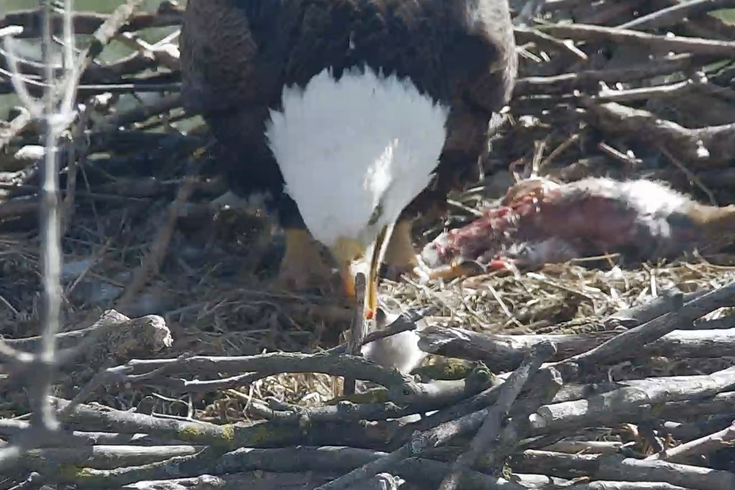 Provided Image/HDOnTap
A bald eagle pair on a farm in Lancaster County welcomed its first hatchling of the season Monday night. On Tuesday morning, the livestream of the nest showed the mother feeding her chick. Three other eggs in the clutch are expected to hatch over the coming week.
Followers of Lancaster County's bald eagle livestream got their first full glimpse of a hatchling Tuesday morning, and viewers could see the mother feeding the tiny eaglet in her nest.
The PA Farm Country Eagles Live Cam follows a pair of bald eagles who have nested at the undisclosed location since 2019. The clutch of four eggs this year is relatively uncommon among bald eagles, but the mother in this pair has had a "four-pack" three times in the last five years.
The first eaglet appears to have hatched Monday night.
"Mom proceeded to sleep all night," said Layne Lozano, who logs the footage and posts highlight clips at HDOnTap, which hosts the 24/7 feed in a partnership with the Pennsylvania Game Commission and Comcast Business. HDOnTap has two eagle cams in Pennsylvania and hundreds of other wildlife livestreams across the country.
On Facebook, an unofficial page for fans of the Lancaster County eagles posts frequent updates and observations about the birds and their eggs. One fan noted Tuesday morning that the meal the mother was feeding her eaglet appears to be a "fresh roadkill rabbit" that was visible in the background of the nest.
Bald eagle eggs generally hatch about 35 to 40 days after they're laid. The first in this year's clutch appeared in the nest 40 days ago on Feb. 4. The second was laid on Feb. 7, followed by the third on Feb. 9. and a fourth on Feb. 13. Beyond 40 days, eggs that haven't hatched generally are no longer viable.
The signs of a hatchling getting ready to break out can be observed when little cracks called "pips" appear on the eggs in the days before they hatch. About half of bald eagle eggs hatch, but success rates can vary based on the environment. The U.S. Fish and Wildlife Service says research in recent years shows about 70% of the bald eagles that hatch survive their first year of life.
When the eagle pair in Lancaster County had four eggs in 2022, all four hatched but only three of the eaglets fledged — meaning they achieved the ability to fly. When four eggs were laid again in 2023, only three of them hatched and all three fledged.
The best time of day to watch the livestream varies based on the time of year, but viewers can expect a lot of feeding in the coming weeks.
"Eagles tend to be busy in the morning and evening until they lay eggs," Lozano said. "Then they are at the nest all the time. Viewership is the highest in the morning and then the evenings. When eggs hatch, viewership tends to stay steady all day long because the eaglets get fed pretty much all day long for the first several days."
Newly hatched eaglets are covered in whitish-gray downy feathers that start to darken after about two weeks. The young are completely dependent on their parents for food and warmth. The father spends most of the time hunting, bringing food to the nest and standing guard against predators. The mother remains at the nest, feeding her eaglets small pieces of food and brooding to protect them against the elements.
By about six weeks, the eaglets become more self-sufficient in the nest and are able to eat the food their parents bring them on their own. Fledging occurs between 10-14 weeks, when eaglets develop juvenile feathers and start hopping between branches before practicing flight. After fledging, the young stay nearby their nest for another month or two while learning to hunt. They strike out on their own when they become independent in the fall.
Lozano said the Lancaster County livestream and the eagle cam at Codorus State Park in Hanover, York County, are among HDOnTap's most popular feeds. The nest in Hanover was abandoned last year, but a new bald eagle pair made a home there this winter. The female laid three eggs between March 2 and March 8. They'll hatch in April.
Bald eagle populations have recovered across much of the United States, including Pennsylvania and New Jersey, after decades of decline due to pesticide exposure, hunting and habitat loss. A state survey shows there are now more than 300 bald eagle nests in Pennsylvania, which removed the bird from the state's list of endangered and threatened species in 2014.