





July 17, 2025
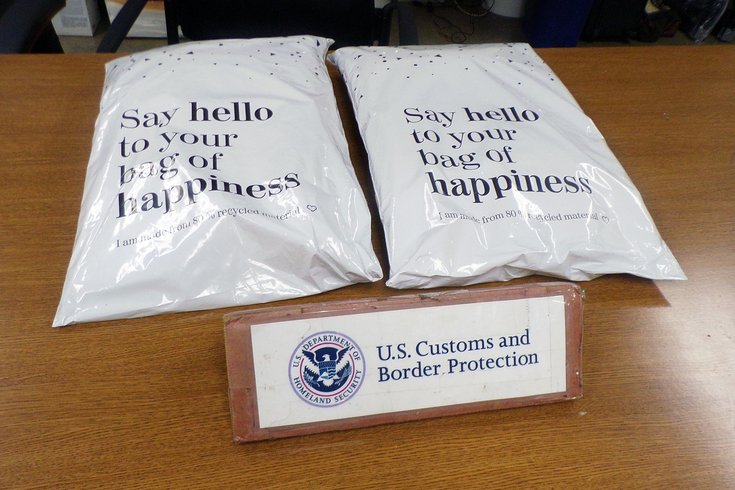 Provided Image/U.S. Customs and Border Protection
U.S. Customs and Border Protection officers in Philadelphia have seized multiple shipments of ketamine — an anesthetic used as a popular party drug — after the drugs were sent to the U.S. from Europe this summer. Since June, the agency has intercepted 130 pounds of the drug valued at $2.8 million.
Packages containing nearly 73 pounds of ketamine, the anesthetic commonly used as a recreational drug, were seized by U.S. Customs and Border Protection officers in Philadelphia earlier this month, officials said Thursday. They are the latest ketamine shipments from Europe to be seized in Philadelphia, following two others late last month.
The shipments that arrived this month came in two batches. The first, sent from France, arrived July 5 in packages that were labeled as industrial air filters. The second came from Germany on July 9 and was labeled as headlights for Mercedes Benz cars. Both were destined to addresses in Broward County, Florida. The estimated street value of the ketamine in the two shipments was $1.8 million, officials said.
MORE: Ocean City residents lean against hotel plan at Wonderland Pier, Rutgers poll finds
The seizures took place weeks after other packages containing 57 pounds ketamine arrived in Philadelphia from the Netherlands and Germany. One sent from the Netherlands on June 21, destined for Miami, was labeled as fishing rods. Then on June 27, four packages from Germany also destined for Florida contained ketamine in vacuum-sealed bags. The packages were labeled as toys, picture frames and other miscellaneous items.
The combined shipments this summer amount to about 130 pounds of ketamine valued at $3.3 million.
CBP spokesperson Steve Sapp said all of the recent packages were sent on express consignment flights and delivered by typical courier services that don't inspect parcels. When CBP sorts through packages, they look for signs of illegal drugs disguised with false manifests.
"Transnational criminal organizations are constantly looking for ways to smuggle their dangerous products or illicit products into the United States," Sapp said. "Any time that we see something, we capture as many data points as possible and we try to look for them. Our job used to be looking for that needle in a haystack. Now our job is to collect data points that minimize that haystack."
Ketamine is often used recreationally for its dissociative effects that may cause hallucinations. The drug can be snorted, ingested or injected. It became a more popular party drug at raves and nightclubs during the 1990s and 2000s, leading federal authorities to classify it as a schedule III drug.
In clinical settings, ketamine is used as an animal anesthetic and also has become more widely used to treat people with depression and chronic pain under the care of physicians.
CBP officials said ketamine increasingly has been used as a sedative by sexual predators, and the drug is often cut with ecstasy and other substances. Overdoses can lead to nausea, elevated heart rate, unconsciousness, convulsions and respiratory failure.
Sapp could not say why Philadelphia has been a repeat port of entry for ketamine shipments this summer.
"The reason it's coming to the United States is because there's a market for it," Sapp said.