





July 14, 2025
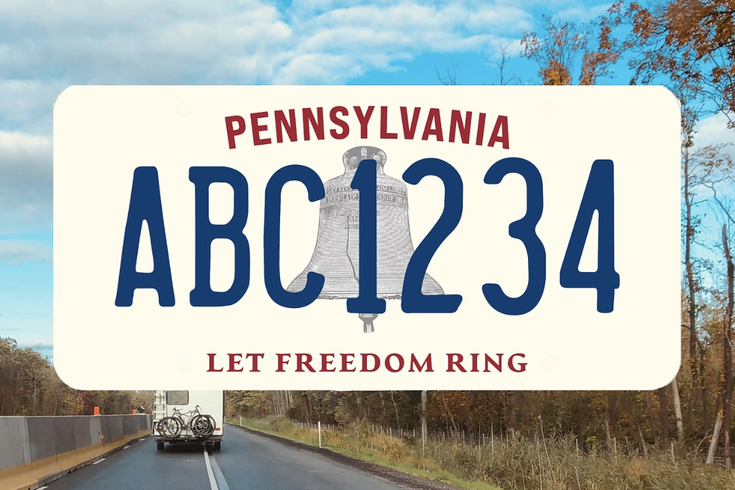 Provided Image/PennDOT
A Pennsylvania state senator plans to introduce legislation to require front license plates on all vehicles. Pennsylvania is one of 21 states that only requires a rear plate. The state's new license plate design is shown above.
A Pennsylvania lawmaker wants the state to require drivers to display front and back license plates on their cars, arguing the move would improve public safety and toll collection.
State Sen. Katie Muth, a Democrat who represents parts of Montgomery, Chester and Berks counties, put out a memo seeking support for the potential bill last week. Pennsylvania is one of 21 states that only require back license plates for the majority of vehicles. Exceptions include commercial trucks, vehicles owned by the state and cars used by press photographers.
MORE: While spotted lanternflies are sparse in Philly, an insect expert predicts a resurgence
"Far too often there are hit-and-run accidents, traffic incidents, or crimes committed where only the front of a vehicle is captured by cameras or witnesses," Muth wrote in the memo. "Requiring a license plate on the front of a car will improve vehicle identification and enhance public safety by helping law enforcement officers, witnesses, or cameras more easily and quickly identify a vehicle. A front license plate can also improve toll collections."
Pennsylvania is among the most populated states in the U.S. that do not require front plates, along with Florida and Ohio. Muth's memo notes that several neighboring states — including New York, New Jersey and Maryland — all require front and back plates. A Florida lawmaker introduced a bill with a similar proposal earlier this year, but that provision was withdrawn in March after its sponsor received negative feedback from constituents and colleagues.
Utah went in the opposite direction at the start of the year by eliminating its longstanding front license plate requirement. Lawmakers there cited cost savings of about $3.50 per plate and said the state's compliance rate for front plates had been low. Some Utah residents also complained about having to drill holes into their front bumpers to affix their front plates, because most cars don't come with mounts when they are purchased in states without the requirement.
Pennsylvania recently debuted a new license plate design, raising the question of whether car owners who keep the old design would be required to have matching front and back plates.
A PennDOT spokesperson said the department does not comment on pending legislation, and no cost estimate has been done to determine what it would take to increase license plate production for such a law.
Past research from the Transportation Institute at Texas A&M University highlights a range of considerations that have been taken into account by states with and without two-plate laws. Major tolled roadways, in particular, may sacrifice significant revenue due to a lack of photographic evidence from cars with unreadable back plates.
At the time of the Transportation Institute's 2012 study, data collected from the 360-mile Pennsylvania Turnpike found that 16% of the vehicles that passed through tolling facilities had plates that could not be read. The Pennsylvania Turnpike Commission saw an even bigger dent in collections when it switched to an all-electronic, toll-by-plate system during the COVID-19 pandemic. The commission totaled $104 million in lost revenue during the first fiscal year after making the change, and an internal report noted that many drivers without E-ZPass were not being billed with invoices meant to be sent through the mail.
Last October, the Turnpike Commission said it collects revenue from about 94% of transactions on the turnpike system within 150 days. Its 6% leakage rate — the term used for uncollected revenue — "aligns with the national average" and meets the state's toll collection levels from before the conversion to all-electronic tolling, the commission said.
The Turnpike Commission would be "grateful" for any legislation that improves toll collection and public safety, a spokesperson said when asked about Muth's potential bill.
There's evidence that requiring two license plates aids toll collection. In Colorado, a two-plate state, the Denver area's E-470 tollway collected one-third of its electronically scanned plate information — about $23 million — using front license plates over a one-year period, the Transportation Institute study found. And in Virginia, another state that requires two plates, the study observed that tolling facilities without automated license plate readers (ALPR) could not pursue about 23% of violations due to lack of photographic evidence from unreadable back plates.
Proponents of front plates also say they will aid red light traffic cameras — which could become more widespread in Pennsylvania — by capturing license plate information as cars pass through them at intersections.
The Transportation Institute study found in states where front plates are required, the cost of of producing them is typically passed on to consumers. Another potential drawback is that people may take advantage of lax enforcement, using their second license plates for other cars.
Muth's memo did not provide a suggested timeline for adoption and implementation of a front license plate requirement. She is seeking co-sponsors for the legislation.