



February 06, 2026
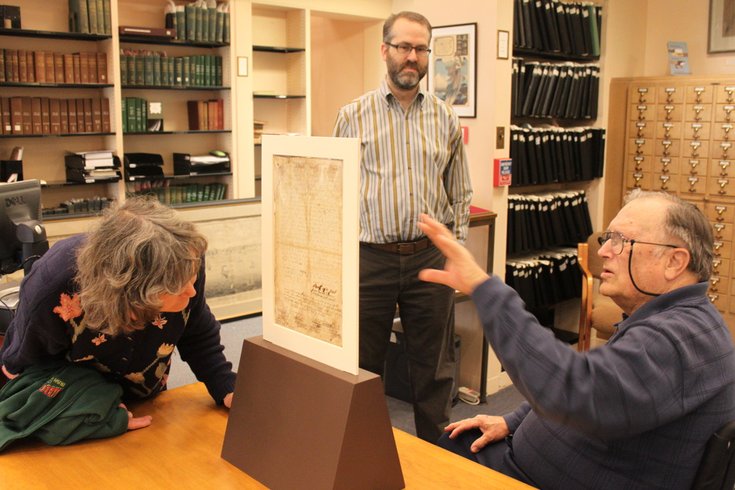 Provided Image/Germantown Mennonite Historic Trust
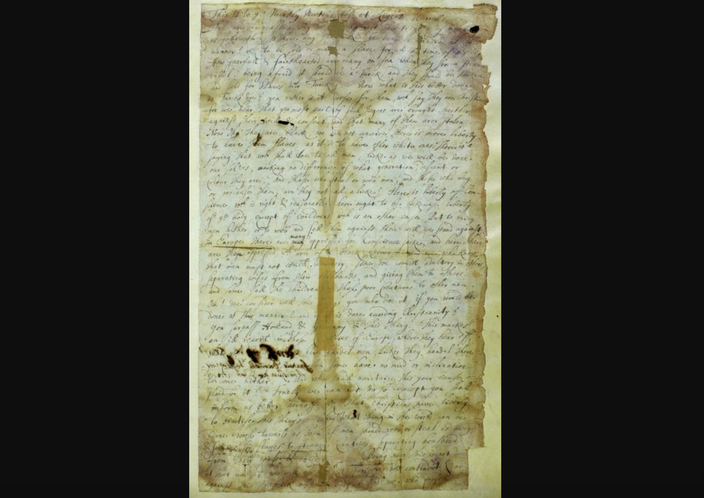
The first petition against slavery in America was signed in 1688 by four German immigrants in Philadelphia’s Germantown neighborhood. Above, the document is on display at Haverford College.
The first public protest against slavery in the British North American colonies originated in Philadelphia's Germantown neighborhood by a group of four men whose shared egalitarian beliefs sparked the beginning of the abolitionist movement.
On April 18, 1688, nearly 90 years before the founding of the United States, a two-page petition was signed in the home of Thones Kunders, a prominent Quaker in the city, declaring that slavery was morally inconsistent with the beliefs of the Peace churches and warned that a violent revolt could ensue. The document is now on display at Haverford College, and the desk it was written on is housed in the Germantown Mennonite Historic Trust.
MORE: Boyz II Men is getting a mural in South Philly just blocks away from where its members met
The petition, officially named the Germantown Friends’ Protest Against Slavery, is among the many milestones being recognized by the Philadelphia Historic District in 2026 for its “52 Weeks of Firsts” program. Each week, different inventions, trends and contributions that have roots in the city are celebrated. Sculptures are being placed at sites relevant to each milestone, and educational events, called "Firstivals," are being held every Saturday at locations around the city.
The four signees — brothers Derick and Abraham op den Graeff, Francis Daniel Pastorius, considered the founder of Germantown, and Garret Hendericks — had immigrated to Pennsylvania from Germany five years prior. The petition attempted to appeal to Quaker leadership that they should practice what they preach.
“Is there any that would be done or handled at this manner? To be sold or made a slave for all the time of his life?” the petition said. “... There is a saying that we shall do to all men like as we will be done ourselves; making no difference of what generation, descent or colour they are.”
The first petition against slavery in the British North American colonies, pictured above, was signed by four German immigrants in Philadelphia’s Germantown neighborhood in 1688.
Specific events that led to the signing of the petition are not well known, but its contents were presented at the yearly Quaker meeting in Burlington, New Jersey, where it was ultimately rejected.
What stood out about the protest was the differences in some of the men’s religious backgrounds, according to Craig Stutman, a history professor at Delaware Valley University and board member of the Germantown Mennonite Historic Trust. The op den Graeff brothers were Quakers, while Pastorius was practicing Lutheran Pietism at the time but eventually shifted closer to Mennonite and Quaker beliefs.
“It’s interesting because there was so much fluidity in Germantown,” he said. “If you were German, regardless of whether you were Lutheran, Mennonite, Quaker or Dutch, you generally got along. In Europe, that would not have been the case. But in Germantown, there was more of a German cultural community.”
Despite the formal denial from local religious leaders, the abolitionist sentiment resonated for much of the neighborhood, a majority of whom opposed slavery, according to Stutman. In 1844, the document resurfaced and became a focal point of a larger abolitionist movement.
“It really set the ball rolling for formal protests that would continue throughout the 1700s in Philly,” Stutman said. “There’s a lot of complexity there, but the underlying common denominator is abolitionism. But the desire for abolition and the folks who take part in it are very diverse.”
The first public protest against slavery in America will be celebrated at the Historic Germantown Mennonite Meetinghouse at 6119 Germantown Ave. from 11 a.m.-1 p.m. on Saturday, Feb. 28, with historical reenactors, readings from the petition, Mennonite folk art traditions and music for its “Firstival.”
Three other firsts will be celebrated around the city on Saturdays in February from 11 a.m.-1 p.m.
• First African Methodist Episcopal congregation (1794): Founded by Richard Allen, Mother Bethel African Methodist Episcopal Church is the first organized African American congregation in America. It will be celebrated at the church located at 419 S. 6th St. on Saturday.
• First abolitionist society in America (1775): Despite being a slaveowner himself, Benjamin Franklin at one point led the first formal group dedicated to abolishing slavery in America. An educational event will be held at the African American Museum in Philadelphia at 701 Arch St. on Feb. 14.
• First authentic Chinese gate built in America (1984): Philadelphia’s Friendship Gate, designed by Chinese American Sabrina Soong, symbolizes the international cultural exchange between Philadelphia and its sister city, Tianjin. A celebration will be held at the Crane Community Center at 1001 Vine St. on Feb. 21.
The full list of Philadelphia's firsts for the year — and the events celebrating them — can be found on Visit Philadelphia's website.