



July 16, 2025
 Thom Carroll/for PhillyVoice
Two dozen states have joined a lawsuit against the Trump administration over its deferred payment of $6.8 billion in funds from the U.S. Department of Education. If the money remains unavailable, nonprofits that provide services to schools may not survive, Philadelphia Education Fund President Farah Jimenez says.
As the Trump administration moves ahead with plans for major cuts at the U.S. Department of Education, schools across the country are bracing for the immediate fallout of $6.8 billion in funding that's being withheld just weeks before students return to class.
A lawsuit filed Monday by the attorney generals of 22 states — plus the governors of Pennsylvania and Kentucky — claims the money has been frozen illegally without congressional authorization. The federal Office of Management and Budget says the funds are being deferred rather than eliminated, at this stage, although the timeline of the deferral remains uncertain. The money accounts for about 14% of federal funding for elementary and secondary education.
MORE: AFCSME District Council 47 reaches tentative deal with Parker administration
Programs that could face immediate impacts include after-school activities, counseling services, support for students with English as a second language and assistance for recent immigrants entering schools, according to a memo sent to Congress by the Department of Education that was obtained by ABC News.
"There are a lot of categories that do operate within our public schools that are critical for functioning ... (and) support students who are lagging in performance or who have special needs," Farah Jimenez, president and CEO of the Philadelphia Education Fund, said Tuesday about the funds.
The Philadelphia Education Fund's mission is to support high school completion and college readiness, often through federally supported programs that facilitate college visits and applications. In one of the poorest big cities in the country, these services are crucial in supplementing school counselors who primarily address students' social and emotional needs.
Jimenez said most school districts and institutions that support them are proceeding with the hope that the legal process will get funding released in a timely manner. But the longer it remains tied up, the damage could be irreversible.
"To me, what comes to mind always is the Humpty Dumpty story," Jimenez said. "At some point, this desire to make changes is like pushing Humpty Dumpty off the wall. You can't really so easily put it back together."
Many school programs supported by federal funding are served using staff from contracted nonprofit organizations, which often don't have budgets to survive gaps in funding without making severe cuts. The third-party impact of deferred funding could wipe out resources that school districts have relied on to provide services.
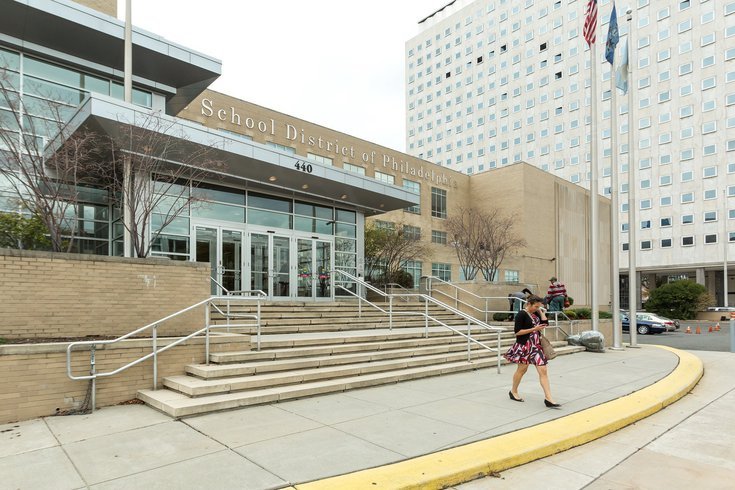
The School District of Philadelphia did not respond when asked if it is anticipating cuts to specific programs and how staff could be impacted if federal funds are not released. The district's school year starts Aug. 25.
Since President Donald Trump took office in January, the Department of Education's staff of about 4,000 has been reduced by half, including large layoffs at the Office of Federal Student Aid and the Office for Civil Rights. Some of the department's functions, like administering student loans, may be absorbed by other federal departments. Some education experts say gutting the department will have the greatest impact on vulnerable and disadvantaged students.
Jimenez said the push to dismantle the agency has partly been driven by claims of "overreach" in areas not directly related to learning. She mentioned the Obama administration directive that required schools to give transgender students access to their bathrooms of choice to ensure federal funding, followed later by controversial policies during the COVID-19 pandemic.
"All of that stuff started to seed an opposition to the U.S. Department of Education because on the basis of those elements that are ancillary to actual education, but happen in schools, we started to have people be really upset about that and parents start to rail against it," Jimenez said. "I think that's why we're in this moment."
At PEF, Jimenez worries that instability in federal funding will affect programs for low-income Philadelphia students, particularly those that help first-generation college students navigate picking schools and accessing aid.
"These kinds of delays and disruptions that are only natural to transition will also impact the experience educators can give their students," Jimenez said.
Jimenez believes it's possible there could be benefits to reshaping how the federal government interacts with schools, but the prevailing justifications for it have been lacking.
"I get the cost-cutting. I totally get the local control argument, but is this achieving it?" Jimenez said. "I'd like to hear more of a case being made of how these changes will actually deliver on a vision of improved outcomes for students."
One of the best steps people can take to help protect school services is to call their elected officials and advocate for the value of the programs that could be sacrificed, as well as the consequences of losing them.
"That has been impactful in moving some programs that in the past were at risk back into getting the support that was needed," Jimenez said. "The advocacy works."