




December 30, 2025
 Thom Carroll/for PhillyVoice
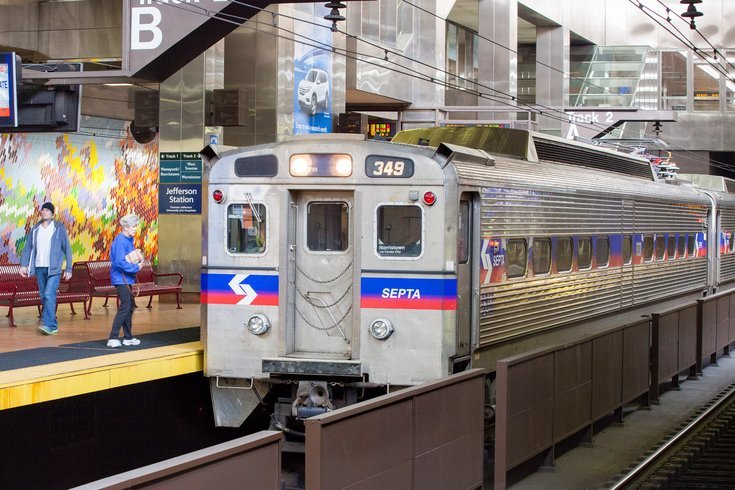
SEPTA's rocky 2025 put the transportation authority in the middle of a state budget fight over long-term funding for public transit agencies. Without a deal in Harrisburg, SEPTA had to dip into capital funds to close the shortfall in its operating deficit. The aging Regional Rail fleet also faced scrutiny from federal regulators, leading to disruptions for commuters.
Entering 2025, SEPTA faced a dire fiscal crisis that threatened to slash up to 45% of its service by the start of next year.
For the roughly 790,000 people who use SEPTA's mass transit on an average weekday, the backbone of transportation in the Philadelphia region rested in the hands of lawmakers in Harrisburg to come up with a fix in the state budget.
What ensued during the spring and summer was a contentious standoff. On one side, Gov. Josh Shapiro and his Democratic allies proposed a range of transit funding solutions. On the other, Senate Republicans said SEPTA's woes were a product of mismanagement. A monthslong budget standoff put SEPTA and other public transit agencies in the crosshairs of a stark urban-rural divide in state politics.
SEPTA's board, faced with an annual $213 million shortfall in its operating budget, voted in late June to approve a phased plan that would eliminate 50 bus routes, cut five Regional Rail lines and impose a 9 p.m. curfew on all remaining rail services. The plan also called for a 21.5% across-the-board fare increase, which took effect in September.
In 2024, Shapiro staved off a SEPTA calamity by diverting $153 million in PennDOT flex funds that otherwise would have paid for highway projects across the state. His budget proposal this year sought to provide $292 million in new annual funding for SEPTA using a higher portion of state sales tax revenue to cover transit costs for five years. The governor also sought to give SEPTA a short-term lifeline by accessing up to $394 million in capital funds for operational needs.
The Pennsylvania House of Representative approved Shapiro's transit funding plan on five occasions in the spring and summer, but the measure met steady resistance in the Republican-controlled Senate. Majority Leader Joe Pittman, who represents parts of four counties in western Pennsylvania, pushed for a plan requiring SEPTA to access capital funds as a "bridge" to a more permanent solution. The GOP proposal included statewide funding for roads and bridges, drawing from a mix of the Public Transportation Trust Fund and gaming revenue. House Democrats rejected the plan.
As months wore on without a state budget, partisan animosity intensified. Transit advocates in the Philly area took aim at Republican state Sen. Joe Picozzi, of Northeast Philadelphia, who sought to tie SEPTA funding to a series of accountability and performance measures. Democratic lawmakers, including state Sens. Nikil Saval (Philadelphia) and Lindsey Williams (Allegheny), pitched a transit funding alternative that would have increased taxes on rideshares, car rentals and vehicle leases.
With negotiations stalled, SEPTA's fare increase and a 20% service reduction took effect late in the summer The service cuts, which faced a legal challenge, were then reversed by a Philadelphia judge. With no funding solution in sight, SEPTA turned to PennDOT in September to use the $394 million in capital assistance funding to cover operations over the next two years. The decision led to the postponement of infrastructure and procurement projects, including the replacement of buses.
"I want to again emphasize that the one-time use of SEPTA's capital assistance allocation is not a long-term or sustainable solution to SEPTA's budget crisis," SEPTA General Manager Scott Sauer said.
The $50.1 billion state budget eventually was passed in November — more than four months late — without a long-term transit funding plan.
SEPTA's rocky 2025 didn't end with the budget standoff. In October, the Federal Railroad Administration ordered SEPTA to complete safety inspections and repairs to the Regional Rail system's decades-old Silverliner IV fleet. The emergency audit of 223 trains — more than half of SEPTA's fleet — came after a review of a series of electrical fires that indicated a more widespread risk.
Regional Rail riders faced major service delays and cancellations through the fall, upending the system's reliability and requiring SEPTA to borrow 10 train cars from the Maryland Area Regional Commuter Rail to fill the gaps.
With new questions about the safety of the Regional Rail fleet — and SEPTA's capital budget already squeezed — PennDOT again stepped in this month to provide an infusion of $219.9 million to ensure all of the Silverliner IV trains get back in service by the end of the year. The repairs will give SEPTA a longer runway to eventually replace the fleet, which could take up to a decade.
"SEPTA riders don't have the kind of time to wait 10 years and I don't have the patience to wait 10 years," Shapiro said at a news conference announcing the PennDOT funding.
In December, SEPTA also narrowly avoided a strike among its largest bargaining unit, Transport Workers Union Local 234, that would have brought subway, trolley and bus operations to a halt. The union and SEPTA agreed on a two-year contract extension to prevent a work stoppage.
With the nation's 250th birthday, World Cup and other major events slated for 2026, SEPTA will have the funds it needs to operate in the short-term as Philadelphia enters an expected boom year for tourism. But as Sauer said in September, the future of public transit in the region is riding on a better outcome in Harrisburg than what took place in 2025.
"This is a Band-Aid. This will get us through a couple years, but at the expense of future capital programming," Sauer said. "We still need a solution. We need something long term. We need legislators to continue this discussion."