



February 01, 2026
 Joe Lamberti/Imagn Images
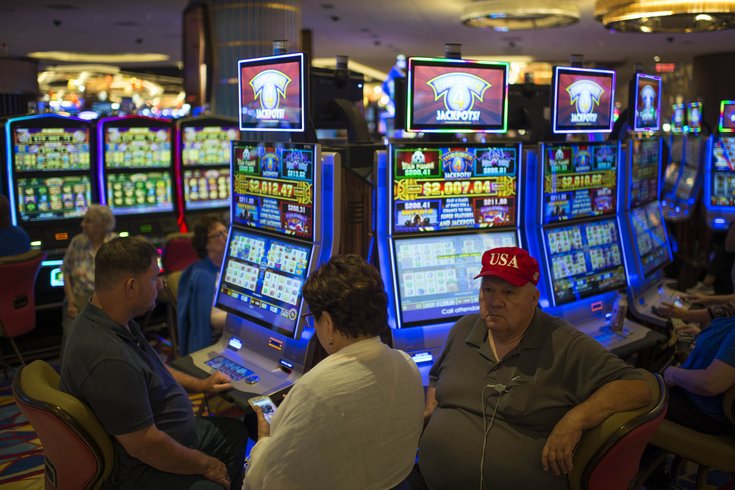
A New Jersey appeals court ordered a lower court to restart proceedings over whether Atlantic City casinos' indoor smoking exemption violates the state constitution, finding the judge improperly dismissed casino workers' lawsuit. This file photo shows people inside the Hard Rock Hotel & Casino.
A state appeals court ordered a lower court Monday to restart proceedings over whether a casino exemption in New Jersey's indoor smoking ban violates the state's constitution, finding procedural deficiencies had denied the case a fair hearing.
The decision is the latest in a yearslong fight over the 2006 Smoke-Free Air Act, which banned indoor smoking statewide but allowed it to continue inside casinos and their simulcasting facilities. Casino floor workers represented by the United Auto Workers union have for years pushed to end the exemption.
SIGN UP HERE to get PhillyVoice's free newsletters delivered to your inbox
A lower court judge in 2024 dismissed a complaint filed by the union and an antismoking advocacy group, but Monday's decision dings that judge for improperly addressing the plaintiffs' equal protection challenge and for not performing detailed fact findings. The lower court judge decided the case based on written briefs alone and no testimony, according to Monday's ruling.
"On remand, the court shall allow the record to be developed and litigated to address the hotly contested projections of revenue loss, and for the court to make appropriate findings of fact concerning the reliability and credibility of the competing expert projections. Such findings are especially crucial to the ultimate disposition of plaintiffs' state equal protection arguments, with the health of thousands of casino employees and, perhaps, millions of dollars at stake," Judge Jack Sabatino wrote for the three-judge panel.
The casino workers sued after legislative pushes to close the exception – ones that enjoyed broad support among lawmakers – stalled over concerns about the effect an indoor smoking ban would have on gambling houses' profitability.
The workers alleged the law unconstitutionally singled them out to face the harms of secondhand smoke.
They charged it violated constitutional rights to safety and equal protection and was unconstitutional special legislation – laws that improperly single out an individual or group and do not apply to others similarly situated.
When he was governor, Phil Murphy banned smoking inside casinos for about 11 months during the pandemic, though that ban was lifted in June 2021 (Murphy left office last week).
The trial court judge in August 2024 ruled there was no constitutional right to safety, found provisions in the New Jersey Constitution related to Atlantic City and its casinos allowed special legislation, and dismissed the workers' equal protection claims.
The workers harmed by secondhand smoke could just find other jobs, the trial judge ruled, and casino revenue demanded that the indoor smoking exception be allowed to continue.
That judge, who denied preliminary restraints to bar casino smoking and dismissed workers' challenge to the law, erred repeatedly, the appellate court found Monday.
The trial court used the wrong test to weigh the constitutionality of the smoking exemption, asking whether a rational basis existed for such a ban rather than employing the three-part balancing test used in equal protection cases lodged under New Jersey's Constitution, Monday's ruling says.
The trial judge also improperly deferred to the findings of a casino-funded report that found banning indoor smoking would significantly reduce gambling houses' revenue. That report found the ban would cut revenue by diverting smokers to casinos in other states or forcing them to interrupt their gaming for cigarette breaks.
UAW and Casino Employees Against Smoking Effects, which joined the union as a plaintiff, pointed to a separate study that found smoking and non-smoking casinos perform similarly.
The lower court took the casinos' study at face value and did not appear to consider the one raised by smoking opponents, Monday's decision says.
"The trial court improvidently accepted at face value respondents' disputed economic contentions and the untested premise that ending the smoking exemption will inexorably result in drastic revenue and job losses, without a development of a fuller record," Sabatino wrote.
The appeals panel declined to weigh whether the state's constitution creates a right to safety, saying that matter falls outside the scope of its review and is better left to a higher authority.
"If such a sweeping right is recognized for the first time, it should be by the Supreme Court as the ultimate arbiter of our State Constitution," wrote Sabatino.
New Jersey Monitor is part of States Newsroom, a nonprofit news network supported by grants and a coalition of donors as a 501c(3) public charity. New Jersey Monitor maintains editorial independence. Contact Editor Terrence T. McDonald for questions: info@newjerseymonitor.com.