




January 25, 2026
 Anne-Marie Caruso/Imagn Images
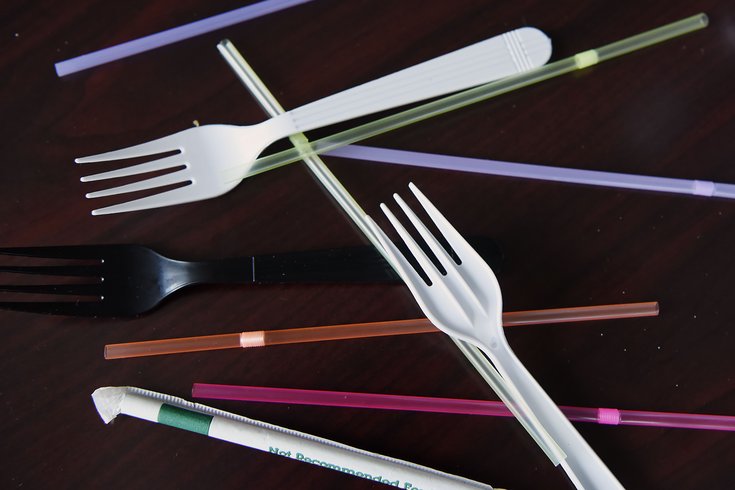
New Jersey restaurants can no longer automatically provide plastic cutlery to customers under a law signed by outgoing Gov. Phil Murphy last week. The restrictions take effect Aug. 1 for most establishments.
Phil Murphy signed more than a hundred bills before his two terms as governor ended Tuesday, including legislation to bar restaurants from providing disposable cutlery to customers unless asked.
The new law prohibits full-service New Jersey restaurants from providing single-use utensils to dine-in customers, and all restaurants can only provide disposable knives, forks, and spoons to customers who request them or through self-serve dispensers.
SIGN UP HERE to get PhillyVoice's free newsletters delivered to your inbox
The same restrictions apply to single-use condiments like ketchup packets, though the bill permits the use of disposable paper serving cups used for self-service purposes at certain eateries.
School cafeterias, health care facilities, and correctional institutions are exempt from the bill's restrictions. The bill takes effect Aug. 1. It'll take effect two years later for food courts.
Murphy, a Democrat, left office after two terms as governor. His successor, Gov. Mikie Sherrill (D), became governor on Tuesday.
Other legislation signed by Murphy in his final hours in office approved $128 million in new spending that was lambasted by Republicans in the Legislature. The bill includes $20 million to the FIFA World Cup host committee for promotions (Murphy's wife chairs the committee's board of directors), $25 million for a state supercomputer, and millions for projects in Democratic-run counties. A bill to allow for $300 million in tax credits to renovate the Prudential Center in Newark also got Murphy's signature.
A separate bill Murphy signed will boost penalties for cyberharassment of public servants – including, among others, elected officials, jurors, and judges – or their families.
The governor's signature boosted the maximum prison term for cyberharassment against a public servant to between one and five years, from the 18 months allowed under New Jersey's existing harassment law.
To be guilty of cyberharassment, a person must threaten physical harm to another or their property, commit a crime against them, or post obscene material about another person with the intent to cause them emotional distress.
Murphy also signed a bill to create a specialized unit within the Department of Corrections to investigate sexual misconduct in New Jersey correctional facilities.
That legislation creates a women's services division within the Department of Corrections and a separate board of trustees to oversee the state's women's prisons and mandates the prisons provide certain services, like doulas to pregnant women serving jail terms, for example.
The bill also requires additional training for correctional officers, including on their responsibilities under the federal Prison Rape Elimination Act.
New Jersey's Department of Health will be permitted to launch a pilot program studying the effects of psilocybin, the psychoactive ingredient in hallucinogenic mushrooms, under a separate bill Murphy signed.
The bill appropriates $6 million for studies at three New Jersey hospitals – one each in the state's northern, central, and southern regions – to measure the chemical's effect on mental health and substance use disorders.
The Department of Health must submit a report detailing its findings and recommendations for the potential medical use of psilocybin.
The bill does not legalize or decriminalize psilocybin.
New Jersey Monitor is part of States Newsroom, a nonprofit news network supported by grants and a coalition of donors as a 501c(3) public charity. New Jersey Monitor maintains editorial independence. Contact Editor Terrence T. McDonald for questions: info@newjerseymonitor.com.