




July 24, 2025
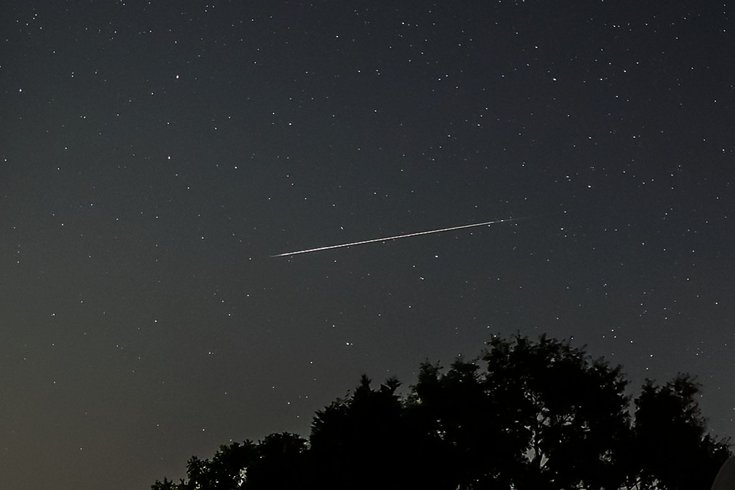 Johnny Horne/USA TODAY NETWORK via Imagn Images
The Perseid meteor shower, seen above in August 2021, has returned to the night skies. It will hit its peak Aug. 12-13, but moonlight may impact visibility during that time.
The nighttime skies will be filled with shooting stars in the coming weeks due to the annual Perseid meteor shower.
The meteor shower is considered the best of the year due to the bright and frequent shooting stars it produces every summer. The Perseids can be seen through Sept. 1, but the meteor shower will hit its peak on Aug. 12-13, NASA says. At that point, there are 50 to 100 meteors each hour, including fireballs — larger streaks of light and color that last longer than the typical meteor.
The meteor shower is best seen in the Northern Hemisphere just before dawn, although shooting stars can be seen as early as 10 p.m. The rate of shooting stars increases throughout the night.
This year's peak viewing will be slightly obscured by a waning gibbous moon — the lunar phase when more than half of the moon is illuminated. That means only the brighter meteors will be seen, reducing visible shooting stars by at least 75%, according to the American Meteor Society.
The Perseids are generated from leftover particles from the Swift-Tuttle comet, which orbits the sun every 133 years. It was last seen in the inner portion of the solar system in 1992. The Earth passes through this debris during its own orbit, which is why the Perseid meteor shower occurs every summer.
Meteor showers are named after their radiant — the point in the sky from which they seem to fall. In the case of the Perseids, that's the constellation Perseus. Locating that constellation is the easiest way to find the Perseids meteor shower.
Here at the best ways to watch the shower:
• The Perseid meteors are visible to the naked eye, so there's no need for a telescope or binoculars. But viewers should allow 20-30 minutes for their eyes to adjust to the dark and be patient. Meteors often show up in spurts and then have lulls.
• Experts recommend looking at the parts of the sky that are away from the moon. For better views, stand near a building, tree or other large object that blocks the moon's light.
• Viewing is best over several hours. Bring a reclining lawn chair, blanket and warm drink to stave off the coolness of the early morning hours.
• Using a cell phone or tablet will ruin night vision, even when they're in dark mode. It's best to leave them at home or in a car to avoid temptation.