




January 20, 2026
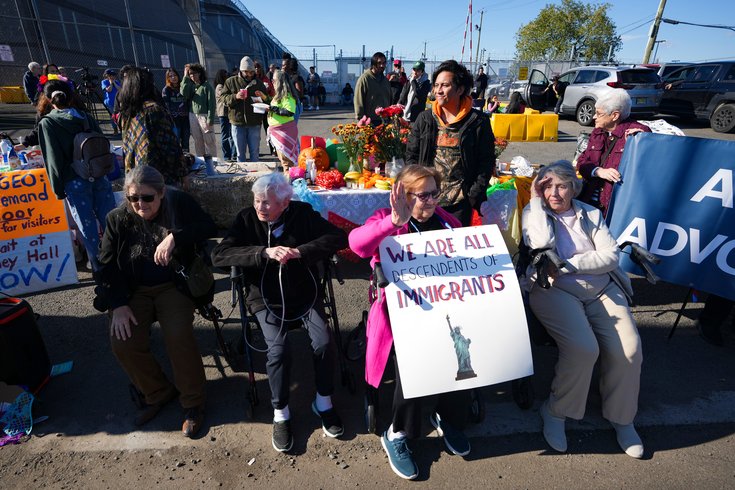 Yannick Peterhans/USA TODAY NETWORK via Imagn Images
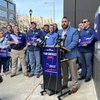
Former New Jersey Gov. Phil Murphy signed one bill on protections for immigrants but vetoed two other similar measures in his final hours in office Tuesday. Above, protestors outside the Delaney Hall detention center in Newark in November.
In his final hours as New Jersey's governor, Phil Murphy signed a bill adding protections for immigrants but vetoed two other related measures.
The Safe Communities Act, which is now law, directs the state attorney general to develop a plan to protect "personal freedoms" at spaces such as hospitals, schools and courthouses. It also calls for a separate policy for spaces of worship. The law requires agencies to adopt the policies within 180 days. Murphy left office Tuesday following the inauguration of fellow Democrat Mikie Sherrill.
The package of bills comes in response to increased raids by Immigration and Customs Enforcement agents around the country.
"Whether you’re praying in a church, studying in school, receiving medical care at a hospital, or seeking legal relief, no one should live in fear or uncertainty or be deterred from seeking essential services due to their immigration status," Murphy said in a statement.
All three bills passed in the state Senate on Jan. 12. A statement from Murphy said he "regrettably" could not sign the other two as he was concerned that they would "undermine" existing protections for immigrants.
One of the vetoed bills, the Privacy Protections Act, would have limited the ability for government agencies and health care providers to ask about immigration status to determining eligibility for public benefits. Murphy said that bill included a "drafting oversight" missed during the session that could jeopardize billions of federal funding dollars for New Jersey. He submitted a recommended amendment to the bill and said that he hopes the state legislature will reintroduce and pass that version in the coming weeks.
The third bill would have codified a 2018 attorney general directive, which said that law enforcement officers could not question someone based on their suspected citizenship status. It also would have limited law enforcements' ability to assist federal immigration authorities. Murphy said the bill "goes beyond" the initial directive in a number of ways, and he was worried that it would have spurred a possible legal challenge.
"I am extremely concerned that signing this bill, which differs from the Immigrant Trust Directive, would open New Jersey up to a new court challenge and renewed judicial scrutiny from judges who may not render the same decision upholding these critical protections," Murphy said. "Renewed litigation would also put our time-tested Immigrant Trust Directive at risk, endangering hundreds of thousands of immigrants in New Jersey in one fell swoop. I cannot in good conscience allow that to happen."
In a letter published Friday, immigration activists called on Murphy to sign the bills. The letter has 126 signatures including the New Jersey chapter of the American Civil Liberties Union, Council on American-Islamic Relations, NAACP, labor unions and churches.
In response to the vetoes, Amol Sinha, executive director ACLU-NJ, said the organization was "deeply disappointed" and said Murphy's action left communities vulnerable.
"In failing to sign these bills, Governor Murphy has left New Jersey without critical protections at a moment when ICE is brutalizing our communities," Sinha said in.a statement. "These bills were legally sound, politically viable, and commonsense policy. We call on Governor-elect Sherrill, her administration, and the Legislature to establish data privacy protections and ensure state and local resources are not commandeered for federal immigration enforcement — we have no time to waste.”