





January 29, 2026
 Provided Image/CBP
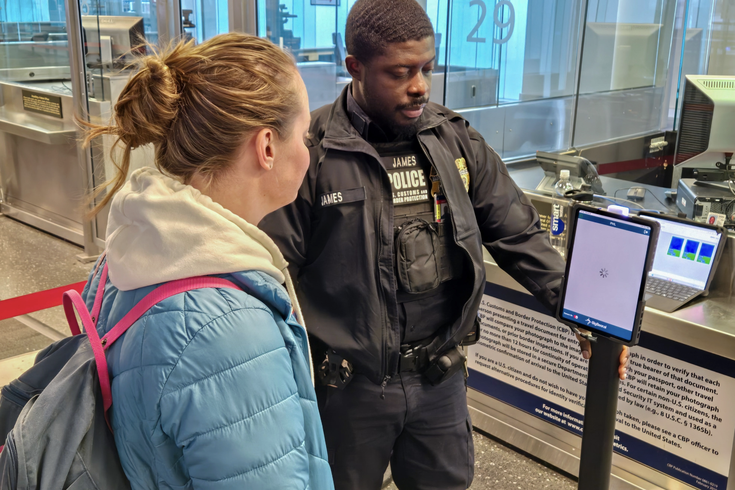
Philadelphia International Airport is now using biometric facial comparison technology to speed up customs inspections for U.S. citizens returning to the country from abroad. Above, a CBP officer directs a traveler to stand in front of the camera, which takes a picture and compares facial features to passport photos on file.
When U.S. citizens return to the country at Philadelphia International Airport, their arrivals will now be processed using biometric technology that scans their faces to verify them with photos shown on official government documents.
U.S. Customs and Border Protection debuted the technology this week, calling it a time-saving measure that allows officers to focus their attention on what's happening around them. The agency said Philly's airport is now the 15th in the country to use the cameras, which also are at several seaports and one border crossing.
MORE: Man pistol-whipped during fight over parking spot in Kensington
"Travelers arriving at PHL Airport will feel the benefits of this new technology in shorter wait times, faster processing through CBP arrivals inspection, and the improved ability to make their connecting flights," Cleatus P. Hunt Jr., CBP’s Area Port Director for the Area Port of Philadelphia, said in a statement.
When travelers get to the airport's inspection area, they will step up to a tablet with a camera that takes a picture. The photo is then analyzed and cross-checked with the facial features in travelers' passport photos. The system is used to verify identity and citizenship status, run a law enforcement background check and create a record of travelers' re-entry to the United States.
CBP started introducing the technology for international arrivals last year in response to an uptick in travelers entering the country at airports and other points of entry. The agency processed 420 million travelers in 2024, an increase of 6.6% from the previous year.
"As a major transatlantic hub, being able to quickly process through customs and head home or to a connecting flight is one of the best guest experiences we can offer travelers," said a spokesperson for Philadelphia International Airport.
CBP also has a free mobile app that lets pre-approved Global Entry travelers complete their processing before leaving their planes when they land.
Travelers at the airport in Philly will still be required to carry their documents for entry and have their declared items from abroad inspected.
During President Donald Trump's first term, CBP began using biometric technology to process all noncitizens entering and exiting the United States. Other applications of the technology have already been in place at many airports for travelers entering and leaving the country. It's also used by the Transportation Security Administration.
Biometric scanning is now required for noncitizens, but rules finalized by the Department of Homeland Security in December maintain citizens' rights to opt out of the facial biometrics process. Travelers must notify a CBP officer or airline representative that they prefer to undergo a manual inspection of their passport, which requires going to a separate section of the inspection area.
The rules also state that CBP must discard the photos taken of U.S. citizens within 12 hours of the identity verification process. Noncitizens' photos are stored in a DHS identity management system that retains pictures for up to 75 years.
CBP spokesperson Stephen Sapp said the main purpose of the technology is to streamline arrivals for U.S. citizens. Since the cameras were installed at other airports in August, CBP says wait times have been cut down for U.S. citizens by about 25%.
"It takes a quick photo of you and it matches you to the passport photo we have of you in our system," Sapp said. "Then you get green-lighted to the next step, and that is just going right over to baggage to pick up your bags and leave."