


August 19, 2025
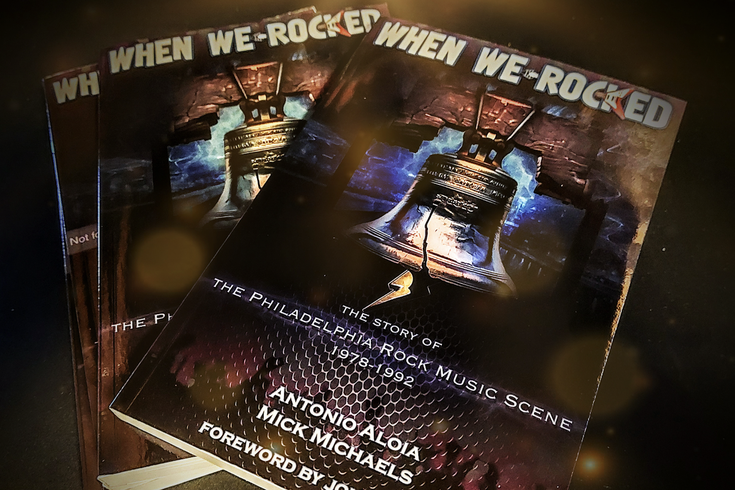 Provided Image/March Baby Media
'When We Rocked,' by Antonio Aloia and Mick Michaels, explores Philadelphia's rock and roll scene from the late 1970s to the early 1990s.
Philadelphia was home to some of rock 'n' roll's biggest stars and iconic sounds leading up to the 1970s, with Bill Haley helping bring the genre to mainstream America and Dick Clark's "American Bandstand" putting the likes of Frankie Avalon, Chubby Checker and Bobby Rydell in the national spotlight.
But the city's influence on rock music in the decades that followed often has gone unsung. Now, a new book is daring to change that perception.
Authors Mick Michaels and Antonio Aloia spent two years interviewing dozens of rock artists who gained various levels of prominence between 1978 and 1992 for their book, "When We Rocked," which was published earlier this month. They hope the book opens the door for new perspectives on the city's influence on music and pop culture.
Growing up in Philadelphia, Michaels said he viewed local glam rock bands like Teeze, which later changed its name to Roughhouse, as "the big time." As a guitarist who performed around the city in the 1980s, Philly shows represented a gateway into the mainstream. But, over the years, he came to feel that Philadelphia's influence on the rock 'n' roll scene at-large was repeatedly undermined.
"It always felt that Philly's contributions were overshadowed, dismissed and even marginally overlooked compared to other music scenes across the U.S.," Michaels said. "That always bothered me. There was a lot of good music here over the decades, and especially during the time span the book covers."
"When We Rocked" examines Philadelphia's place in rock 'n' roll history through interviews with members of Roughhouse, Britny Fox and Heavens Edge, among others. It traces the rise of disco, hard rock, heavy metal and grunge music in the city.
While some artists got a taste of the big leagues at the time — as Britny Fox did with its hit "Long Way to Live" in the late 80s — the book highlights bands that achieved varying levels of success, including the highs and lows they faced. It's a story that Aloia, a Philadelphia-based historian and musician, sees as being more relatable than ever.
"It tells the story — or multiple stories — of Philadelphia musicians trying to play music within the city and nationwide, and make music their living," Aloia said in an interview with Cosmick View, a publication where Michaels serves as editor in chief. "Not only is that something relatable, it also provides insight into how these bands and musicians achieved their respective levels of success."
The urge to bring greater light to Philadelphia's rock scene was on Michaels' mind for years. After recruiting Aloia, the pair interviewed dozens of artists who got their starts or hit their strides in Philadelphia.
Although the authors view the book's focus period as a "golden age" in Philadelphia's music history, they also recognize its obscurity compared to the city's rock 'n' roll heyday of the 1950s and 1960s and its smaller impact than the city's soul scene at that time, which, led by Leon Huff and Kenny Gamble, produced the likes of Patti LaBelle, Teddy Pendergrass and the O'Jays.
Aloia said he hopes the book can be used as an "icebreaker" to get other Philadelphia-based musicians talking about what made the city so special to be a part of at the time.
"'When We Rocked' is an underdog story with a host of local champions, who each made a difference and left some sort of mark on the city's music scene legacy," Michaels said. "Back then, heroes didn't wear capes. They had big hair, loud guitars and the b---- to take a chance."