




February 05, 2026
 Thom Carroll/for PhillyVoice
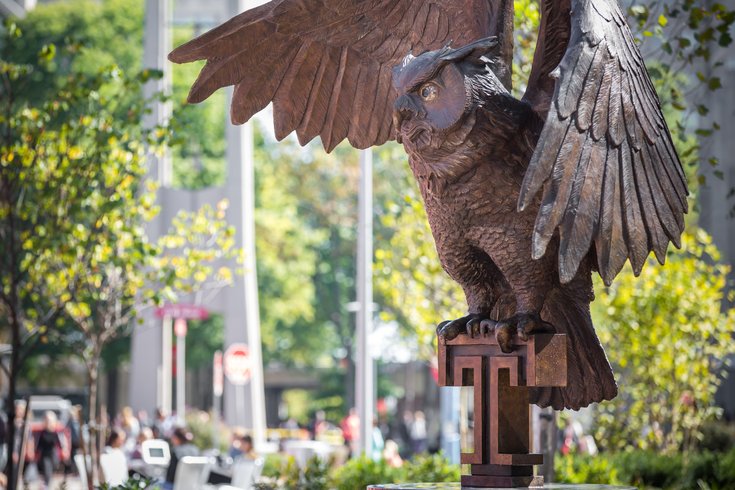
Student demographics shifted dramatically at colleges like Temple University following the Supreme Court ruling to end affirmative action, according to a new report. The percentage of Black students in Temple's freshman class rose from 12.27% in 2018-2019 to 29.71% in 2024.
Early data indicates that diversity on college campuses has shifted since the Supreme Court gutted affirmative action. A new report shows that enrollment of Black students surged at Temple and La Salle universities in 2024, even as the number of students of color at Ivy League schools declined nationwide.
The analysis, published Monday by the nonprofit Class Action, describes a "cascade" effect in recent years. College admissions teams had previously considered a student's racial identity as one of many factors in their decision-making. But that practice effectively ended in 2023 after the Supreme Court ruled that race-conscious admissions were unconstitutional. Now, the report says, the number and percentage of students from underrepresented minority groups has decreased "significantly" at highly selective colleges and increased "almost everywhere else," particularly at state universities.
Philadelphia colleges didn't completely hew to this trend. The share of Black and Hispanic freshmen at the University of Pennsylvania barely budged between 2018 and 2024, while the percentage of white first-year students dropped from 36.47% to 21.94% over that same time period. Asian students are now the largest racial group at the Ivy League school, representing 31.47% of the 2024 freshman class.
The table below shows the breakdown of the top five ethnicities that students selected on their applications. American Indian, Alaska Native and Native Hawaiian students made up less than 1% of the freshman class, while international students were grouped as a separate category.
| Ethnicity | Year | Percentage |
| White | 2018/2019 | 36.47% |
| 2022/2023 | 25.07% | |
| 2024 | 21.94% | |
| Hispanic | 2018/2019 | 10.15% |
| 2022/2023 | 11.53% | |
| 2024 | 11.32% | |
| Black/African American | 2018/2019 | 8.27% |
| 2022/2023 | 9.42% | |
| 2024 | 8.61% | |
| Asian | 2018/2019 | 22.84% |
| 2022/2023 | 29.7% | |
| 2024 | 31.47% | |
| Two or more races | 2018/2019 | 5.03% |
| 2022/2023 | 6.26% | |
| 2024 | 5.27% |
Other city schools reflected the cascade effect. Seven years ago, over half of Temple University freshmen were white. Now, the most recent data shows, white students make up just 28.47% of the class. The share of Black students has conversely climbed from 12.27% to 29.71%. Hispanic students also made gains, rising from 8.79% to 11.38% of the first-year class.
| Ethnicity | Year | Percentage |
| White | 2018/2019 | 56.92% |
| 2022/2023 | 39.8% | |
| 2024 | 28.47% | |
| Hispanic | 2018/2019 | 8.79% |
| 2022/2023 | 11.38% | |
| 2024 | 12.64% | |
| Black/African American | 2018/2019 | 12.27% |
| 2022/2023 | 20.88% | |
| 2024 | 29.71% | |
| Asian | 2018/2019 | 12.75% |
| 2022/2023 | 16.75% | |
| 2024 | 15.01% | |
| Two or more races | 2018/2019 | 4.42% |
| 2022/2023 | 4.44% | |
| 2024 | 5% |
La Salle University saw similar demographic shifts. The percentage of white students in the freshman class dipped from 46.89% to 26.33% over the six-year period, while the share of Black students rose from 18.69% to 37.72%. The percentage of Hispanic students shrank slightly.
| Ethnicity | Year | Percentage |
| White | 2018/2019 | 46.89% |
| 2022/2023 | 35.58% | |
| 2024 | 26.33% | |
| Hispanic | 2018/2019 | 22.19% |
| 2022/2023 | 22.57% | |
| 2024 | 19.84% | |
| Black/African American | 2018/2019 | 18.69% |
| 2022/2023 | 27.74% | |
| 2024 | 37.72% | |
| Asian | 2018/2019 | 5.03% |
| 2022/2023 | 4.14% | |
| 2024 | 4.13% | |
| Two or more races | 2018/2019 | 3.72% |
| 2022/2023 | 3.31% | |
| 2024 | 4.72% |
Black and Hispanic students made more modest gains at Drexel, Villanova and Saint Joseph's universities, where the percentage of white students likewise decreased. Altogether, the six Philadelphia colleges reported 54.6% of students identified as white, 8.91% as Black and 9.5% as Hispanic in their freshman class at the start of the time period. By 2024, the makeup had shifted to 37.44% white, 17.64% Black and 11.9% Hispanic.
Search the Class Action database here to compare first-time enrollments at over 3,000 colleges and universities.
While student diversity improved at numerous colleges, the report cautioned that the cascade effect can have harmful implications, too. Black freshmen enrollment increased at schools with lower graduation rates and expected salaries after college. The cascade effect, in practice, pushes students to progressively less selective and/or attractive institutions as they displace one another.
"Highly qualified students of color who lost an advantage in the admissions process due to (the Supreme Court ruling) were not going to opt out of higher education altogether as a result of being rejected by the most selective institutions," the report reads. "They would end up, instead, enrolling at schools that would have been their safety schools."
Class Action noted that more students are opting out of disclosing their racial identity following the Supreme Court decision on affirmative action, which may skew the data. Information on the number of students admitted to college through legacy preferences, thanks to a family member's prior attendance, is also not available.
Follow Kristin & PhillyVoice on Twitter: @kristin_hunt
| @thePhillyVoice
Like us on Facebook: PhillyVoice
Have a news tip? Let us know.