




February 04, 2026

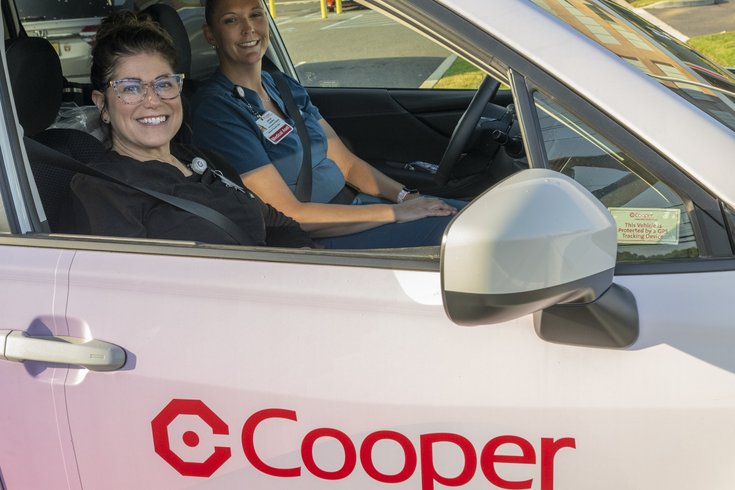 Provided image/Cooper University Health
Nurse practitioner Kimberly Young, left, and medical specialist Jaclyn Cauley are part of Cooper University Health's new mobile unit, which brings primary care to the homes of patients with intellectual and developmental disabilities.
Visiting doctors' offices and hospitals can be overstimulating and stressful for anyone. These visits can be especially difficult for people with Down syndrome, autism or cerebral palsy, because they may have more acute reactions to external stimuli.
To help address these challenges, Cooper University Health Care has created a mobile unit that provides primary care to South Jersey patients with intellectual and developmental disabilities and their families in their homes, day programs, community residences or group homes.
"Some patients who have sensory impairment, just a simple way in which you examine them, in which you touch them, can cause discomfort," said Dr. Franziska Jovin, Cooper's senior vice president and chief experience officer. "Other patients who have auditory sensitivity, new noises and an unfamiliar environment can cause distress and take away from the focus of the doctor's visit. So the familiarity with the environment is an important, dramatic benefit."
The mobile team includes a nurse practitioner and medical assistant who coordinate with patients' primary care doctors at Cooper.
"It's a seamless partnership between the primary care physicians at Cooper and our mobile program. We work hand in hand," said Erin Shipley, Cooper's vice president of consumer experience.
Sick visits, routine health assessments, follow-up care, medication management, preventative screenings and other services are all provided through the mobile unit. The nurse practitioner and medical assistants who provide the on-site care, as well as the behind-the-scenes staff and providers involved in the mobile program, are trained in how best to help people with intellectual and developmental disabilities and how to tailor care to each patient's needs.
"Some of our patients are nonverbal, and they're wary of communicating with us," Jovin said. "It's more difficult, and sometimes they have less understanding of how an office functions, the need for wait time. Just simply being in a new environment creates anxiety and that can translate to agitation, which, for many of our patients, can be a form of communication. So part of the impetus for this program was to care for them in the environment they're most familiar and comfortable in."
The mobile unit, which started over the summer, is an extension of an overarching program Cooper launched in 2023 to better address the needs of patients with intellectual and developmental disabilities. Funded partly by a $2 million grant from the New Jersey Department of Health, the program has offered specialized education for staff and providers and improved care coordination for patients and families. It also has created a series of multi-sensory rooms with special lighting, noise-canceling headphones and other features in Cooper's emergency and radiology departments.
Even so, for some patients with intellectual and developmental disabilities, getting to office visits requires additional support, sometimes one or two family members or caregivers. The new mobile unit removes these impediments.
"We hear stories all the time about patients who it's been four or five years since we've been able to get a blood pressure on them, and now, all of a sudden, we're able to get a better clinical picture to treat them and design care plans for them, because they're able to be seen," Shipley said.