



January 09, 2026

 Kevin Barrett/For PhillyVoice
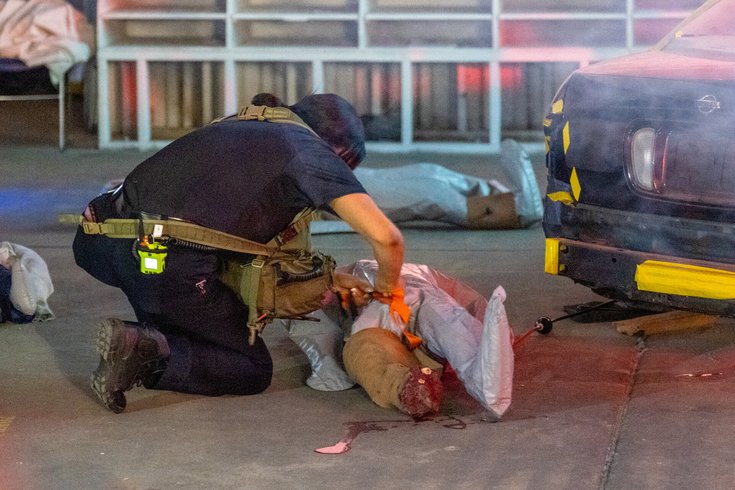
At Disaster University, first responders learn how to triage patients at mass-casualty events in less than 30 seconds and also how to transport them to hospitals and other locations.
Medics in chemical-protective suits, gas masks and fluorescent orange boots trudged onto a SEPTA platform where an attack of unknown origin — chemical, biological, radiological or nuclear — had erupted in thick smog. They carried hard black boxes with nerve agent antidotes and checked the symptoms of a person passed out on a bench, and another on the ground, to decide which shot to give them.
Thankfully, this was not happening in real life.
It was a simulation Thursday at Philadelphia's new Disaster University, a training facility at a Kensington warehouse where emergency medics and firefighters are learning to respond to mass-casualty incidents in an authentic, real-time environment.
The biological weapons attacks, active shooter situations and other manmade and natural emergencies staged at Disaster University – the only training facility of its kind in the Mid-Atlantic Region – require first responders to think "critically and dynamically" and to use "an element of free-form, open-decision making that isn't available in normal, curated clinical experiences," Fire Paramedic Captain William Murphy said at Thursday's media event, also attended by top fire department brass.
Disaster University is part of Philadelphia's preparation for hosting the FIFA World Cup and other celebrations marking America's 250th birthday this year. The Philadelphia Fire Department and paramedics also have 220 new ballistics protective vests that are lighter, easier to put on and have an enhanced penetrative coating – along with 220 new helmets with splash protectors and trauma bags.
Philadelphia's new Disaster University puts first responders through a range of simulations, including active shooter incidents, biological attacks and other mass-casualty events. Above, an EMT triages a patient during a simulated car crash.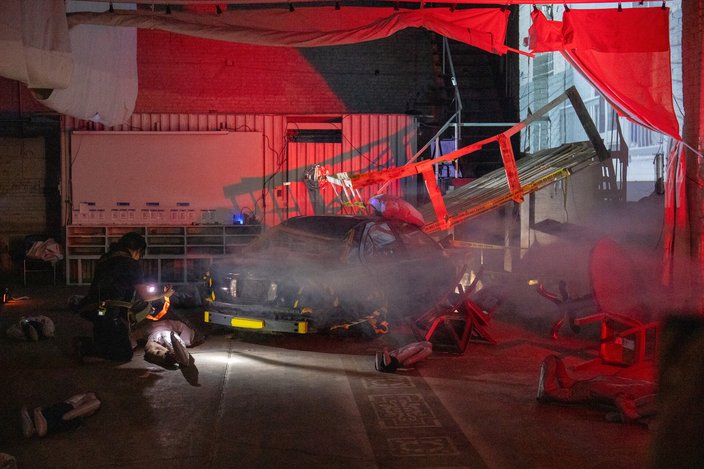 Kevin Barrett/For PhillyVoice
The new gear cost about $1 million, with the city using grants and budgeted funds to cover it. But sweat-equity, donated materials and support from the Fire Department administration, Office of Emergency Management and other groups made Disaster University a zero-cost set-up in just over a month, fire department officials said.
"This was really thinking outside of the box, an alternative way to provide training — in particular, hands-on training — to ensure that our EMS providers are some of the best in the country," Philadelphia Fire Commissioner Jeffrey Thompson said.
Between October and December, the city's 500 EMTs each went through a 12-hour training day at Disaster University. During that time, they learned to triage victims at mass-casualty scenes in 30 seconds or less. A second part of the training this spring will help EMTs practice incident command structures and transporting victims to hospitals and other locations away from mass-emergency sites. Firefighters who are trained as EMTs also will go through Disaster University, Murphy said.
"We're doing everything that we need to do to be prepared for anything," Fire Battalion Chief Derek Bowmer said before a curtain lifted on a scene with blaring sirens, flashing lights and clouds of smoke. In this scenario, a car had rammed into a building.
Disaster University, Philadelphia's new training program for EMS workers, is part of the city's safety preparations for hosting the FIFA World Cup and celebrations of America's 250th birthday in 2026.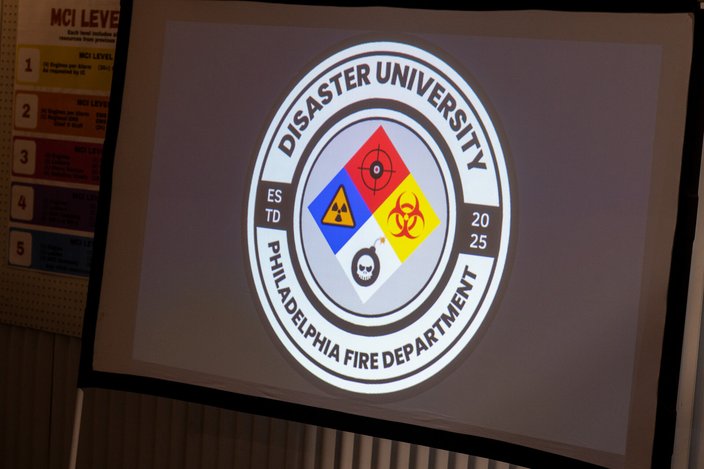 Kevin Barrett/For PhillyVoice
Seven inflated dummy victims sprawled on the ground, including a child lying on top of an adult. An EMT used a flashlight to examine and triage each person, cinching a tourniquet onto one victim who looked like it had lost part of a leg. A trail of painted blood dripped from the limb onto the ground.
Then, to further demonstrate the training EMTs receive at Disaster University, I was tasked with following a group of fire department medics as they responded to an active-shooter incident in a staged teachers lounge. They marched into the scene shouting "move it," "back on the wall," "clear" and other commands I had trouble hearing over the sirens and alarm.
The vest was heavy, and I hadn't been able to put my helmet on straight or tighten it well enough before it was time to go, so it wobbled on my head. I think I heard one of the medics say something like "pulseless" when he was examining the first of two dummy victims lying on the floor.
PhillyVoice reporter Courtenay Harris Bond prepares to take part in a simulation at new Disaster University, a training program for the Philadelphia's first responders.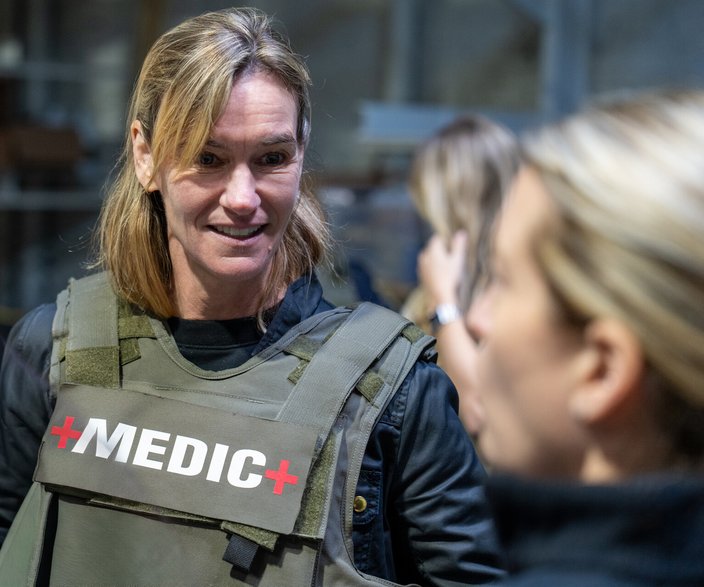 Kevin Barrett/For PhillyVoice
Before I knew it, I was following the line of medics out of the site. I was exhausted, and I hadn't done anything.
My reactions were a response to the "jeopardy" and "chaos" Murphy said they introduce to Disaster University scenes to simulate how the "neurological system wants to go into fight and flight mode" during these emergencies – and how the first responders have to override that reaction to tend to victims and maintain radio contact.
"The idea that you can maintain enough neurocapacity to be able to communicate, while you're doing physical skills, when you have everything in the world telling you that you're in danger, is a skill that can ... only be developed in (these) kinds of settings," Murphy said.