




August 08, 2025
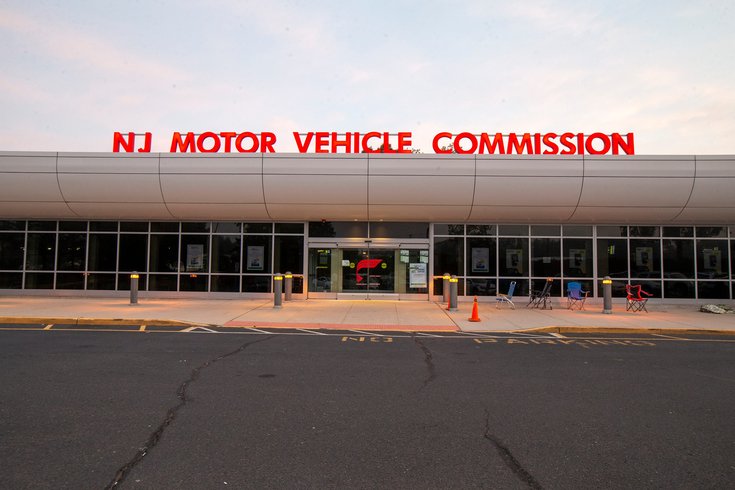 Tanya Breen/USA TODAY NETWORK
New Jersey's digital driver's license law promises convenience but civil liberties advocates warn of privacy risks and potential surveillance overreach.
A new state digital driver's license law promises convenience, but critics warn the move risks turning smartphones into surveillance tools.
Last month, Gov. Phil Murphy signed legislation requiring the state Motor Vehicle Commission to create mobile driver's licenses, digital versions of physical IDs that will be accessible on a smartphone. Implementation is still at least three years away, giving the state time to work out the technological details.
SIGN UP HERE to get PhillyVoice's free newsletters delivered to your inbox
Murphy has pitched the law as a common-sense move that will make New Jerseyans' lives easier, but civil liberties advocates are concerned about the potential for privacy breaches if safeguards are not in place.
"We want to make sure that digital IDs don't risk broad surveillance or risk circumventing Fourth Amendment rights and privacy rights," said Jake Laperruque, deputy director of the Center for Democracy and Technology's security and surveillance project.
Laperruque worries the new technology could be used for ulterior purposes, such as mapping people's movements.
"That's why it's important to have clear and conspicuous consent for any ID check," Laperruque said.
The Center for Democracy and Technology, a nonpartisan, nonprofit organization that promotes civil liberties, helped the American Civil Liberties Union develop a list of recommendations for states aiming to approve digital licenses. The organizations are pushing for written protections that would prevent overreach.
"Digital IDs raise a host of concerns for privacy and civil liberties, particularly in an era where private businesses and the federal government have weaponized data for oppressive ends," ACLU-NJ staff attorney Dillon Reisman said.
A group of advocacy organizations signed a recent statement discouraging lawmakers from adopting identity systems that allow officials and businesses to track when or where digital IDs are used.
In other states, digital IDs are typically stored in an encrypted digital wallet. It's not clear how law enforcement will access the necessary data during traffic stops or how to avoid overreach. The New Jersey law says whoever presents a digital driver's license to, say, a police officer does not have to relinquish their phone, and that displaying a digital license does not mean they are giving consent for their phone to be searched.
Those are helpful, said Alexis Hancock, director of engineering at the Electronic Frontier Foundation.
"Writing that into the bill helps create guidelines for law enforcement to understand that this is not a warrant for search," Hancock said. "This provides a voice for those people who may not feel empowered enough to go back and forth and negotiate with a law enforcement officer."
Another feature of New Jersey's law supported by civil liberties advocates: its long runway. Language requiring 44 months for implementation may be the right move to ensure the system is soundproof, Hancock added.
"If we start making this thing that can be grabbed in a lot of ways and stored and held in a lot of ways that it couldn't previously, inevitably, people are going to want to grab and stockpile that," Laperruque said. "It's always better to try to think about, anticipate, how that will happen on the front end than try to, then try to clean up the mess on the back end."
New Jersey Monitor is part of States Newsroom, a nonprofit news network supported by grants and a coalition of donors as a 501c(3) public charity. New Jersey Monitor maintains editorial independence. Contact Editor Terrence T. McDonald for questions: info@newjerseymonitor.com.