




February 22, 2026
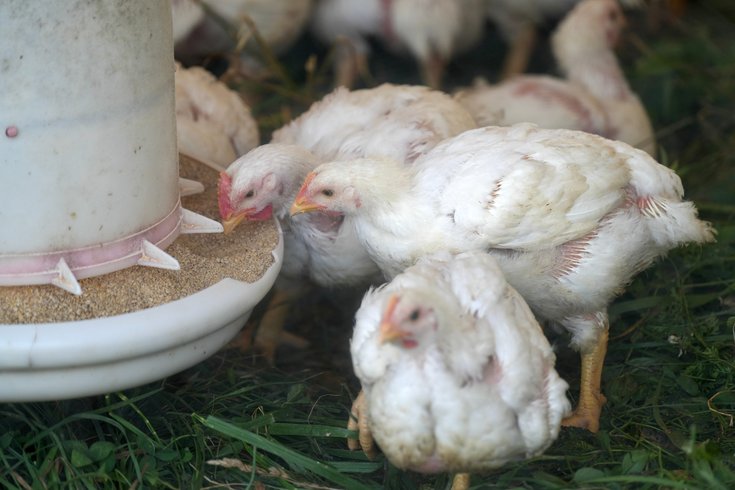 Scott Utterback/Imagn Images
Pennsylvania is deploying more personnel and expanding testing as a highly contagious strain of bird flu kills millions of birds. About 7.1 million birds have died this year, with outbreaks in Philadelphia, Bucks and other counties.
As a highly contagious strain of bird flu ravages the state's poultry farms, Pennsylvania and the federal government are deploying more personnel and expanding testing.
The commonwealth's $7.1 billion poultry industry has grappled with Highly Pathogenic Avian Influenza since 2022, but infections have spiked in recent months – claiming the lives of millions of birds.
SIGN UP HERE to get PhillyVoice's free newsletters delivered to your inbox
The U.S. Department of Agriculture reports that 7.1 million birds have died in Pennsylvania so far this year – with the majority in Lancaster County. But other reported outbreaks were in Dauphin, Philadelphia and Bucks counties.
Fifty-five veterinarians and employees, four Penn State Extension experts and three members of the Pennsylvania National Guard Civilian Support are already working to combat the virus' spread. They will be joined by six commonwealth employees and 42 workers with the U.S. Department of Agriculture in the coming days.
"This virus continues to test our industry, and we have been responding aggressively from day one. When cases rise, we intensify. Our teams are on the ground immediately, our labs have increased testing capacity and have expedited results to support the response, and we are coordinating daily with USDA and industry leaders," said state Agriculture Secretary Russell Redding in a release.
"We need every producer to double down on biosecurity – vigilance on the farm is the strongest defense. We are fully mobilized. We will continue deploying every available resource to protect Pennsylvania farms and we need every producer to stay alert and proactive as we confront this evolving threat together," he added.
In the last six weeks, Pennsylvania's Animal Diagnostic Laboratory System has performed 8,000 tests and tested 80,000 birds, an expansion of its testing abilities. Once avian flu is detected, state teams deploy alongside USDA and local emergency management officials to quarantine affected sites and conduct testing.
Those groups also guide cleaning and disinfection protocols at local farms to contain the virus. Wild bird migration increases seasonal risk, but the state's agricultural department urges poultry producers to adopt the following preventative measures:
• Limiting and tracking farm access
• Requiring protective clothing and footwear for anyone entering poultry areas
• Cleaning and disinfecting vehicles and equipment
• Preventing contact between domestic flocks and wild birds
• Monitoring flock health closely and reporting unexplained illness or death immediately
Pennsylvania is the only state with a dedicated recovery fund for poultry producers impacted by the virus. The fund currently has just under $59 million in the fund after $16 million was distributed to 300 businesses. Some farms have used the dollars to improve their disease prevention processes.
The 2024-2025 budget included $6 million to establish a fourth diagnostic laboratory at Penn State Beaver. Gov. Josh Shapiro's 2026-2027 proposal includes $11 million for Agricultural Preparedness and Response, $2 million of which would support operations at a new lab.
Avian flu has a very low risk to the general public and infected poultry is safe to consume when properly handled and cooked, according to the state's release.
Sick birds and unexplained deaths should be reported to (717) 772-2852. Free Wildlife Biosecurity Assessments are available through the USDA. For more information, visit agriculture.pa.gov.
Pennsylvania Capital-Star is part of States Newsroom, a nonprofit news network supported by grants and a coalition of donors as a 501c(3) public charity. Pennsylvania Capital-Star maintains editorial independence. Contact Editor Tim Lambert for questions: info@penncapital-star.com.