



July 18, 2026
 Colleen Claggett/For PhillyVoice
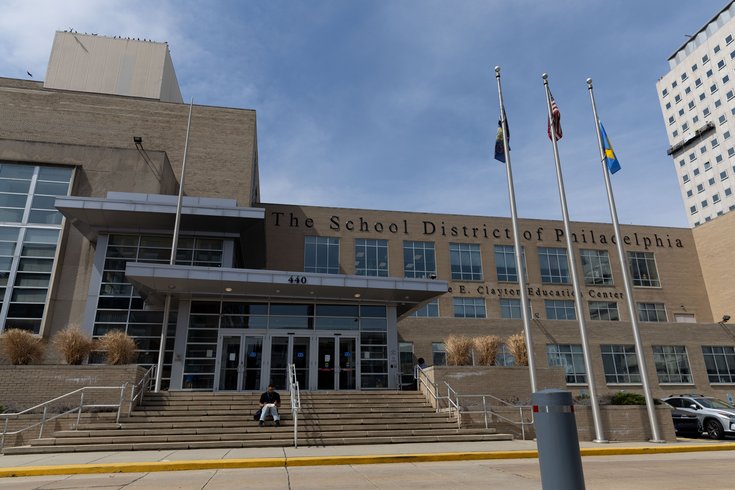
English learners made up around 22% of Philadelphia’s school district enrollment last year, more than double the share from a decade prior. Above, the district's administration building in Center City.
English learners make up a growing share of Philadelphia’s district enrollment, with around 25,000 enrolled last year.
But they’re significantly less likely to make it to graduation than their peers — and that gap has only widened over the past decade.
English learners include a diverse range of students, from various different language and cultural backgrounds. Some students arrive in Philly from wholly different education systems, and some have received little previous education in English at all. Last year, they represented around 22% of the district’s enrollment, more than double the share from a decade prior.
MORE: Philadelphia teachers describe chaotic 'fantasy football draft' to get their school assignments
Families and advocates say the district doesn’t provide families enough support or students enough flexibility, especially in high school. Even with English as a second language classes and newcomer programs, students often need more help, several English as a second language teachers told Chalkbeat.
Last year, only 70% of students identified as English learners at any point in high school graduated within four years, compared with 88% of students who were not identified as English learners, according to district data.
That data doesn’t include students who were identified as English learners in elementary or middle school and reached English proficiency before ninth grade. But advocates say the lower graduation rate among high school English learners underscores that older students need additional support to get their diplomas.
"The School District of Philadelphia is pretty far behind and out of touch with what it means to support high school age newcomers," said one district English as a second language teacher, who spoke on the condition of anonymity because the district did not authorize her to speak publicly.
She and other teachers and advocates said the biggest issue is poor attendance. Many English learners have to balance school with work to support themselves or their families. Though the district has some flexible options, such as accelerated or virtual programs, they are rarely accessible to students just beginning to learn English or who have just started formal schooling.
As a result, students often cut class to go to their jobs, the teacher said. Those absences can lead to suspensions and truancy.
"It winds up pushing them out of school," she said.
In a statement, district spokesperson Monique Braxton said the district "remains deeply committed to ensuring each and every EL student has a clear, supported pathway to graduation."
Braxton said the district ensures students can access high-quality curriculum and get support to meet graduation requirements. The district also provides training to teachers across subjects in how to work with English learners.
Across the country, English learners are less likely to graduate than their peers, though some studies have found that those who attain English proficiency before high school outperform their peers who are native English speakers. Since 2022, English learners’ average scores on standardized math and reading tests have declined more sharply than those of other students, according to national assessment data.
Some of that gap is expected because the category, by definition, includes students who are not yet proficient in English, said Michael J. Kieffer, a professor of literacy education at New York University.
"It's a long-term narrative that English learners are struggling, and often they're referred to as if they're perpetually struggling," Kieffer said. He said it's important to remember that some English learners' success isn't captured in data focused solely on high school.
Philadelphia has expanded its newcomer academies to three schools in recent years, providing additional support and resources for students who are new to the country and learning English. It also offers English as a second language classes and support programs for English learners in several other neighborhood high schools.
Still, advocates say families and students constantly struggle to get information in a language they understand and to get help accessing the curriculum.
"We often get calls from families who realize that their children are not making progress in their neighborhood schools, not learning enough English, or getting enough support," said Kristina Moon, a senior attorney in the Philadelphia office of the Education Law Center.
Moon's group and others have advocated for the district to put more resources toward newcomer programs in high schools to help students reach English proficiency faster. Doing so would help students pass classes and connect with the greater school community through extracurricular activities and sports, Moon said.
Rebecca Redelmeier is a reporter at Chalkbeat Philadelphia. She writes about public schools, early childhood education, and issues that affect students, families, and educators across Philadelphia. Contact Rebecca at rredelmeier@chalkbeat.org. Chalkbeat is a nonprofit news site covering educational change in public schools.