






March 24, 2026

 Source/Image licensed from Ingram Image
Philadelphia FIGHT is opening a health clinic in Center City that serves people getting out of prison. The Sam Morales clinic offers low-barrier primary care, mental health treatment and other services.
Figuring out how to access medical care, including mental health or addiction treatment services, can be a major challenge for people leaving jail and prison.
That is why the nonprofit Philadelphia FIGHT is opening a walk-in clinic on the second floor of its Center City facility to provide wraparound services to people re-entering the community after periods of incarceration.
Philadelphia FIGHT offers health care and support to people facing health disparities throughout the city and already has several other services at its building at 1207 Chestnut St.
Its John Bell Health Center on the third floor provides primary care, HIV prevention, mental health services and nutrition education for people 18 and older. On the fifth floor, Philadelphia FIGHT Pediatrics offers primary care for children and adolescents, with a special focus on youth who have experienced social adversity. The Y-HEP Adolescent and Young Adult Health Center has trauma-informed primary care, sexual and reproductive health services, pre-exposure prophylaxis medication and other services for adolescents and young adults ages 13 to 26.
Now, the Sam Morales clinic, named after a local advocate for people with HIV and AIDS, is offering primary care, mental health services, medications for opioid use disorder and case management to people coming out of city jails and prisons. With a ribbon cutting slated for Friday, the clinic is designed to be a "one-stop shop," said Philadelphia FIGHT Chief Executive Officer José Benitez.
"Its main focus is for people who are reintegrating into society, but it's not exclusive to that," Benitez said. "It will also be open to people who might be experiencing homelessness, people who typically do not come in for health care easily, because there are barriers that are set up when they come into health care."
People can visit the Sam Morales Clinic between 9 a.m. and 5 p.m. Mondays through Fridays without need to book an appointment. In the coming months, the clinic may add some evening and weekend hours, Benitez said.
On-site patient navigators will help people secure state identification and health insurance. The clinic will evolve as its staff learns more about the needs of the people it serves and will look for outside partners to collaborate with, Benitez said.
"Providing this service is going to be, 'What else do people need?'" Benitez said. "We're going to learn from the process and then continue to sort of evolve the program."
Philadelphia FIGHT is receiving some funding for the clinic from the Pennsylvania Commission on Crime and Delinquency, a state agency partly geared toward assisting reentry initiatives.
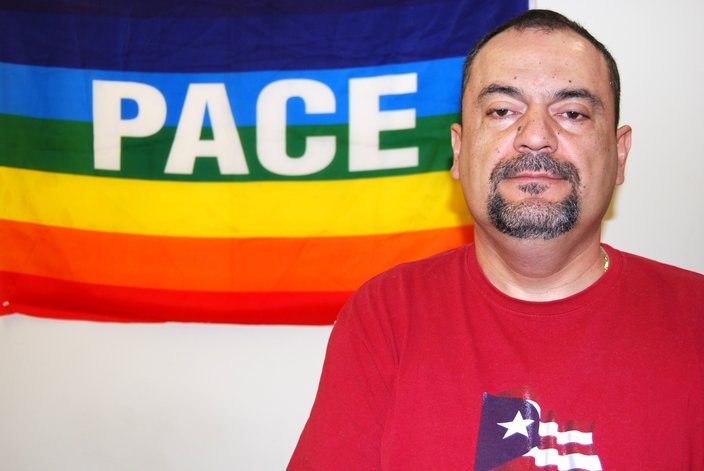
Sam Morales, who died in 2016, was an advocate for Latino people living with HIV, and adept at connecting people with medical, social and other support services. Philadelphia FIGHT has named its new walk-in clinic for people leaving jail and prison after Morales.
Morales was an advocate for people with HIV and AIDS until he died in 2016. Among his many efforts, Morales helped start Latino TEACH, a program at Prevention Point Philadelphia for Spanish-speaking people living with HIV to train as peer educators, advocates and activists.
"Sam was a person with lived experience who came out of the prison and chose to live his life in a way that he wanted to give back to his community," Benitez said. "He was hyper focused on people who were being released from prison and making sure that they had these wraparound services."
"Somebody would seek him out to say, 'Hey, I'm struggling with this.' And Sam would be like, 'Let me plug you into this service over here.' So essentially, Sam is really the inspiration for the clinic, because in lots of ways, he was an early navigator before the job was sort of written."