


June 05, 2026
 StreetView/Google Maps
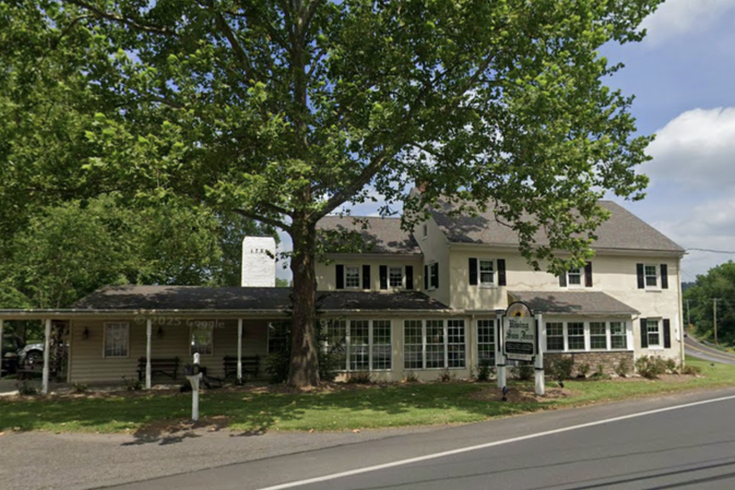
The Rising Sun Inn, at 898 Allentown Road in Franconia Township, has closed and will be sold to the township for $1.25 million at the end of the month. The property, built 1739, was once used to store the Liberty Bell for a night when the British occupied Philadelphia during the Revolutionary War.
The Rising Sun Inn, a tavern housed in an 18th century building in Montgomery County, once served as a temporary hiding place for the Liberty Bell during the Revolutionary War, became a stop on the Underground Railroad and operated as a speakeasy during the Prohibition Era in the 1920s.
Its days as a restaurant have come to an end — for now — as the owners of the property at 898 Allentown Road prepare to sell the building and adjacent barn to Franconia Township. Rising Sun Inn owners Donna Paci and Fred Duerr are retiring and say their business, which opened in 2006, had faced difficulties staying afloat in recent years.
"While our retirement played an important role in this decision, the changing economic landscape and ongoing challenges facing small, locally owned businesses also contributed," the owners said on Facebook. "We worked hard to continue operating and serving our guests, but ultimately it became clear that we could not sustainably continue for the future."
The tavern said it has reached an agreement of sale with the township, "which recognizes the historical significance of the property."
"We appreciate the Township’s commitment to protecting and preserving an important piece of local history for future generations," the owners said.
Franconia Township manager Jon Hammer confirmed the pending $1.25 million sale on Friday and said the township expects to close on the property at the end of June. The purchase includes the tavern's liquor license.
"We are interested in the preservation of the structures. That's really what we care about," Hammer said. "What we didn't want is a developer to buy the property and demolish the structures, or a developer to come in and turn the property into something less than desirable. In the future, we'll be looking for someone to occupy the structure, whether that be another restaurant or a similar use. We're just doing due diligence at this point."
The colonial era property was constructed in 1739 by settler Peter Gerhart, a German immigrant who originally operated the building as a tavern and inn for travelers moving between Philadelphia and Allentown. Gerhart also founded a church in neighboring Telford, now known as the Christ Reformed Church at Indian Creek. The area was a midpoint along a vital trade route between Philadelphia and Allentown, which was then known as Northamptontown.
The Liberty Bell, first known as the State House Bell, was cast at London's Whitechapel Bell Foundry in 1752. It cracked on its first test ring in 1953 and was then recast in Philadelphia by craftsmen John Pass and John Stow.
During the Revolutionary War, when the British occupied Philadelphia in 1777-78, members of the Continental Congress gathered 18 of the city's public bells to be removed for safekeeping. Legend has it that the British were feared to melt them down and recast them for munitions.
The 2,080-pound Liberty Bell was removed from the steeple of the Pennsylvania State House — now Independence Hall — and was among a collection of bells taken to Allentown by a convoy of military wagons. Gerhart's hotel quartered soldiers during the war and stored the bells for one night during the 50-mile trek to the Lehigh Valley in September 1777.
The bells, including those taken from prominent churches and public fixtures, were stored under the floorboards of Zion's Reformed Church in Allentown until the British fled Philadelphia in June 1778. They went north to support forces in New York City after France entered the war, anxious that a naval blockade of the Delaware River would cut off access to other campaigns.
When the State House Bell returned to Philadelphia that summer, the steeple at Independence Hall was too damaged to have it remounted until after the war in 1785. Abolitionists started using the name Liberty Bell in the 1830s. There was never an official renaming. The distinctive crack beneath the inscription formed in the 1840s and worsened when the Liberty Bell was repaired to ring to honor George Washington's birthday in 1846. It has been silent ever since.
The bell was kept at Independence Hall until the city's bicentennial celebration in 1976, when it was displayed in a glass and steel pavilion on Independence Mall. Its current home across the street at the Liberty Bell Center opened in 2003.
Zion's Baptist Church in Allentown opened its own Liberty Bell Shrine Museum in 1962, displaying a replica and exhibits for decades until the museum closed in 2023. The replica bell, cast in 1769, remains at the church. The exhibits have since moved to the Lehigh Valley Heritage Museum.
Historian Jim Higgins, who serves as the Allentown museum and historical society's executive director, said there are few written records documenting the journey of the bells from Philadelphia to Allentown and back.
"There's a lot of myth and hearsay in oral tradition. It's like written tradition. It can change over time," Higgins said. "I have to assume that when they went back down to Philadelphia in 1778, the bells were returned to their original owners. People forget that these bells were really expensive items. You would want them back."
Higgins thinks the value of the bells might have been the most plausible reason for relocating them.
"The British were never short of munitions during the Revolutionary War," he said. "You're not making cannon out of bells because it's not the proper constituent metals."
The Rising Sun Inn's basement is thought to have been part of a network of stations on the Underground Railroad during the 19th century, although historical records of many safe houses are incomplete. The Gerhart family sold the inn during the early 20th century in the years before Prohibition. In an interview with CBS Philly earlier this year, Paci said the property has been a magnet for paranormalists and was a notorious speakeasy.
"The owner during that time went to jail multiple times for concealing alcohol here and having it hidden and not turning it over and kept continuing to serve the community," Paci said.
The Rising Sun Inn has not had any preservation work done in recent memory, Hammer said, but the owners made some upgrades over the years to keep the buildings in good condition. The barn was used as a wedding venue and the owners added a deck to the tavern in recent years.
"As long as I can remember, it's always been a tavern under many different names," Hammer said.
The owners of the Rising Sun Inn thanked patrons for their support over the years and encouraged people to support local restaurants and shops.
"Being part of this community has meant more to us than words can express," the owners said on Facebook. "The friendships and relationships built throughout the years made the Rising Sun Inn a very special place."