




February 09, 2026
 Julian Leshay Guadalupe/Imagn Images
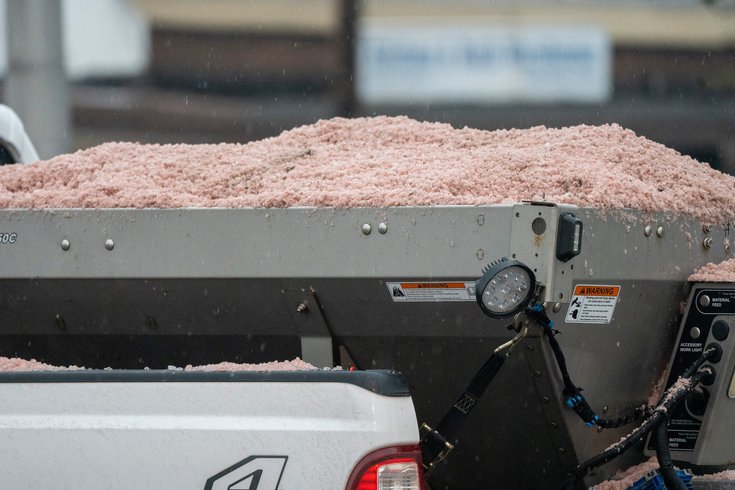
When road salt gets into a water system after the snow melts, it can impact local plants, wildlife and drinking water, according to environmentalists. Above, a truck delivers a shipment of salt.
As cleanup continues from the massive snowstorm that hit the Philly region on Jan. 25, even more road salt is set to hit the streets this week.
Approximately 15,000 tons of road salt — about 650 truck loads — was delivered Thursday, the Philadelphia Streets Department said. That brings the municipality's total reserves back up to 30,000 tons after another 15,000 tons was distributed pre- and post-storm.
The crystals that get spread across the ground every winter are most often made up of sodium chloride, the same as table salt but in much larger granules. While it helps make sidewalks and streets safe for walking and driving during freezing temperatures, using it in such large quantities can be harmful to roadways, plants, animals and water sources.
Corrosion from salt causes $5 billion in repair costs annually in the United States, according to the Environmental Protection Agency. Salt contaminates the drinking water and can cause issues for people with high blood pressure, as the water department doesn't treat for it, the Delaware Riverkeeper Network said. When there's a high amount of salt in ground water, trees can't pick up moisture. Animals that like to lick salt such as deer get attracted to the roads, which can increase crashes.
Faith Zerbe, a community action coordinator at the DRN, said she sees the excessive use of salt following a storm as a change to the whole food web and ecology of a stream or river because it causes a spike in sodium levels.
"Mayflies and stoneflies and all the little creatures that you want to have in the creeks and streams around Philadelphia and the Delaware watershed, that diversity can be impacted because of those big slogs of road salt and those spikes in salt in (water runoff), especially during the melts," Zerbe said.
Salt from de-icing efforts contributes to about 2/3 of the sodium input into the Delaware River, making it the largest salt source for the basin, according to the DRN.
The effects of this storm will also be felt into the spring and summer, Zerbe said. She expects a lot of damage to trees and shrubbery come spring due to the high levels of salt in the soil. It will also likely linger in the groundwater, and wildlife will struggle to stay hydrated when there are low base flows and the available water is extra salty.
To limit what goes into the water systems, Zerbe suggests shoveling and plowing often to reduce the need for melting. She also said to limit how much salt goes down in the first place, as two big sidewalks squares usually only require about a small cup. Researchers at Penn State said that grains should be about 3 inches apart for safe and effective melting, and it should only be applied to places where people are walking or driving.
"When you're seeing all that white and hear all the crunch, you don't want to be crunching walking through a parking lot, it means there's way too much salt down," Zerbe said.
Some alternative compounds such as calcium chloride, magnesium chloride and calcium magnesium acetate are less toxic for pets and the environment, though they can be more expensive and have different melting temperatures. The watershed also recommends spreading sand and birdseed to help with traction. But Zerbe said another simple solution is sweeping up any excess or unused salt from the sidewalks and streets, which keeps it out of the sewers, and reusing it for the next storm.
"After you put it down, if it's still remaining after things are gone and the temperatures rise, sweeping it up and then using it again is also a way to spread your finances," Zerbe said.
When the storm is over, salt should be stored in a waterproof container, which helps prevent leaks and spills better than bags. If there's a large pile of salt on the road, highway or in a local parking lot, it can be reported to the local municipality for cleanup.