





March 19, 2026
Temple Lung Center surgeons performed 179 lung transplants in 2025, the most ever completed in a single year at any institution in the United States.
The milestone underscores the scale and expertise of a program that has become one of the nation’s busiest lung transplant centers. It also highlights something many patients may not realize: world-class lung care is available right in Philadelphia.
Even in years when it is not setting records, the Temple Lung Center performs far more lung transplants than most similar programs.
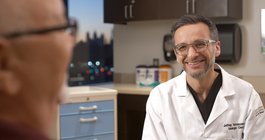
Dr. Kartik V. Shenoy, a pulmonologist at the Temple Lung Center, said a transplant center is considered relatively large if it performs about 50 transplants annually, while only a handful perform around 100.
“When you’re doing 179, experience matters,” he said.
That level of activity reflects the breadth of the Temple Lung Center’s program and helps explain why patients travel from across the country for care.
Each year, the center evaluates roughly 400 patients for lung transplants, making it one of the busiest programs of its kind in the United States.
Shenoy said most patients evaluated for transplant are able to move forward in the program. Others are monitored over time or treated with therapies that may delay or eliminate the need for a transplant.
“When I see a potential lung transplant candidate, I try to make sure that I look at every single stone that can be overturned,” he said. “If I can offer them something short of a transplant, I will. If not, we’ll go down the transplant route.”
The center’s size and multidisciplinary expertise also allow physicians to consider transplant candidates who may not qualify elsewhere.
For example, Shenoy said people with scleroderma may be turned away for lung transplants if the autoimmune disease affects their esophagus, allowing food to enter the lungs and cause complications.
At the Temple Lung Center, Shenoy said those patients would receive “a full evaluation that includes an esophageal evaluation, and we’d find ways for them, post-transplant, to work around their esophageal issues in order to make them good candidates for transplant.”
Similarly, people who need bypass surgery due to blocked heart arteries are often not considered transplant candidates at other hospitals. Temple’s surgical expertise allows both procedures to be performed at the same time.
“A lot of other programs will say, ‘Once you hit age 71, we won’t give you a transplant,’ or ‘If you have this degree of pulmonary hypertension, we won’t give you a transplant.’ We look at each patient as an individual and come up with the best plan moving forward.”
When Shenoy meets with a patient who has been turned down for a transplant somewhere else, the first step is understanding why.
He explains the potential risks and benefits of transplant and determines whether another treatment may be more appropriate.
If a transplant remains the best course of care, the patient undergoes a comprehensive evaluation by the specialists who would care for them before, during and after surgery.
In some cases, this process can help patients become eligible for a transplant later, even if they are not candidates at first.
Shenoy recalled a patient who came to Temple after being denied a transplant elsewhere because of aortic valve disease. Surgeons and cardiologists repaired the patient’s heart valve and adjusted their medications, stabilizing the condition enough for the patient to be placed on the transplant list.
The whole-patient approach to transplant evaluation has helped make the Temple Lung Center a destination for patients from across the country.
At the same time, Shenoy said the program remains committed to caring for patients close to home.
“One of our biggest missions is to help not only people across the nation, but also people right in the 19140 zip code and surrounding area,” he said.
The Temple Lung Center offers specialized care for complex lung diseases at locations across Philadelphia and nearby communities. To learn more or schedule an appointment with a Temple Health specialist, call 800-TEMPLE-MED (800-836-7536) or request an appointment online.