





August 28, 2025
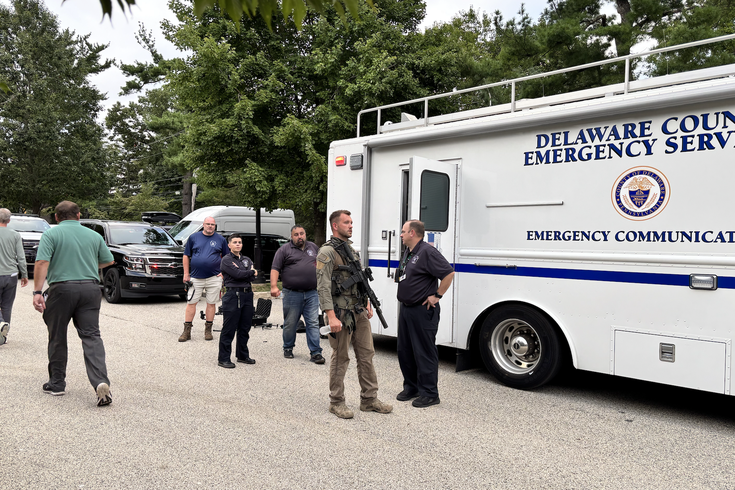 Courtenay Harris Bond/PhillyVoice
Law enforcement agencies are investigating last week's fake report of an active shooter at Villanova University. The nonprofit Global Project Against Hate and Extremism says it has evidence tying the swatting incident to a cybercrime group called Purgatory.
The false warning of an active shooter at Villanova University last week may be tied to an online group called Purgatory that anti-extremism researchers have linked to a string of so-called "swatting" events recently at U.S. universities.
The orientation day scare at Villanova on Aug. 21 – which was followed by a second hoax call Sunday – sent panic across campus and drew hundreds of law enforcement officers from across the region to search for an armed suspect while students, families and staff were placed on lockdown.
MORE: Philadelphia teachers union to vote on tentative new contract
The Global Project Against Hate and Extremism, a nonprofit group of researchers who formerly worked at the Southern Poverty Law Center, said Tuesday they had gathered evidence pointing to Purgatory's involvement in the first call at Villanova and at least one other swatting call made the same night at Bucknell University in central Pennsylvania.
Swatting describes a hoax report to police intended to cause the large-scale deployment response, including Special Weapons and Tactics teams and bomb squads, according to the Department of Homeland Security.
"At this time we can neither confirm or deny the report from Global Project Against Hate and Extremism," Delaware County District Attorney Jack Stollsteimer said in an email Thursday morning. The DA's office is working with the FBI, Radnor Township Police and Villanova University police on the ongoing investigation.
The researchers at GPAHE say Purgatory is part of a decentralized network of online "threat actors" who take glee in terrorizing college campuses and public places through false shooter reports and bomb scares. Members of the group interact with each other in chatrooms on Discord, Telegram and other apps to share and claim credit for their exploits, some of which are carried out for hire. GPAHE published a screenshot of a "Purgatory Services Menu" that lists fees ranging from $15 to $70 to carry out various types of swatting.
On the night of the Villanova incident, GPAHE researchers gained access to a chat group in which a male user under the name "Gores" allegedly claimed credit and started a voice chat with other members to make several swatting calls to other institutions. In the chat, Gores claimed to be under house arrest, the researchers said.
GPAHE posted a recording of the call allegedly made to Bucknell University, where Gores told a woman at the security office that there was a shooter on campus.
"I'm currently at Bucknell University. I'm in the library right now," Gores allegedly said. "I just saw a guy walking around, six foot tall, and it looks like he's holding an AR-15."
During the call, Gores tells the woman the shooter is heading toward him and that he can hear gunshots. The woman promises Gores she will send police.
GPAHE staff, who were attempting to track down the Villanova caller at the time, immediately called Bucknell's security office to inform them that the call they had just received was a hoax. Later that night, the researchers said Gores made similar calls to police departments and other locations in Michigan.
Wired reported Wednesday that it made contact with Gores and he took credit for at least the first hoax call made at Villanova. Gores did not reveal his name but identified himself as one of the leaders of Purgatory, which is part of a larger online network called "The Com" that engages in a range of extortion scams and other cybercrime.
About a dozen universities have been targeted by swatting calls in recent weeks. Another threat was made at the University of Tennessee at Chattanooga just hours before Villanova was placed on lockdown, and on Monday a hoax call was placed at the University of Colorado Boulder.
GPAHE said the challenge of identifying hoax callers like Gores is that they use Voice Over Internet Protocol services to make calls online while concealing their locations and other information from being traced.
Researchers at the nonprofit say an earlier version of Purgatory was formed in 2023 and targeted schools, airports and residential communities. One of the original leaders of the group was charged in July with orchestrating hoaxes in multiple states. It's unknown whether the current version of the group has any of the same leaders and members.
"While there is undoubtedly an ideological element to some of the groups, what is unique to this subculture is the emphasis on social standing within The Com," GPAHE staff wrote Tuesday. "The more media attention a group or individual receives, the more destructive the action, or the more harm inflicted on a victim, the more notoriety is rewarded."
The FBI declined to comment on Purgatory's possible involvement in the recent swatting incidents, but the agency said it has seen an uptick in these threats and urged the public remain vigilant.
"Knowingly providing false information to emergency service agencies about a possible threat to life drains law enforcement resources, costs thousands of dollars, and, most importantly, puts innocent people at risk," an FBI spokesperson said.
Villanova Police Chief David G. Tedjeske sent out an email Tuesday morning assuring the school community that his staff is taking the recent swatting incidents "extremely seriously" and will never assume a threat made against the campus is just a hoax. Tedjeske said the university has gathered and forwarded information from its investigation to the FBI, but said no suspects have been identified.
The university plans to have an added police presence on campus in the coming weeks. Tedjeske said last week's response is a sign that the region is prepared to address violent threats.
"While I understand that feelings of fear can also accompany watching all those law enforcement partners arrive, it does show the immense support our campus community has," Tedjeske said.