


July 27, 2026
 Provided Image/DRWC
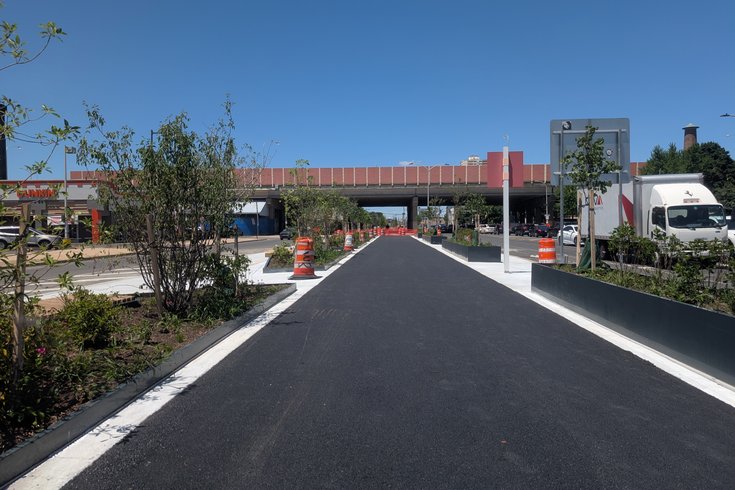
The Washington Avenue Connector is a multimodal path that runs along the South Philly corridor from Fourth Street to South Christopher Columbus Boulevard. The $9.5 million project, set to be finished this summer, is part of the Delaware River Waterfront Corp.'s long-term plan to transform the city's eastern riverfront.
For more than a year, the Delaware River Waterfront Corp. and Philadelphia Streets Department have been working together to build a more accessible and inviting path along Washington Avenue from Fourth Street to Christopher Columbus Boulevard.
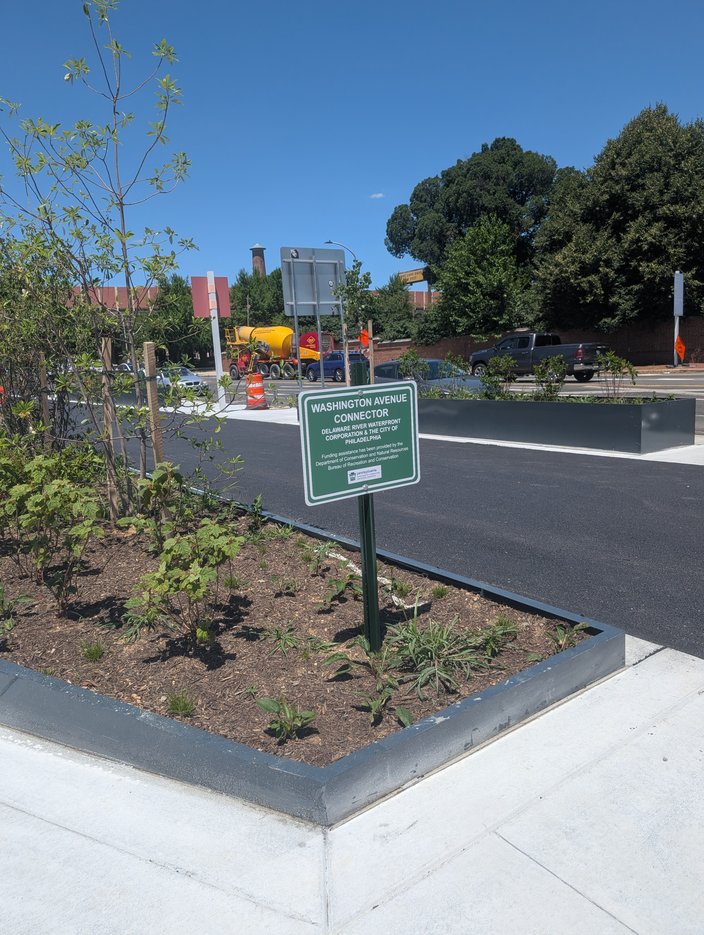
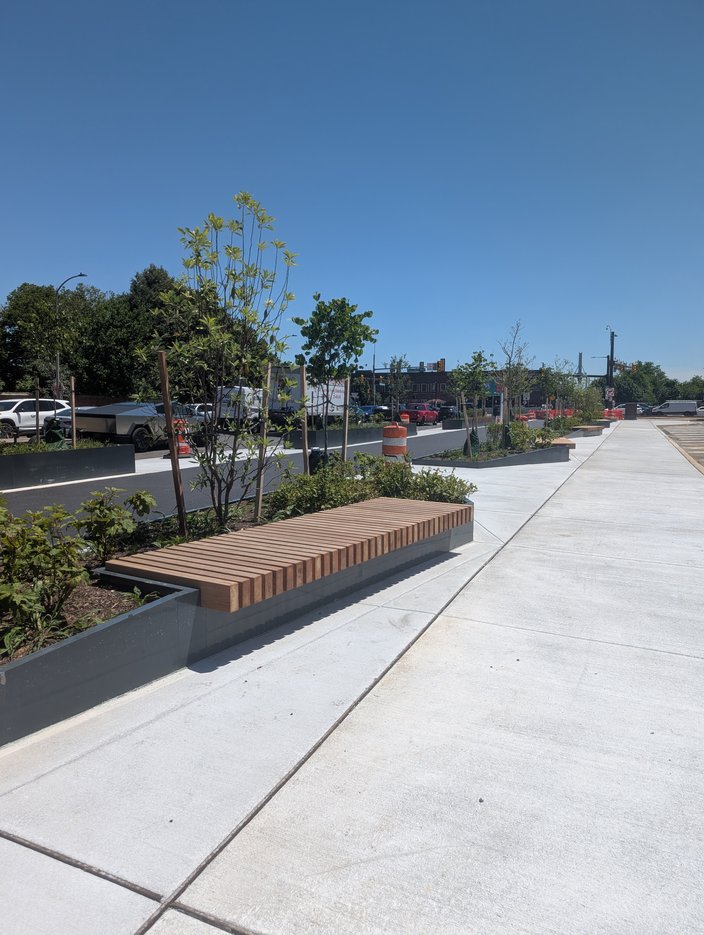
The Washington Avenue Connector project has added a multi-use path for pedestrians and cyclists, dozens of new trees, better lighting and new median islands along the stretch that links the South Philly corridor to the waterfront. The project is on track to be largely completed by the end of August.
"We were able to add a ton of pedestrian and bicycle infrastructure to make this street safer and more inviting for all modes of traffic, while also improving vehicular traffic through there by doing signal upgrades as part of it," said Elizabeth Woods, senior vice president of strategic development and real estate planning at DRWC.
The nonprofit's stewardship of the waterfront typically is contained to projects directly along the river and sometimes extending to Second Street. Its most notable improvement is the Delaware River Trail, a multi-use path that runs more than three miles along Columbus Boulevard from Pier 70 in South Philly up to Penn Treaty Park in Fishtown. The trail has helped turn an isolated stretch of high-traffic roadway into a welcoming recreational path along the riverfront.
Improving navigation and safety along Washington Avenue has been a long-term goal for the city. The contentious "road diet" that spanned two miles from Grays Ferry Avenue to Fourth Street pitted residents, businesses and traffic safety advocates against each other over how and where to trim the five-lane stretch. The city ultimately settled on a hybrid design that includes portions of Washington Avenue with three, four and five lanes.
When it came time to reconfigure the road from Fourth Street to the waterfront, the city turned to DRWC for help.
"There's kind of a natural division there at Fourth Street, where you get the start of that slip lane on the south side, and it's also where the street is the widest," Woods said.
The Washington Avenue Connector brings a new bike and pedestrian pathway, dozens of plantings and traffic-calming measures to the South Philly corridor that connects with the Delaware River waterfront.
The Washington Avenue Connector doesn't change any of the lane configurations on the main stem of the road. The width of the road allowed more flexibility to make improvements without inciting the level of conflict that simmered further west. The goal was to bring the east end of the road into better alignment with the future of the waterfront.
"The history of the waterfront is one of changing modalities, and so we have infrastructure that was built for certain uses that are no longer there," Woods said. "Part of what we're doing now, in concert with so many others, is trying to right-fit the infrastructure we have to both the current needs and our long-term goals for how we want the waterfront to look and feel."
The central segment of the Delaware River Trail, running from Washington Avenue to Spring Garden Street, has been a game changer in terms of laying the groundwork for a more pedestrian- and bike-friendly waterfront over the past few years. The Washington Avenue Connector now offers a safer access point to that path for South Philly residents in Queen Village, Pennsport and Bella Vista.
"The waterfront is both a destination for the entire city and a neighborhood destination for immediate upland neighborhoods, and a growing neighborhood in its own right," Woods said.
One of the goals of master planning along the Central Delaware is to increase residential development in an area that has historically been commercial and industrial. DRWC is looking to strike a balance of new housing and citywide attractions, bringing amenities that support both uses of the waterfront.
The pace of construction along the waterfront has made it a challenge to reinvent the corridor all at once.
PennDOT is now several years into building the cap over Interstate 95 that will support the 11.5-acre Park at Penn's Landing, and any transformational public space of that scale requires projects like the Washington Avenue Connector to make the park accessible on foot or bike. PennDOT also is working on the South Street Pedestrian Bridge extension, which will carry the existing structure across Columbus Boulevard to the waterfront.
All of these projects have brought a revolving series of detours and other traffic disruptions to Columbus Boulevard, I-95 and surrounding streets. Construction timelines are subject to delays, including the planned installation of the arch for the South Street Pedestrian Bridge. PennDOT had hoped to get the arch in place by June, but the agency now expects it won't happen until February, a spokesperson said.
PennDOT is now 50% finished with its portion of the I-95 cap, which has a target for completion in 2029. The Park at Penn's Landing, to be built by DRWC, is targeted to open in late 2029 or 2030.
DRWC is preaching patience and the promise of a future that will change how Philadelphia views its eastern waterfront. Various pieces of the vision — Spruce Street Harbor Park, Cherry Street Pier, the ecological park and "land buoy" at Washington Avenue Pier — each contribute to a bigger picture.
"The general public, they don't always see it as one cohesive connection," said Erika Joy Erb, DRWC's vice president of marketing. "Things are still very fragmented to the consumer, so people know and love certain beloved spaces, but they might not have any real sense that the DRWC team is a nonprofit and our mission is to really build and beautify and grow the waterfront."
The Washington Avenue Connector was built in a partnership between the Philadelphia Department of Streets and the Delaware River Waterfront Corp.
Progress is evident in some neighborhoods, including Northern Liberties, where residential construction has surged along the Delaware River. The most notable project has been the Rivermark apartment complex, which has a Sprouts grocery store, a shimmering public art installation and the recently opened Lucky Duck bar with views of the Benjamin Franklin Bridge.
"We always said we wanted mixed-use residential and commercial, with a strong emphasis on community-serving retail," Woods said.
Some projects have taken longer than expected to get off the ground.
Nearly six years have passed since DRWC awarded development rights to the New York-based Durst Organization to construct as many as 12 buildings to the north and south of Penn's Landing between Spruce and Lombard streets. Preliminary work started during the pandemic, but the project has been stalled by rising construction costs and a tough economic climate for large-scale development. DRWC still has an active letter of intent with the developer and remains in conversation with them, including on matters of design that will be impacted by the park.
"Getting some clarity on the schedule for the park and the actual engineering — not just the engineering on plan, but the actual built structure of the park edge and the roadways — was really important for any design of buildings that would go on that parcel to move forward," Woods said.
For now, the Durst Organization's $2.2 billion plan is still taking shape with room for the developer and DRWC to reevaluate the future of the waterfront parcels.
DRWC also declined to comment on the status of its plan to create a new public park at Graffiti Pier in Port Richmond. The six-acre property, owned by Conrail, still has not been formally transferred to DRWC seven years after the parties signed a contract to rehabilitate the space. The abandoned coal-loading terminal has been a waterfront haven for street artists for decades, but its condition has deteriorated over the years. Plans for the park have been in limbo since a portion of the pier collapsed into the river two years ago.
The $9.5 million Washington Avenue Connector has been funded with a combination of investments from the city, state and grants provided to DRWC.
Washington Avenue has been resurfaced from Fourth Street to Columbus Boulevard, and the project has added new ramps for accessibility and curb bump-outs at intersections. Crosswalk distances have been shortened alongside traffic signal improvements. There's also now a parking-separated westbound bike lane on the northern side of the road. The slip lane that went from Fourth Street to Third Street at Jefferson Square Park and under I-95 has been removed.
DRWC officials are excited to see the area come to life and draw more people to the waterfront after a lengthy period of construction that took a few months longer than expected. Projects can take years of coordination with the city and PennDOT to manage work on streets they own.
"Construction causes inconvenience for people. That's just the nature of it," Woods said.
Changing the infrastructure comes with sacrifices, including longer traffic signal changes at some intersections, but the adjustments are part of an equation meant to get the most of the waterfront in the years ahead.
"It comes with a learning curve," Woods said. "You had a lot of folks who had lived on the waterfront, or had been using the waterfront in a certain way for decades, without that level of bike and pedestrian traffic. It takes some growing pains as things change and people learn how to to work with the improved infrastructure."