





July 02, 2026

 Kevin R. Wexler/Imagn Images via Reuters Connect
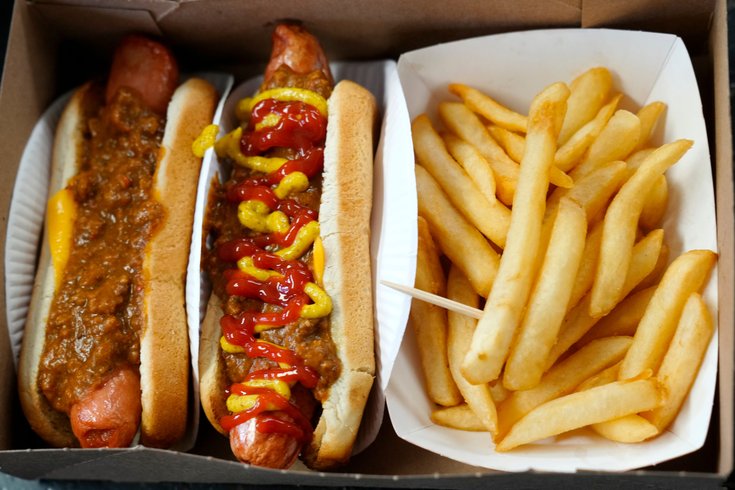
Hot dogs, an American staple, can be hard to resist, but are often high in unhealthy additives, including sodium and nitrates.
Hot dogs are a summer staple, consumed in large numbers at cookouts and ballgames.
"Americans like them because they are convenient and easy, and hyper-palatable because they taste salty and fatty," Julia Zumpano, a registered dietitian with the Cleveland Clinic, recently told the Guardian. "We get a big cascade of pleasure eating them. They hit the pleasure centers in our brains. It's hard to not eat them and it's hard to stop eating them."
MORE: U.S. death rate dropped to record-low last year, CDC report says
On the Fourth of July, some Americans even compete to see how many hot dogs they can gorge on – despite the medical risks ranging from life-threatening ruptures of the esophagus to permanent damage to the gastrointestinal tract and sepsis. Not to mention other serious health issues, such as an increased risk of heart disease and some cancers.
"Are hotdogs harmful? Are you kidding me?" Michael Jacobson, a food scientist and retired executive director of the Center for Science in the Public Interest, told the Guardian. "They are among the worst foods you can eat if you eat them often. Once in a while is OK, but eating them on a regular basis is a very bad idea."
Still, more than half of Americans recently polled said they ate hot dogs on a regular basis, and nearly 90% said they were unaware of health dangers posed by hot dog consumption.
So what is actually in a hot dog?
The U.S. Department of Agriculture defines hot dogs, sometimes called frankfurters, as cooked or smoked sausages "according to federal standards of identity." The official jargon is hard to translate, but basically hot dogs are "semisolid products made from one or more kinds of raw skeletal muscles from livestock (like beef or pork)" in various sizes, "short, long, thin and chubby."
The National Hot Dog and Sausage Council has a hot dog ingredient guide. The list includes "mechanically-separated" pieces of chicken, turkey or pork and also sometimes "variety meats," also known as organ meats. Casings may be made from collagen or from hog or sheep intestines.
If that's not enough to turn consumers off, hot dogs top the list of processed meats, and are full of nitrates used to preserve them.
Nitrates occur naturally in some vegetables. But in foods with added nitrates, these chemicals break down into nitrosamines, which increase the risk of stomach, colorectal and esophagus cancer and also can contribute to complications during pregnancy, WebMD says.
A 100-milligram serving of cured ham contains about 1 milligram of nitrates, and a 100-milligram serving of bacon has about 5.5 milligrams. The average hot dog? About 9 milligrams.
Another reason to avoid hot dogs: "Processed meats contain other additives and are very high in sodium, which is a well-established risk factor for high blood pressure and heart disease," Dr. Walter Willett, professor of nutrition and epidemiology at the Harvard T.H. Chan School of Public Health, said in a Harvard Health publication in 2022.
Cutting down on sodium, even for people who do not have high blood pressure, may reduce risk of stroke, heart attack, heart failure, kidney disease and other serious medical issues, the American Heart Association says.
For people who are still intent on consuming hot dogs, foodies have some recommendations.
"When I'm buying hot dogs, I look for all-beef brands, and always flip the package around to check for filler. You want minimal ingredients included," Kathleen Boureston, chef and owner of the food and recipe blog, Gonna Want Seconds, recently told Real Simple. "Some things you want to look for and avoid are mechanically separated meat, corn starch and soy ingredients."
The consensus among the three chefs Real Simple interviewed was that Applegate Organics' The Great Organic Uncured Beef Hot Dog was the best for several reasons, including its "clean ingredients" and "perfect snap."
Wirecutter recently deemed Sabrett's hot dog as the "platonic ideal" with a "firm but juicy beefy interior, bolstered by paprika, hickory smoke, salt, and pickle brine" – giving the "dogs a rich, pastrami-like flavor."
Other recommendations included Hebrew National Beef Franks, Vienna Beef Franks and Nathan's Angus Beef Franks.