





January 26, 2026
 Ashley Smith/Arden Theatre Co.
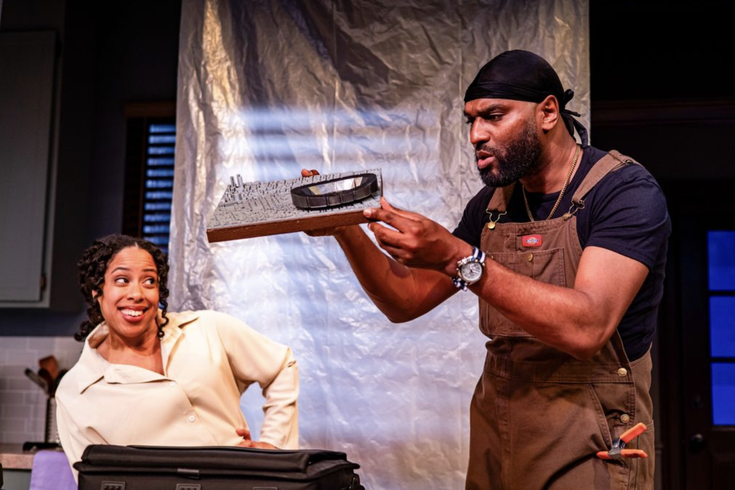
'Good Bones,' James Ijames' new play at the Arden Theatre Co., runs until March 15. The story examines issues surrounding a proposed sports stadium in a struggling community, drawing parallels to the 76ers' abandoned plan to build an arena in Center City. Above, actors Taysha Marie Canales (Aisha) and Walter DeShields (Earl) perform during a preview of the show.
Pulitzer Prize-winning playwright James Ijames is back at Arden Theatre Co. this winter with a show that will resonate as an allegory of the Sixers' scuttled plans to build a new arena on the edge of Chinatown.
"Good Bones," Ijames' drama about a sports stadium proposed in a poor Black community, tackles themes that pit neighborhood preservation against the gentrifying forces of urban renewal. It draws parallels not only to the contentious saga of the Sixers arena but also the proposed Temple University football stadium that was fought and defeated by residents in North Philly nearly a decade ago.
MORE: As 'Queer Eye' comes to an end, its Philly stars explain how the show changed their lives
"James takes it a step deeper than just, 'Should the sports complex happen or not?'" director Akeem Davis said ahead of the Jan. 22 premiere last week. "You can argue on either side for the capital good or the communal safe harboring. You could find pros and cons in both outlooks. The thing that makes great drama is personal cost. Great plays make us ask questions of ourselves."
Davis' wife, Taysha Marie Canales, stars in "Good Bones" as a young woman named Aisha who returns to her downtrodden community — now successful in her career as an adult — to help developers get support for the stadium plan.
"Think the worst projects in the city," Davis said. "There is this opportunity to raze them and put something productive in their place. The dynamic of the play is asking, how should a survivor of a depressed, decayed, systemically oppressed area feel about that area? Should they feel a sense of wanting to save it? Maintain it? Invest in it? "
South Philly native Walter DeShields, who grew up witnessing the gradual impacts of gentrification, co-stars in "Good Bones" as local contractor Earl — an opponent of the stadium. He challenges Aisha to consider the damage and displacement the project would cause families in their community, despite promises of jobs and revitalization.
"I wouldn't call Aisha necessarily pro-development, and in a few ways, I wouldn't say that Earl is anti-development," DeShields said. "But they both make cogent, salient arguments. I don't know that either one of them is completely wrong. I think the folks who are probably wrong, they don't have voices in this show."
As the Sixers made their push to build an arena on East Market Street over the past few years, Davis said he and Ijames observed as different factions of the city debated the issue.
The Sixers owners claimed they wanted to leave Xfinity Mobile Arena, where the team is a tenant of Comcast Spectacor, to construct their own venue and revive the rundown Market East corridor. The plan had enthusiastic backing from Mayor Cherelle Parker, who touted the Sixers' unusual pledge to privately finance the project, but it was fiercely opposed by an anti-arena coalition made up of residents and allies of Chinatown. They protested at town halls and packed City Council hearings to warn about the negative ramifications of the project. Supporters, including the building trades unions and members of the Black clergy, viewed the arena as a bold commitment to progress.
The city ultimately gave the Sixers the go-ahead in December 2024, only to be blindsided by the team less than a month later. The Sixers turned around and struck a deal with Comcast Spectacor, owner of the Flyers, to partner on a new stadium at the Sports Complex in South Philly. They also jointly agreed to redevelop the properties the Sixers had already bought on Market Street, where Parker has pledged to invite more public input.
"The conversation that I remember (James) and I having about the arena situation is that we both saw early that this is corporate chess," Davis said. "We're sympathetic to the mayor. We like the mayor. We voted for her. But we saw that she was playing a dangerous game. We saw she's obviously only interested in leaving a legacy of economic growth, and in that way, it almost put her at odds with her constituency."
DeShields said backroom deals have a way of fueling racial and class-based division, allowing powerbrokers to insulate themselves from the fallout of the public "pony show." He recalled growing up amid tension between the city's Black and Asian communities, and he feels that dynamic complicated viewpoints on the potential impact of a Sixers arena near Chinatown. When Temple sought its stadium in predominantly Black North Philly, the local NAACP chapter and major clergy groups fought to kill the project. Many of the same groups endorsed the Sixers arena.
"The Sixers stadium kind of messed around with some of those old wounds," Deshields said. "Maybe the enlightened folks said, 'Those are brothers and sisters. If they're not feeling it, then we're not feeling it.' But then, you know, you start throwing around jobs and you get the Black clergy involved, and all of a sudden it's a thing that in any other case, Black folks would have been in the hole fighting against like, 'Don't disrupt our communities with this nonsense.'"
Ijames, who grew up in North Carolina, has become a fixture in Philadelphia's theater community over the past two decades. He attended Temple for graduate school in the mid-2000s, performed as an actor in numerous local productions and formerly served as co-artistic director of the Wilma Theater. "Fat Ham," his 2021 reimagining of "Hamlet," won him a Pulitzer and raised his national profile but that hasn't dimmed his connection to his adopted city.
"Good Bones," which runs at Arden Theatre Co. until March 8, is one of three Ijames plays hitting the stage in Philadelphia this year. "The Most Spectacularly Lamentable Trial of Miz Martha Washington," which premiered at the Wilma in 2014, will return to the theater from March 17 to April 5. "Wilderness Generation," a new play about a Black family in the South, will premiere April 10 at the Philadelphia Theatre Company and run until May 3. The three theaters are selling a $130 pass for all three Ijames shows. Tickets for "Good Bones" can be purchased at Arden Theatre Co.'s website.
DeShields sees Ijames as a rare talent who can bring wit and humanity to complex issues, disarming audiences just enough to get them to question their reflexive biases. In "Good Bones," that's most obvious in the sniping between Aisha and Earl.
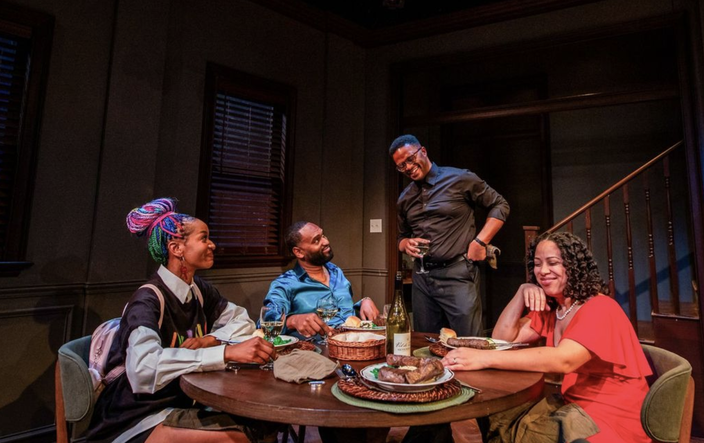
'Good Bones' is on stage at the Arden Theatre Co. through March 15. Above, from left to right, actors Kishia Nixon, Walter DeShields, Newton Buchanan and Taysha Marie Canales.
"I think what James might be saying in his writing is, 'Ya'll both right,'" DeShields said. "Or, 'Y'all both not wrong.' When I first read the play and talked about it, I said, 'Oh, the play's about gentrification.' And sure — but it ain't, really. It's about community. It's about connection. It's about the future."
Davis hopes "Good Bones" illuminates the generational pain of debates about gentrification and gives audiences insight on what's at stake for skeptical communities when they're promised brighter days.
"When we bend to corporate interests completely, we lose our souls. We do," Davis said. "And that's not to say corporations are inherently bad, but when corporate interest is pitted against community welfare, come on now. There's an obvious choice to be made. You have to do a lot contorting to forget about the people who have invested their lives in those different square footages."