






June 17, 2026

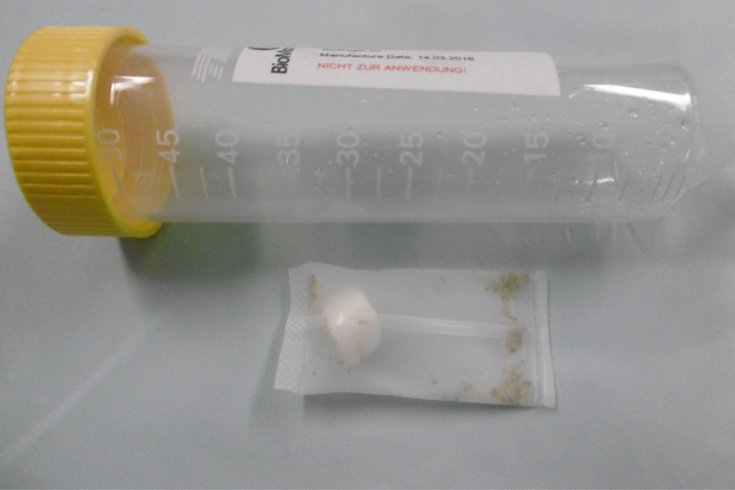 Creative Commons Attribution-Share Alike 4.0 International/Wikimedia Commons
Maggot debridement therapy uses sterile fly larvae, above in a biomedical bag, to eat dead and infected tissue, cleaning out a wound and helping it heal without gnawing away healthy tissue.
Maggots have been deployed to treat wounds in the United States since the Civil War, and the Food and Drug Administration has cleared a new type of fly larvae for the debridement of pressure ulcers, diabetic foot ulcers and chronic wounds.
Maggot debridement therapy uses sterile larvae to eat dead and infected tissue, cleaning out a wound and helping it heal without gnawing away healthy tissue. While the advent of penicillin in the 1940s caused the practice to drop off, the rise of superbugs and antibiotic resistance has led to renewed interest in the treatment.
In 2004, the FDA approved the use of maggots for wound care, with the first product Medicinal Maggots coming to market in 2005. On Monday, the federal agency approved a Singapore biomedical company's product called Medifly Maggots, which uses the larvae from the Australian sheep blowfly that's raised in a sterile environment.
"Maggot debridement therapy has earned its place in modern wound care, and adding a second FDA-cleared species strengthens the entire field,” said Dr. Ronald Sherman, who helped pioneer the therapy.
The treatment uses larvae from certain species of blowfly that release enzymes that melt dead tissue that the flies then digest. But the enzymes, and the treatment, spare healthy, living tissue.
Maggot debridement therapy may not be the first line of treatment for most wounds, but it can be effective for patients who are not responding to other methods. It can also work synergistically with other types of wound treatment, Dr. David Armstrong, professor of surgery at the Keck School of Medicine, told the Wound Care Education Institute.
“Having a discussion about maggots almost seems ridiculous juxtaposed to modern treatments,” he said. But maggot therapy can sometimes "eliminate the need for surgical debridement."
While some people may be grossed out by the idea of using fly larvae as agents of wound healing, "only a few have declined from this type of care," said Armstrong, who calls maggots "nature's microsurgeons."