




August 14, 2026
 Michaela Althouse/PhillyVoice
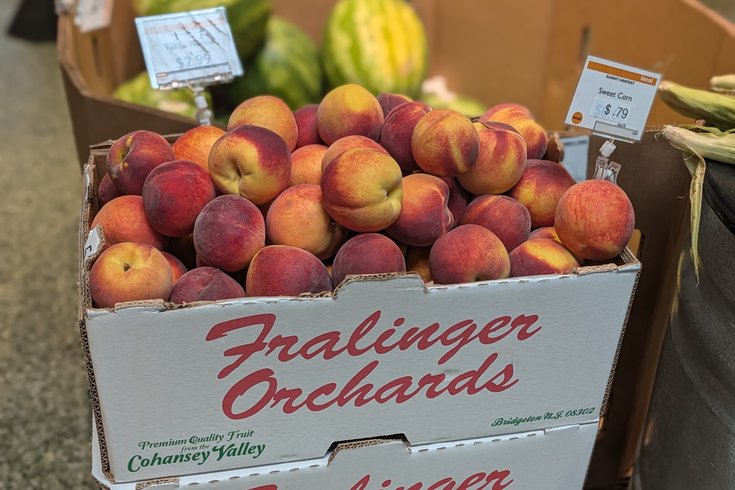
After a late frost killed young fruit, peaches and other stone fruit are in short supply in Philadelphia this summer. Above, peaches for sale at Weavers Way Co-op in Germantown.
To keep her stores stocked with any amount of local stone fruit, Weavers Way Co-op Retail Director Jess Beer said she's "had to get scrappy." Cherries, plums and, most recently, peaches are increasingly hard to come by, and while she's been able to keep some on the shelves at five locations, it's not nearly as much quantity or variety as other years.
"For the most part, it would be an entirely local and quite diverse set," Beer said. "This year, that's not the case. So not only do we have less local availability, we all also just have much less variety."
In early April, farmers in the Mid-Atlantic were hit by a heat wave, closely followed by frost later in the month, which significantly impacted the amount of viable tree fruit for 2026. As a result, farmers are struggling to supply anything and canceling pick-your-own events, while stores and farmers markets have had to get creative to keep up with demand, especially since the freeze hit multiple states including New York, New Jersey and Maryland, in addition to Pennsylvania.
Farm to City, which operates farmers markets in the area, allowed its vendors to look outside their orchards and normal suppliers to keep fruits in stock.
"Rittenhouse and most other area markets have taken the unusual step of allowing the farmers to buy in fruit just for this season to replace their losses, something we've never done before and don't anticipate doing again," Daniela Pierson, Farm to City's program manager, said in an email to PhillyVoice. "Nearly all of the farmers were able to find fruit from family orchards that they trust, but they had to reach out of the region because the freeze hit the entire area."
Though peach season isn't until the end of summer, the problem started all the way back in spring, said Steve Frecon, a grower at Frecon Farms in Boyertown. On the weekend of April 4-5, temperatures in the area climbed up into the 80s, which is "absurdly warm" for that time of year, Frecon said. Then, on April 20-21, it jumped back down to the 20s and even as low as 19 degrees in certain parts of Frecon's orchard.
While temperature fluctuation is normal for April, a 60-degree difference is catastrophic for stone fruit trees, which include cherries, peaches, plums, nectarines and apricots. At the time, the flowers on peach trees had begun to change from a pollenated flower into a small fruit. When those young crops experience a frost, their cellular walls are destroyed, and they "basically go to mush and fall off the tree," Frecon said.
"The trees themselves are fine," Frecon said. "What happens is it damages either the fruit or the flower, causing it to be not viable and then you just have a tree with no fruit."
As a result, fruit trees were decimated across the board, including at farms that are more direct-to-consumer. Media's Linvilla Orchards had to cancel pick-your-own for apricots, cherries and peaches this summer. Solebury Orchards in New Hope had to do the same for cherries, peaches, plums and pears, and Highland Orchards in West Chester had to source from outside local farms and producers in Georgia and South Carolina to keep peaches in stock at its market.
Frecon, though, is one of the lucky ones. While his cherries and plums didn't make it, his peach trees are located on a slope, and the higher elevation meant many of his trees were spared. His produce is so in-demand right now that he's had to ration his supply and prioritize some relationships with long-standing vendors.
Still, while he feels grateful to still have fruit to sell this summer, it's hard for him to think of it as anything more than chance.
"It's the luck of the draw, it's nothing special that I did as an orchard manager," Frecon said. "It's more of the location of our farm, we're fortunate to have land that is high in elevation."
The good news for growers is that the frost affected only the fruit and flowers, not the trees themselves, so everything should come back strong next year as long as the weather is good. But the impact of the shortage will go beyond just this summer, Frecon said.
Most farmers will spend a lot of money at the beginning of the season to get their crops started, often going into debt in the spring and paying it off in the fall after the produce comes in. This year, though, many started in a deficit and have nothing to sell to stores, restaurants and farmers markets to pay the money back.
That means that many will likely be starting next year's season in an even larger debt, especially considering how much the frost took out. In July, the state set aside $10 million to create a freeze disaster recovery grant program for growers affected by the frost to help ease the financial burden.
While crops will ebb and flow depending on weather and other factors, and farmers do plan for it, the April frost was like nothing Frecon had seen before.
"This is hopefully a once-in-a-lifetime event, the scale and the scope of it, and how widespread it is across the industry is unprecedented," Frecon said. "To have something that's widespread that covers the entire state of Pennsylvania, Maryland, most of New Jersey, West Virginia, and Virginia is unprecedented."
Beer said that while it hasn't been the best year for peaches, as most are a little more tart than normal, there are still some really good peaches on the market — if you know where to look. While large grocery stores are more likely to be supplementing with out-of-state fruits, farmers markets and stores specializing in local produce are probably going to have some regional peaches available.
"If they're in the local produce game, they're doing everything they can to keep peaches in stock because it's such an important product for summer," Beer said.
At her stores, Beer said she's managed to keep peaches in stock pretty much every day. The South Philly Food Co-op said it has local peaches, as well, and many of Frecon's fruits can be found at suburban groceries stores including Landis Supermarkets and Kimberton Whole Foods, and through delivery service the FruitGuys.
Philly-area farmers markets have been making do, as well. Organizers said the Rittenhouse Square, Headhouse Square, Clark Park, Fairmount and Bryn Mawr farmers markets all should have local peaches in the coming weeks, but organizers recommend shoppers come early, as they'll likely sell out fast. The Pennsylvania Department of Agriculture also hosts a map of orchards with peaches in stock, although most are outside the Philadelphia region.
The effects of the frost will likely continue into the fall, as it also stunted much of the area's apples. According to the Bucks County Courier Times, only about 1/10th of Solebury Orchards' crop survived, meaning there will be limited supplies for picking, cider and donuts.
Still, while it might have been a bad year for fruit trees, not everything suffered in the same way. Blueberries have done well, Frecon said, and many tomatoes have been producing well because of the heavy rains. And it's been an outstanding year for melons like cantaloupe and honeydew, Beer said.
"All the local melons have been particularly delicious, so that's been a little bit of a, I wouldn't even call it a silver lining, but I highly recommend eating some local melon right now because we're in a great time of year, and it's another one that can go sweet or savory in the ways that peaches can," Beer said. "So a lot of fun can be had."
In a normal year, farmers would set aside some of their harvest for wholesale sales to restaurants and supermarkets and some for farmers markets, said Bridget Palombo, director of the Food Trust. But with such a small crop, they only really have supplies for farmers markets and are relying heavily on that income to make ends meet. So while she's encouraging people to go to the markets to check for peaches, she also wants people to check out what other produce vendors have in stock, too.
"Go to your farmer, ask about the peaches, but also take it a next step further and open up the conversation to ask them, 'Well, what else do you typically grow this year?' or, 'How have you been doing through this?'" Palombo said. "It's just a really a point to be able to humanize the farmers and the people growing our food and get their recommendations on what else is being grown that's available, and to try something new."