





August 25, 2025
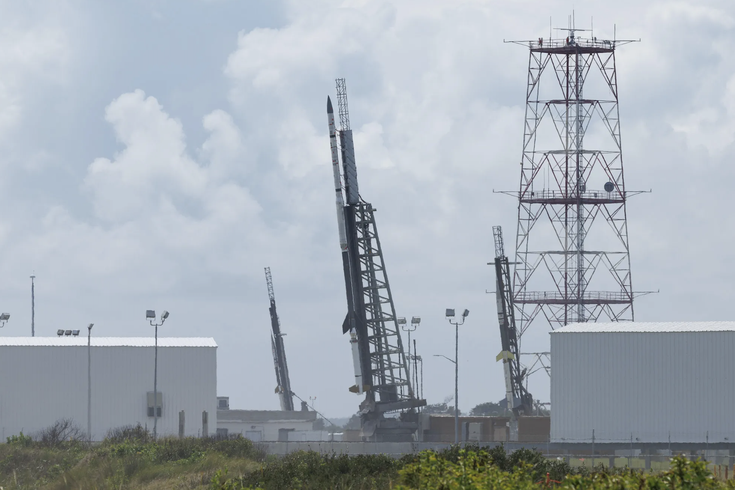 Danielle Johnson/NASA
Three NASA rockets, like these pictured above, launch from Virginia overnight Monday into Tuesday and should be visible in the sky above the Philadelphia region. The blastoffs are scheduled to take place between 10 p.m. Monday and 3 a.m., and they are part of a NASA mission to study the atmosphere's mesopause layer.
Stargazers are in for a show tonight as three NASA rockets launching from Virginia should be visible in the sky above Southeastern Pennsylvania and South Jersey less than a minute after they blast off.
The mission to launch the rockets, which will be carrying equipment to study the mesopause, a layer of the atmosphere that's 53-65 miles above the Earth's surface, has been delayed multiple times because of poor weather. Cooler temperatures and clear skies are forecast for the region, conditions that make it favorable the rockets will take off tonight and more likely that the launch will be visible over much of the Mid-Atlantic.
If the good weather holds, NASA officials said the launches will happen between 10 p.m. Monday and 3 a.m. Tuesday. The space agency will provide updates on the Facebook and X, formerly Twitter, accounts for the Wallops Flight Facility, located on the Eastern Shore of Virginia, just east of the Delmarva Peninsula. The liftoffs will be livestreamed on NASA's YouTube channel.
The mission is called the Turbulent Oxygen Mining Experiment Plus, or TOMEX+. The mesopause is the coldest layer of the Earth's atmosphere where temperatures can drop to minus 148 degrees, and it is one of the most turbulent regions of the atmosphere.
The mesopause spans the boundary between the Earth's atmosphere and outer space, and it is too high to be studied with weather balloons but too low for satellite recordings. Better understanding this layer is important, NASA said, because energy the mesopause transmits into space creates turbulence that affects satellites. The three TOMEX+ rockets will carry equipment that will help scientists map upper-atmospheric wind patterns and measure the measure the layer's density.
The map below published by NASA shows the rockets should come within view above most of the Philadelphia region between 10-30 seconds after the launches. The first two rockets will be launched within one minute of each other. The third takes off five minutes after the second.
The TOMEX+ mission is targeting Monday, Aug. 25, for the launch attempt of three sounding rockets. The window will open 10pm-3am ET. Livestream will begin five minutes before launch.
— NASA Wallops (@NASAWallops) August 24, 2025
Those in the mid-Atlantic region may catch a glimpse of the rockets, weather permitting. pic.twitter.com/rp7Q6UG0BD
According to NASA, the first launch attempt for its TOMEX+ sounding rocket mission is scheduled between 10 p.m. and 3 a.m. this evening and in the early hours of Tuesday. According to the agency, Philadelphia-area residents will be able to catch a glimpse of the rocket within 10-30 seconds after the mission launches.
The TOMEX+ mission has been delayed repeatedly since the launch window opened on Aug. 18 due to bad weather, poor visibility and rough seas, some of which were caused by Hurricane Erin. If the mission does not commence tonight, NASA can continue to try through Sept. 3.