




June 16, 2026
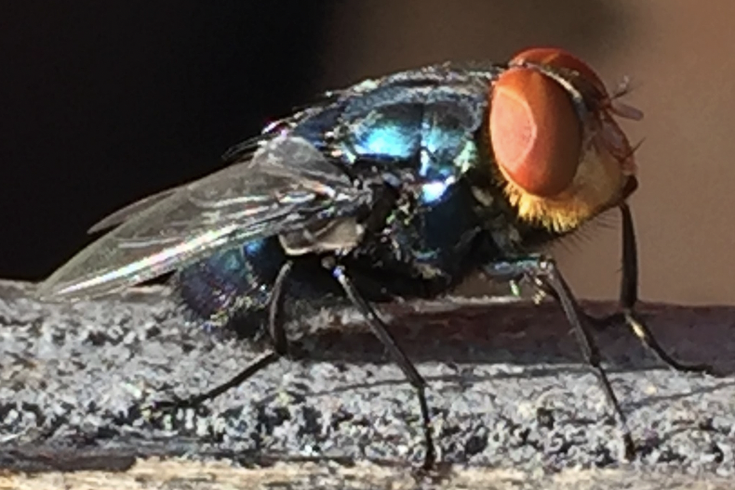 Provided Image/USDA
A New World Screwworm outbreak in Texas has federal and state agriculture officials adopting precautions to protect livestock and pets from the flesh-eating parasites. There are no reported cases in Pennsylvania or New Jersey, but officials are advising farmers and pet owners to be vigilant. Above, an adult New World Screwworm.
Pennsylvania and New Jersey are taking steps to protect farms and educate pet owners about the risks of the New World Screwworm, an invasive fly species that was confirmed in the United States for the first time this month in Texas.
The fly — native to South America, the Caribbean and parts of Central America — poses a serious threat to livestock and pets, because its larvae feed on living tissue in animals and humans.
MORE: Nara Organics recalls formula after three babies are hospitalized with botulism
"New World Screwworm is unlike the flies and maggots we commonly encounter," Alex Hamberg, Pennsylvania's state veterinarian, said in a statement Saturday. "These larvae feed on living tissue, causing severe wounds that can quickly become life-threatening if left untreated. Producers, veterinarians, and pet owners should regularly inspect animals for wounds that fail to heal or show signs of maggot infestation."
There are no current cases reported in Pennsylvania or New Jersey, but the species has been spreading north beyond its endemic range in recent years. Mexico reported its first outbreak two years ago, and the U.S. Department of Agriculture's Animal and Plant Health Inspection Service detected an isolated case in a dog in New Mexico earlier this month after the pet had been in Texas. Cases have been reported in more than a dozen livestock in Texas.
The parasite once was prevalent in North America, but the USDA eradicated it in the 1960s by introducing large populations of sterile insects. Much of Central America had gotten the pest under control in recent decades before its resurgence a few years ago. The parasite is transmitted when females lay their eggs in open wounds of warm-blooded animals and humans.
Last week, Pennsylvania Agriculture Security Russell Reading issued a quarantine order that restricts animal movements and creates stricter health monitoring for susceptible domestic animals entering the state. Pennsylvania also has increased funding for monitoring and diagnostic labs to detect agricultural disease outbreaks.
New Jersey's risk level is low, according to a June 5 memo from state veterinarian Amar Patil. But officials advised farmers and pet owners to be on alert. People who travel out of the country to impacted areas with their dogs must present a certificate confirming the animal is free from screwworm or was quarantined and treated for the parasite.
"NJDA is asking animal owners to remain vigilant for this pest," Patil said. "If you suspect (New World Screwworm) in your animal, please alert your veterinarian or the New Jersey Department of Agriculture, Division of Animal Health."
Common signs of infestation in animals include irritated behavior, head shaking, the smell of decay from wounds and the presence of maggots in wounds. If left untreated, a painful infestation can become fatal, because the maggots bury into living flesh and expand wounds. Secondary bacterial infections and toxicity can occur in untreated animals.
Adult screwworm flies are about the size of a common housefly. They have orange eyes, a metallic blue or green body and three dark stripes along their backs.
Health officials said humans are at low risk for infestation. The first U.S. case in a person was reported last year when a man returned from El Salvador and developed symptoms in Maryland. Treatment in animals and people involves extracting all of the larvae from affected tissue, cleaning the area and applying parasiticides.
The USDA said the insects are not a threat to the nation's food supply, because they do not infest meat or produce. Still, outbreaks could have a serious economic impact. The USDA estimated last year than an outbreak in Texas — the nation's biggest cattle-producing state — would cost $1.8 billion lost in livestock deaths, labor costs and medication expenses.
To prepare for possible outbreaks, the Food and Drug Administration issued an emergency use authorization for a generic over-the-counter drug used to treat New World Screwworm in dogs and cats.
Efforts are underway to release more sterile flies in impacted areas to curb their populations.
"USDA invested heavily in the tools needed to eliminate (New World Screwworm) ever since cases started increasing in Central America and Mexico," Dudley Hoskins, USDA's under secretary for marketing and regulatory programs, said in a statement earlier this month. "The United States has defeated this pest before, and we will do it again."