




January 27, 2026
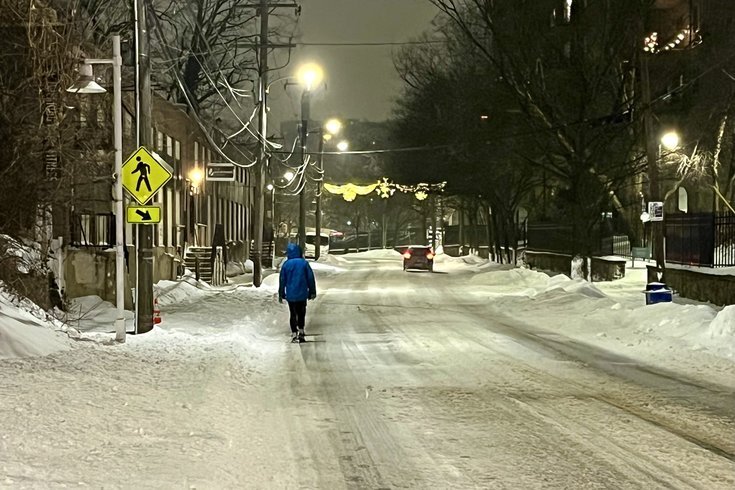 Jon Tuleya/PhillyVoice
The Philadelphia region could record its coldest temperatures since 1994 this week with lows as cold as degrees and wind chills that make it feel like below zero. Above, a pedestrians walks on Main Street in Manayunk after Sunday's storm.
As an encore to this weekend's snowstorm, the region is experiencing some of the coldest temperatures in decades, and it could be another week before temperatures climb above freezing again.
The last time the temperature dropped below zero degrees in the city was Jan. 19, 1994, when a low of minus 5 was measured at Philadelphia International Airport. The lowest temperature since then was 2 degrees on Feb. 20, 2015, which was part of a stretch when thermometers were at or below the freezing for eight days.
MORE: Philly lifts snow emergency, but frigid temperatures may make cleanup efforts more difficult
"Usually, we don't get these prolonged stretches where it's below freezing for over a week at a time," Joe DeSilva, a meteorologist at the National Weather Service's Mount Holly station, said Tuesday.
The forecast for the week calls for it to be coldest on Thursday and Friday nights. Thursday night could dip to 3 degrees and Friday night is predicted to be 2 degrees. With the wind chill, DeSilva said it will feel even colder, like between zero and minus 10.
On both nights, it's possible readings at the airport could be zero if skies are clear and there is minimal wind. The snowpack from the storm would contribute to cooling temperatures under those conditions.
"It really depends on how windy it is at the time," DeSilva said.
The warmest temperature on the horizon is a high of 31 degrees next Tuesday, the NWS forecast shows.
With bitter cold setting in, this week looks like as good a time as any to have fun with the weather. Here are some amusing science tricks to try out at home and make the most of the frigid weather.
This one is relatively simple and only requires a handful of ingredients. You'll need warm water, dish soap, corn syrup, sugar and a straw to blow the bubbles. You'll also want to have a flashlight on hand. The video below explains how to prepare the solution.
In extreme cold, bubbles form crystal patterns as the water in the soap solution freezes into ice. The best and most instantaneous results usually happen when the temperature is at least minus 10, but the cold on Thursday and Friday should be sufficient to freeze bubbles. The experiment could take several attempts, so have your camera ready to capture a video.
Witness the enchanting dance of frost: a soap bubble transforms into a crystalline masterpiece in real-time at -11.1°C. Nature's fragile beauty captured in winter's embrace. ❄️✨
— Earth (@earthcurated) January 12, 2026
pic.twitter.com/9xOTLjLWpj
This one has become a go-to for viral videos – failing as often as it succeeds – but there's a thrill to (safely) launching a pot of boiling water into the air and then watching a frozen mist stream down.
Compared to cold water, boiling water freezes faster because the water droplets are smaller and they lose heat more quickly. And due to the heat of the water, there is more evaporation. Together, the small droplets and rapid evaporation allow the water to freeze more quicky when exposed to extreme cold
The experiment works best when the temperature is below zero, so it might not be cold enough to work Thursday or Friday night. If you try the trick, be careful not to throw water overhead or in the direction of anyone else. Inevitably, some people get burned trying this trick.
It might be best just to watch videos of successful attempts online, like this one:
If you have a balcony, deck or porch, an ice lantern can be a cool decoration during an extended cold snap. The experiment requires a couple plastic containers and a mix of materials, like plant trimmings or small toys, that serve as decorations frozen inside the ice lantern.
The video below demonstrates how use a plastic cup filled with rocks to create the opening for a candle inside a container filled with water. Typically the containers are placed in the freezer to solidify, but later this week it will be cold enough to simply leave them outside overnight.
When water is frozen, pour hot water into the cup of rocks to free it from the ice surrounding it. Then turn the plastic container upside down and run hot water on the plastic to free your new lantern from the ice.
This experiment doesn't involve venturing out into the cold, but it offers a neat lesson in osmosis and demonstrates how "supercooling" fluids can make a tasty drink without freezing liquids completely. Any bottle of soda will work for the experiment. It will take a few hours in the freezer to prepare the slushy, and there are two different methods shown in the video below.