




January 19, 2026
 Jeff Tomik/PhillyVoice
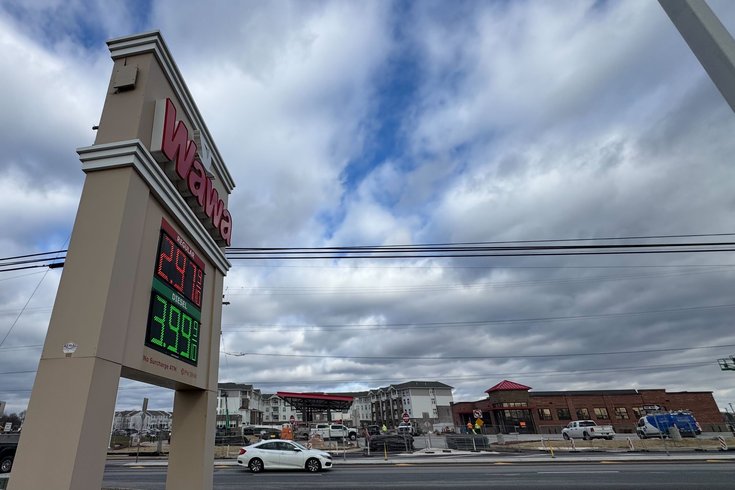
Sheetz is building a new gas station across the street from a Wawa in Montgomery County — the chain's first venture into the Philly region. The close proximity of the competing convenience stores could lead to the businesses lowering gas prices as a way to entice customers, a Temple economist predicts.
For the first time, Sheetz is opening a store in the heart of Wawa's long-established territory in Southeastern Pennsylvania. And to make things more interesting, the new gas station in Limerick Township will be located just across the street from a Wawa.
The Altoona-based convenience store chain will make its incursion on rival turf with the Feb. 12 opening of its 454 W. Ridge Pike location at a busy intersection on one of Montgomery County's major commuter routes.
MORE: City hopes 2026 will be turning point for LOVE Park's vacant 'flying saucer'
Sheetz, whose strongholds are in western and central Pennsylvania, has been planning its push into the Philadelphia region over the last few years while watching Wawa flank out into its own territory. Wawa now has stores in the Harrisburg area and in Williamsport, Chambersburg and several towns in York County, among other communities. Some have opened within half a mile of a Sheetz, and later this year Wawa will venture into State College.
Beyond Limerick, Sheetz already has plans on the horizon in Chester County, where it will open a store in Downingtown less than a mile from the nearest Wawa.
Close proximity between competing businesses is explained by an economic principle known as Hotelling's Law, which says similar goods and services tend to be clustered around prime locations that attract customers.
"Wawa has shown that this is an established traveling pattern for a lot of consumers," Joshua Mask, an economics professor at Temple University, said of the location in Limerick. "In a sense, Wawa has already done all of the scouting for Sheetz, so Sheetz is just piggybacking off that research. People are already in the habit of stopping by a convenience store on that route."
In communities where Wawa is the established player with strong brand loyalty, Sheetz will need to appeal to shoppers' wallets — not just their curiosity — to keep them coming after the initial novelty of a new store fades. The easiest way to do that could be offering gas at cheaper prices than Wawa's.
"That's going to be the strategy. They're going to probably lead with lower gas prices," Mask said.
Although consumers pay high prices at the pump these days — the average in Philadelphia is about $2.95 per gallon in January — gas stations and companies like Wawa and Sheetz don't typically get high returns from selling fuel.
"A lot of their profit margins — at least for Wawa, 30%-40% of their gross profit margins — come from food that people are buying inside the store," Mask said. "Companies like this might even be willing to sell gas at a loss if it gets more customers in stores. What we typically see in other areas when this happens is that directly where the cluster of competition is, there's a drop of 2-3% in gas prices in the general area around it."
Signs that display gas prices outside stores can be effective lures to draw customers who want to get the best deal. For Sheetz, a lower gas price means enticing more customers to get hooked on the food and drink options in their stores instead of Wawa's.
"The winner in all of this is going to be the consumers in that area," Mask said. "They might see some of the lowest gas prices in the state for a while, but will that go on for years? No. Wawa has the ability to undercut Sheetz just as much. At some point, maybe six months, that competition's not going to make sense anymore. That depends on oil prices, too."
The long-term battle between Wawa and Sheetz ultimately comes down to branding and quality.
The two companies tied for second last year — behind Wisconsin-based Kwik Trip — in a national consumer survey measuring satisfaction with convenience stores. They're no strangers to competing against each other in other states, including across the street in some locations, but entering into each other's core territories in Pennsylvania puts the two brands head-to-head among the shoppers most likely to identify strongly with either of them.
Mask said Sheetz could have a hard time gaining traction in places like Delaware County, where Wawa is based, because residents are loyal to the brand for cultural reasons. Wawa customers were credited with inspiring the wardrobes from HBO's Delco-based crime drama "Mare of Easttown," and the company's partnerships with the Phillies and Eagles have leveraged the popularity of stars like Kyle Schwarber and Saquon Barkley to promote themed products. Sheetz, meanwhile, is often touted by Pittsburgh area stalwarts including U.S. Sen. John Fetterman and former Steelers coach Bill Cowher, who competes in the company's annual charity golf tournament.
As entrenched as Wawa's brand is in the Philly area, there have been gripes over the years about declines in quality compared with the brand's nostalgic heyday in the late 1990s and early 2000s. Sheetz entering the area could be a reality check.
"If Wawa doesn't have competition, this degrading of quality is going to happen because they're not seeing the fall in profitability," Mask said. "But if Sheetz opens up across the street and starts to offer some serious competition, my guess is the sandwiches at that Wawa location are also going to be pristine."
Mask expects the battle between the companies to heat up now that Sheetz is matching Wawa's competitive drive.
"It's showing that Sheetz is on the offense. I think Wawa has been on the offense for most of the past few years. Sheetz is showing their hand now. It's a smart move," Mask said. "They've clearly done their research on which markets are going to be most profitable and have the most potential for penetration. They're just testing the waters. They're going to see where it works and where it doesn't work."