






September 04, 2025

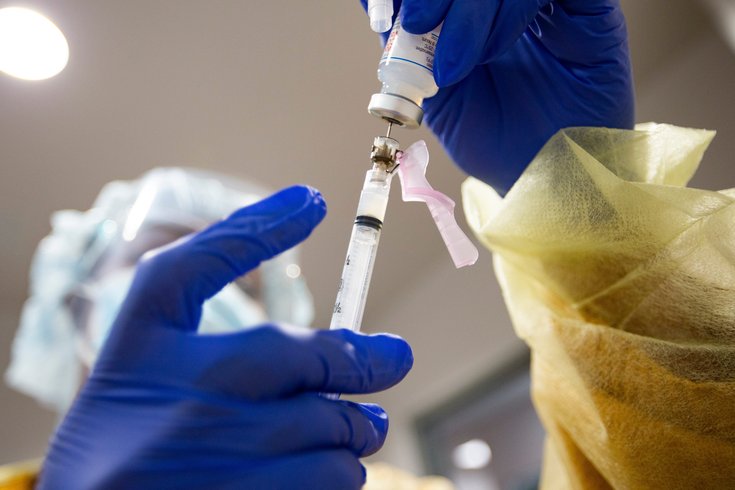 Alicia Devine/Tallahassee Democrat
A new ruling in Pennsylvania lets pharmacists follow recommendations from the American Academy of Pediatrics and other nongovernmental groups to administer COVID-19 shots. They previously had to rely on CDC guidelines.
Pharmacists in Pennsylvania may follow guidance from certain professional medical groups when administering COVID-19 vaccines, a state board ruled Wednesday. The move is aimed at ensuring access to the shots amid more restrictive guidelines from the federal government.
The Board of Pharmacy's vote came one week after the U.S. Food and Drug Administration approved updated COVID-19 shots from Moderna and Pfizer only for people 65 and older and those with underlying medications that put them at risk of severe illness.
But the Center for Disease Control and Prevention's vaccine advisory committee has not clarified its guidelines for the shots — which until Wednesday's vote was necessary for pharmacists in Pennsylvania to administer them — and is not scheduled to meet until Sept. 18. It remains unclear whether the committee will provide updated guidance at that time. Its current guidelines recommend a wide range of people receive COVID-19 shots; insurers must cover vaccines recommended by the committee.
At the request of Gov. Josh Shapiro, the Board of Pharmacy held an emergency meeting in Philadelphia on Wednesday and voted to allow pharmacists to use guidelines from three nongovernmental groups — the American Academy of Pediatrics, the American Academy of Family Physicians and the American Academy of Obstetricians and Gynecologists — and the FDA.
The three medical professionals groups have widely recommended COVID-19 shots. The AAP recommends, for instance, that children 6-23 months and older children at high risk for severe COVID-19 get vaccinated.
"Health care decisions should be up to individuals — not the federal government and certainly not RFK Jr.," Shapiro said in a statement, referencing Robert F. Kennedy Jr., the Health and Human Services secretary. "My administration will continue to protect health care access for all Pennsylvanians."
Pennsylvania pharmacists will not require people to have a prescription to receive the vaccine. CVS said in a statement that COVID vaccines will be available at its Pennsylvania stores as soon as possible and that people can make appointments online or walk into any of its pharmacies and clinics.
New Jersey already had a provision allowing pharmacists to administer COVID vaccines without a prescription based on recommendations from nongovernmental bodies.
Changes to the federal vaccine policy have led some states to pursue their own vaccine policies. California, Oregon and Washington said Wednesday that they will work together to form their own vaccine guidelines, claiming the federal government is politicizing science. Pennsylvania and New Jersey reportedly are among eight states in the Northeast considering a similar alliance.
The federal rollout of the updated COVID-19 shots has produced confusion about who is eligible and whether shots will be covered by insurers. Among the questions left unclear by the FDA's announcement last week: whether people who are not at high risk of severe COVID will be able to get shots, what qualifies as an underlying condition and whether insurers will cover shots for people who do not fall within CDC guidelines.
Dr. Judith O'Donnell, director of the Department of Infection Prevention and Control at Penn Presbyterian Medical Center, said this will have a chilling effect on vaccination rates. O'Donnell spoke with PhillyVoice before the Board of Pharmacy held its vote.
"As a result of all of the confusion and the changes that have already been made, as well as just the churn of the news cycle where … there's been unfortunate statements made about mRNA vaccines and other vaccines that are not scientifically accurate," O'Donnell said, adding that there will be "more vaccine hesitancy" and more "barriers to getting vaccines."
The CDC hasn't provided an updated list of the underlying conditions that put people at high risk for severe COVID-19. Its previous list included cancer, chronic lung diseases, cystic fibrosis, HIV and depression, among other conditions.
O'Donnell said she had no idea whether the CDC is going to create a new list.
"We're kind of waiting to see if that happens or not, and I think insurers are also waiting to see, because insurers will cover (COVID shots) based on those conditions," O'Donnell said. The out-of-pocket cost for a COVID vaccine is about $140, according to the CDC's price list.
Independence Blue Cross, the largest health insurer in the Philadelphia region, said in a statement that it "supports members who choose to get vaccinated against COVID-19 by providing coverage for the vaccines. Our coverage decision is based on our review of the current evidence and considers the positions of relevant professional societies as well as the Advisory Committee on Immunization Practices."
Overall, O'Donnell said she predicts more people will go unvaccinated against COVID this winter and that there will be some "spillover" with fewer people getting flu shots, as well.
"So I am worried that with a less vaccinated population, more people will get sick, more people with severe underlying conditions will need to come to the hospital," O'Donnell said.
More people coming into hospitals with respiratory illnesses will put a heavier burden on overtaxed emergency departments, O'Donnell said.