





September 17, 2026
 Dominique Johnson/Flickr, City of Philadelphia
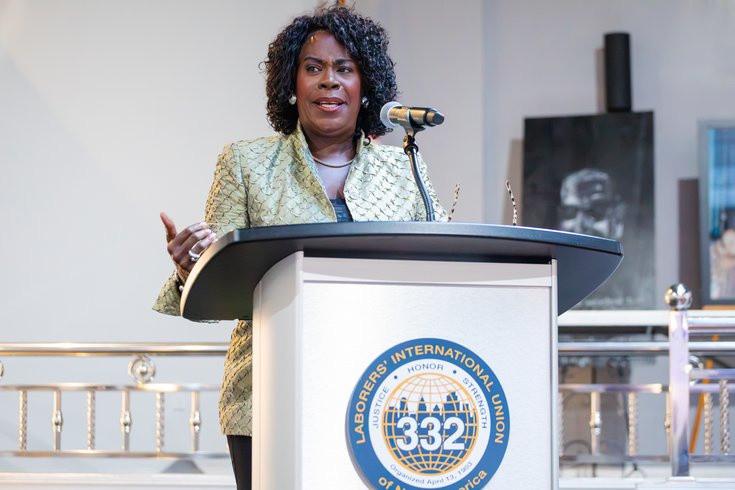
Mayor Cherelle Parker signed an executive order on Wednesday establishing a 10-member task force to evaluate the potential impacts of data centers in the city. Above, Parker speaks at a NAACP general membership meeting on Tuesday.
A task force will evaluate the potential impacts of data center development in Philadelphia, Mayor Cherelle Parker said Wednesday.
The Philadelphia Data Center Task Force will research the potential benefits and harms of data centers on residents, explore best practices for "responsible development" and consult experts and community groups to gather information, according to an executive order signed by Parker. It will be co-led by representatives from the Office of Sustainability and the Office of Clean and Green, and will be composed of representatives from at least eight other city departments.
MORE: Five women appear lifeless in images recovered from Olney home under federal investigation
The task force must submit its findings to city officials by June 30, the executive order says. The final report will lay out recommendations for locations, building placements and size restrictions so that impacts to communities are mitigated.
Research related to environmental impacts, safety considerations, fiscal impacts, regulatory actions and issues related to the decommissioning of data centers also will be included.
Task force members may recommend changes to city laws and policies that "may be appropriate with respect to the development and operation of data centers in Philadelphia," the executive order states. It also orders the team to allow opportunities for public input throughout the process.
"We need to understand who could benefit from this, who could carry the burden and, if they were to be built, what additional safeguards should Philadelphia require to ensure that we're doing everything in our power to protect our people and to protect our city," Parker said in a video posted to social media Wednesday.
Philadelphia has housed smaller data centers for years, but none that are classified as "hyperscale" facilities over 100,000 square feet, Parker said. The impacts of larger and more intensive facilities will be the subject of the task force's research.
"We need to be prepared now for the possibility of a much larger proposal being presented to us for consideration," Parker said. "... However, if a firm was to apply to the city of Philadelphia to build one of these hyperscale data centers, we want to make sure that we are fully prepared to know what the impact on Philadelphians would be."
Parker's executive order comes amid widespread opposition to data center development. A survey conducted by the University of Pennsylvania last month found that 61% of adults, regardless of political party, are against the facilities being constructed in their area, citing concerns related to their potentially adverse impacts on employment, the environment and personal privacy.
Earlier this week, about 100 protestors organized by the group No Data Centers in Philly gathered in front of City Hall, demanding a moratorium on data center development. On Thursday, the group released a statement saying that a task force is not a strong enough response to the threat data centers pose.
"Finally the Mayor is paying attention to this threat, but it doesn't change the fact that City Council still has a job to do: protect neighborhoods with a moratorium now," they said in a statement. "Unless they act, every Philadelphian is at risk from AI data centers. Council must immediately pass a robust, multiyear moratorium so we can create the long-term regulations and rules we need to protect Philadelphia communities."
Gov. Josh Shapiro signed an executive order last month aimed at limiting data center development in Pennsylvania, particularly "speculative proposals" with "no regard for local communities."
Shapiro's order requires developers to sign a consent order to follow the Governor's Responsible Infrastructure Development standards and set penalties if they violate them. It also requires projects to obtain municipal approval and bars state agencies from signing non-disclosure agreements with developers.
Parker said her administration is "fully aligned" with Shapiro's order.
"I wholeheartedly believe that Philadelphia residents deserve to have a voice in making the decisions that could affect their homes, their health and, quite frankly, our city's overall environment," Parker said. "And this process ensures that they have one."