



April 22, 2026
 Michaela Althouse/PhillyVoice
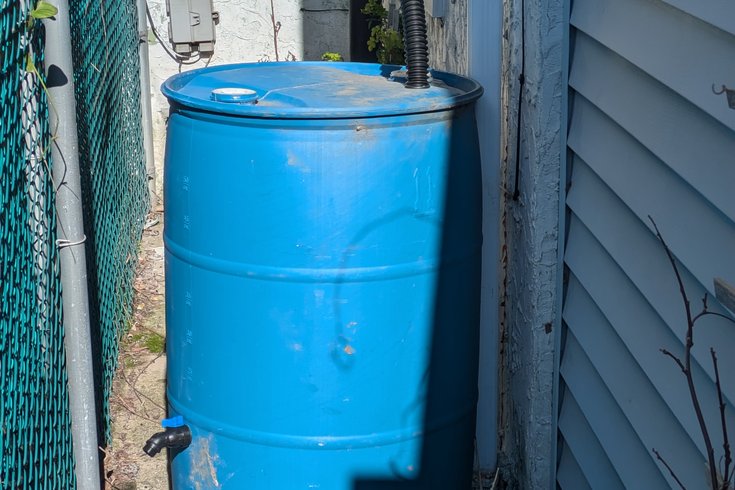
Philly's Rain Check program, which offers free rain barrels (above) and other stormwater management tools, is one of many eco-friendly resources available to city residents.
There are many reasons why buying a house for the first time was exciting — the thrill of DIY projects, the excitement of living on a new block and the safety of a long-term investment. But one aspect filled me with the kind of glee only known to someone who religiously wore a World Wildlife Fund T-shirt in fifth grade.
"I can't wait to get a free rain barrel!" I repeated to friends and family, proceeding to fill out out an application before the ink had dried on the mortgage documents late last year.
MORE: Quinta Brunson says she didn't tell her mom when she dropped out of Temple
As an avid gardener and conservation nerd who didn't qualify for a rain barrel at my previous rental due to its drainage system, this was basically Christmas. And last month, my rain barrel finally came. Now, my blue, plastic trophy sits triumphantly in my side yard, drilled into the downspout to collect rainwater runoff.
The delivery was part of Philadelphia's Rain Check program, one of many eco-friendly resources available to city residents. At little to no cost, residents also have access to yard trees, composting services, recycling bins and storm drain markers. It's all for the sake of greening Philly's homes and neighborhoods.
In honor of Earth Day, here's how to access these services:
The free rain barrels are part of the city's Rain Check program to aid stormwater management and prevent drain overflow, which can send raw sewage into the waterways. The containers are repurposed 55-gallon, food-grade plastic barrels and include spigots, a winter cap for the cold and a diverter to collect water from the downspout.
The Rain Check program is available to all residents, but renters need permission from their property owners to apply for rain barrels. Applicants must complete a 1-hour workshop before they can qualify for a rain barrel.
Rain barrels only are installed during the warmer months, but it's a pretty quick turnaround during that window. The installation at my home was so painless that my fiancé sent me a single message reading "That was quick!" less than 15 minutes after the worker had arrived. I had been expecting play-by-play updates on the progress.
The Rain Check program has a few other offerings, too. Residents who complete the program also qualify for payment assistance for one additional stormwater management project: a planter beneath a downspout, a rain garden or permeable pavers for a yard, which allow water to soak into the ground instead of flowing into drains.
Philly residents can request free street trees and yard trees through the TreePhilly program. Street trees are planted along sidewalks; yard trees are planted in front, side and back yards.
TreePhilly gives away yard trees at community events held from April to May and October to November. The program helps people choose the best tree type for their yards and provides information on how to care for the trees. People who have mobility issues can apply to have their trees delivered and planted by local arborists.
For folks without a yard, the Philadelphia Parks and Recreation Department also operates a free street tree program. Residents can request a tree be planted in front of their homes at no cost. Trees are planted from mid-April to mid-May or mid-October to mid-November.
Philly doesn't have a free pickup compost program, unlike some cities. But its Community Compost Network has 13 sites, including community gardens and schools, where food scraps and yard waste can be dropped off for free. Philly's private compost pickup companies, Bennett and Circle, also offer free compost to customers twice per year.
On weekdays and Saturdays, residents can get up to 30 gallons of finished organic materials, including compost, manure and mulch, for free at the Fairmount Park Organic Recycling Center. The city-run site also offers all-you-can-chop firewood from fallen trees and limbs for a $15 fee.
Recycling service is provided by Philadelphia, and residents also can nab two bins each year to collect their cans, bottles and cardboard for curbside pickup. They're available at the city's six sanitation centers, which are open open Mondays through Saturdays from 8 a.m. to 6 p.m. Residents must show a state ID, lease or utility bill to show proof of address.
Hazardous waste such as batteries, paint and other chemicals can be disposed at no cost during city collection events. Seven are scheduled between April and November.
Storm drains are designed to move rainwater out of the city's streets, but many people dump trash and other waste into them. That all empties into the local rivers, polluting them.
To remind pedestrians that drains feed into the rivers, Philadelphia Water Department offers marking kits — small medallions that are glued to the sidewalk and say which river or creek that drain is connected to. Residents can apply to host an event (although it only requires one person to register), and receive supplies to mark 15 drains including a safety vest, glue and instructions.