



October 21, 2026
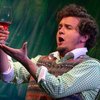
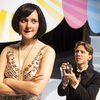
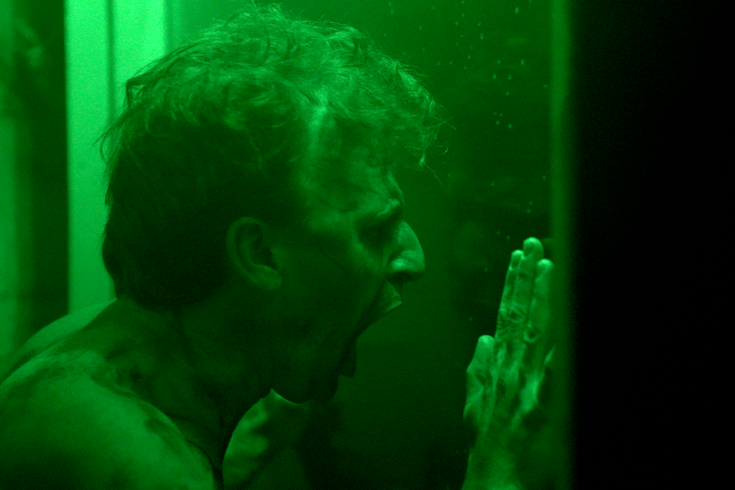 Provided image/Mike Attie
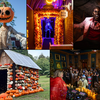
A haunter scares visitors at Pennhurst Asylum in the production still above.
Since 2010, Pennhurst Asylum has been scaring visitors with masked ghouls and bloody specters every Halloween. The spectacle naturally lends itself to a horror movie, but a new documentary reframes the haunted house denizens as marginalized folks reclaiming their stories — and the site's past as the true terror.
"The Haunting of Pennhurst," playing Sunday at the Philadelphia Film Festival, follows the actors as they welcome newcomers, develop characters and practice their creepy walks ahead of a fresh season at the Chester County attraction. The conversations aren't merely tips on applying fake blood. Autumn Werner, one of the veteran haunters, reminds the crew that patient characters can attack doctors, but never the reverse. They should make fun of guests' fashion sense, not any observed tics. Using slurs, especially against disabled people, will result in immediate firing.
The workers who run the Halloween haunt take respect of disability and difference seriously. Most of them are disabled themselves, and all are aware of the dark history of the grounds. For 79 years, the property housed the Pennhurst State School and Hospital, an institution now synonymous with the abuse of mentally and physically disabled Pennsylvanians. Former patients brought the lawsuit that shut Pennhurst down in 1987, long after the dire conditions had been documented in the press.
The people institutionalized there could be restrained to their beds or even the toilet for days on end. Injury, isolation and intellectual regression was common due to inadequate care; despite having a capacity of 1,984, Pennhurst housed up to 4,100 individuals. The most horrifying room in the complex was arguably the dental clinic. If patients bit themselves or others more than once, staffers began pulling their teeth.
"The children, as they are all called, who are rotting in their cages, cribs and beds can thank society for their dreadful plight," WCAU-TV reporter Bill Baldini said in his 1968 expose. "We have forsaken them, not in the sense of what we have done to them, but because of what we have failed to do on their behalf."
Nathan Stenberg, Mike Attie and Katarina Poljak — the directors behind "The Haunting of Pennhurst" — present photos and footage of this grim history like a chilling slideshow, complete with clicks and an eerie score from Dan Deacon. In the present, the actors grapple with the meaning of their performance. Some view their participation as an exploitation of the people who lived and died at Pennhurst. The haunters aren't immune to that feeling. But they also describe the liberation that comes with leaning into the "monster" stereotypes the disabled community suffers, and wielding them to terrorize crowds.
"A lot of people ask me, why would you do that?" Eddie Buck, a deaf actor who appears in the film, said via interpreter at its first PFF screening Saturday. "You're supporting the idea of a place like that. It just seems very conflicting. But I find I have passion working as an actor and the idea of the haunt and the history, I think it's important to find that balance, but also want to tell the story about Pennhurst and how important it is because a lot of people have the wrong perception of it, the place."
The documentary began as academic research for Stenberg, a scholar of disability and bioethics at Johns Hopkins University. When he decided the story was better told through film, he contacted Attie, then an associate professor at the University of the Arts. The two met up in a Wawa parking lot, "as one does in PA," Stenberg said, to hash out details. Poljak, an interdisciplinary artist with a background in experimental horror, came aboard initially as a sound mixer before joining Stenberg and Attie as directors.
The trio saw the movie as both a horror film and a documentary from the start, and strove to create a sense of unease. While they received grant funding from numerous foundations, budget constraints forced them to get creative.
"In terms of like the visual form, one thing that was really interesting is we had to find a way to give some scenes tension," Attie said at the Saturday screening. "And a lot of contemporary horror relies really heavily on big special effects and things like that which obviously are not in our purview. But we ended up watching a lot of really old horror films from the '40s, like Val Lewton's 'Cat People' and things like that. Those are films that actually ended up influencing a lot of how we shot it and just sometimes it was things like simple shadow play that actually did a lot to give it that tone."
For the people behind and in front of the camera, the issue of appropriate care is hardly settled history. Werner shares a story onscreen about her family's struggle to get appropriate accommodations for her sister to ride a school bus. Attie went through a similar ordeal at his autistic son's former school, when an administrator decided he'd be "too much of a disturbance" on a field trip. Stenberg, who has a developmental disability himself, held a sobering truth throughout the three-year production: he could have been confined to Pennhurst.
"I was talking to Autumn and she asked me, 'Do you think that we would have known each other if we were institutionalized here in Pennhurst?'" Stenberg recalled. "And that question still makes me emotional to this day, because I know the answer as a researcher, which would have been no. I, being biologically a male, and Autumn, being biologically a woman, would have been on separate campuses ... had the institution been operating, there would have been almost no chance whatsoever of the two of us ever knowing one another and having this friendship together. That has and continues to sit with me."
"The Haunting of Pennhurst" made its premiere at the Tribeca Film Festival in June and has since played festivals in Lisbon, Phoenixville, Nashville, Pittsburgh, Baltimore and Wilmington. It'll continue onto the New Orleans Film Festival after its run in Philadelphia. The directors hope to land a distribution deal somewhere along this festival tour, but for now, they're simply aiming to start conversations.
"As our participant in the film says, these steps here at Pennhurst remind us not of how far we've come, but rather how close we are to walking back up those steps," Stenberg said. "... If it's not a matter of convenience, if it's not you yourself living with it, or you have a family member who's living with a disability, a lot of people don't care. And again, this is why the horror element of this film is so incredibly important, because we are seeing the real life impacts of what happens when people don't know or don't want to know."
Follow Kristin & PhillyVoice on Twitter: @kristin_hunt
| @thePhillyVoice
Like us on Facebook: PhillyVoice
Have a news tip? Let us know.